• Star Ingredient(s): AHAs and BHAs

    By request from the awesome Angelanrenee of BeautyandtheCat’s Beauty Blog, it’s time to talk about chemical exfoliation!

    Exfoliation in general is vital to achieving bright, smooth, and healthy-looking skin. Unless removed, dead skin cells will build up on the surface over time, leading to a dull, rough appearance; flakiness; and possibly clogged pores and breakouts. Like a lot of people, I enjoy using a scrub once in a while, but physical exfoliation isn’t something I recommend doing every day. In the first place, it can be messy and labor-intensive, at least compared to chemical exfoliation, and in the second place, too much physical exfoliation can be irritating and lead to broken capillaries. For that reason, I prefer chemical exfoliation for day-to-day maintenance.

    There are two main categories of chemical exfoliants: alpha hydroxy acids (AHAs) and beta hydroxy acids (BHAs). AHAs and BHAs serve different purposes and work very well together as part of a well designed daily skin care routine. They should be approached with caution at first, though. Don’t start using both products at the same time, and don’t use them every day until you know your skin will tolerate them well. I suggest starting with an AHA and working your way up from once every other day to once a day, then twice a day if you can stand the wait time in the morning, which I personally can’t. Same goes for BHAs.
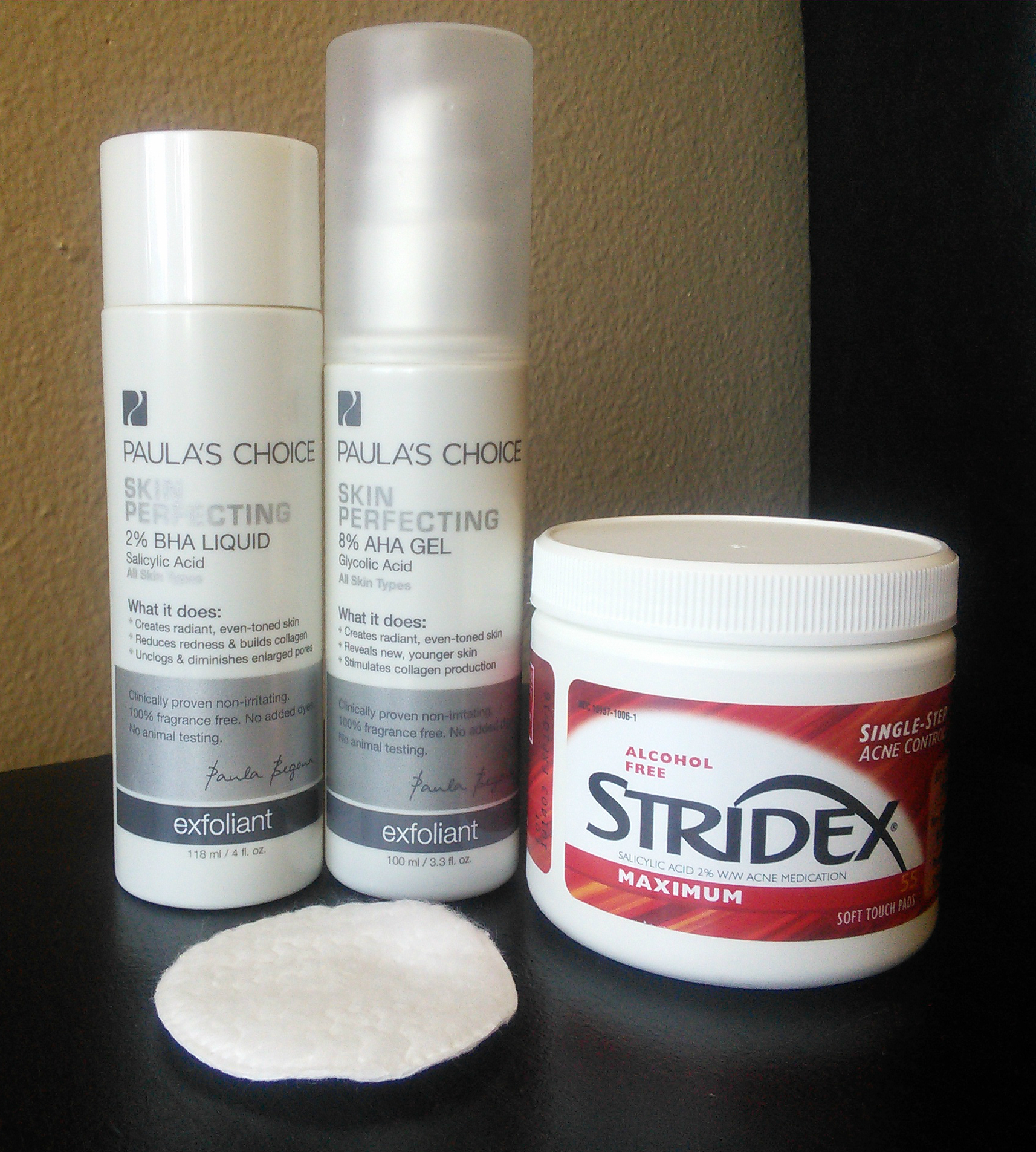
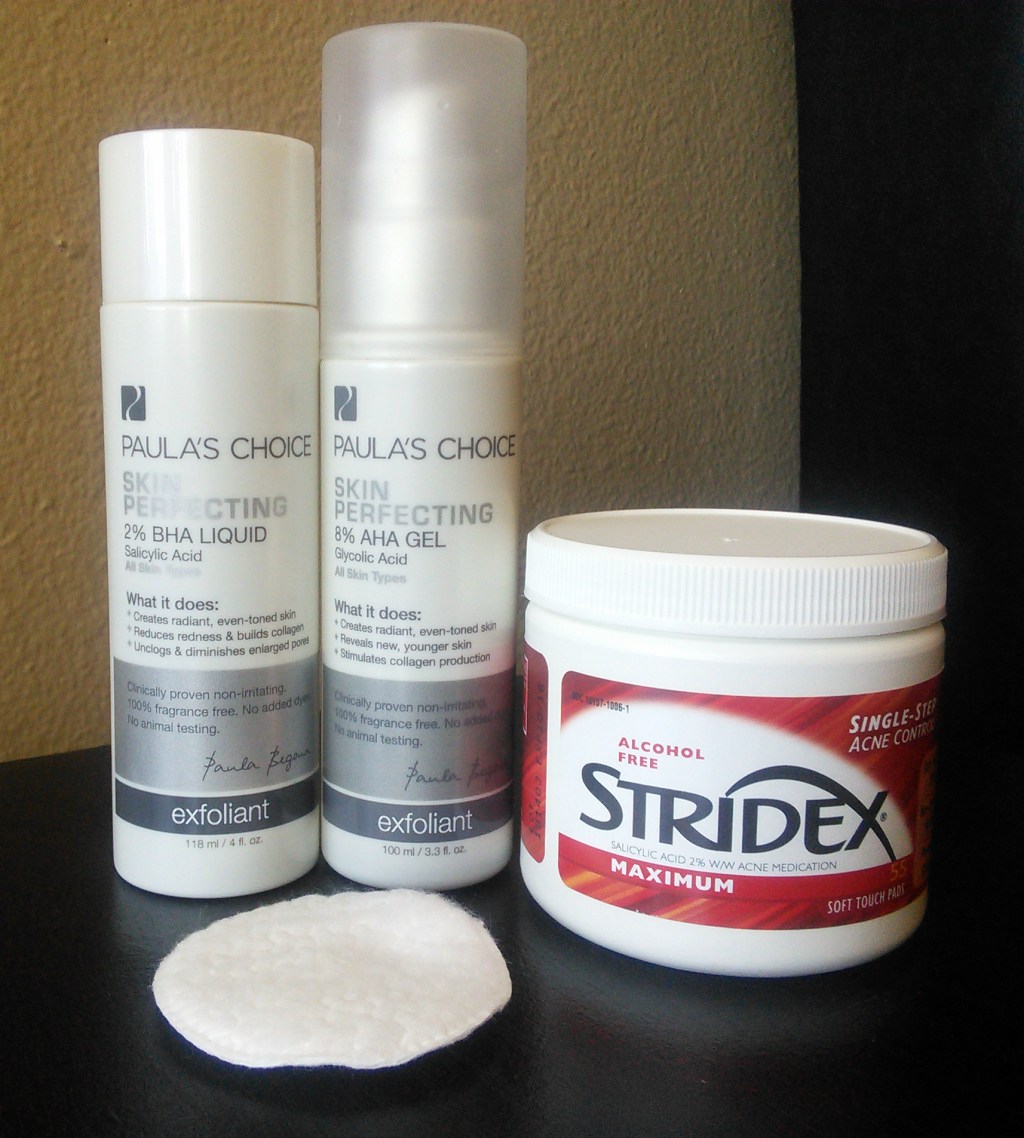
    Paula's Choice and Stridex chemical exfoliants
    My preferred chemical exfoliators are Western.

    AHAs explained

    Alpha hydroxy acids are water-soluble chemical exfoliants that help to exfoliate surface skin by dissolving the bonds between cells so that dead skin can shed more easily. It’s important to note that they don’t dissolve the dead skin itself. Nor do they work instantly, as I’ve heard some people claim. At daily use concentrations of between 5 and 10 percent, AHAs simply accelerate and optimize the skin renewal process.

    AHAs are useful for:

    • Brightening skin
    • Making skin tone more even
    • Reducing hyperpigmentation caused by acne scarring
    • Reducing fine lines
    • Hydrating

    AHA cautions and best practices

    When using AHA products, sunscreen is extremely important. AHAs are photosensitizing, which means that they increase your skin’s sensitivity to the sun. If you use AHAs, even if you only apply them at night, sun exposure without adequate UV protection will lead to increased sun damage. You know that I already consider sunscreen absolutely essential for fighting wrinkles and maintaining healthy, youthful skin. It is even more essential when using AHAs. If you use AHAs but choose not to wear sunscreen, you’ll be undoing any benefits you might get from your AHA product.

    As a final note, the pH of AHA products will make or break the product’s effectiveness. In order to exfoliate, AHA products must be at a pH between 3 and 4. If the pH is below 3, the product is too acidic, and you’ll run the risk of chemical burns (luckily, however, I’ve never heard of an AHA product with a sub-3 pH). If the pH is higher than 4, it just won’t work.

    BHAs explained

    Beta hydroxy acids (BHAs) are oil-soluble chemical exfoliants that behave in a similar fashion as AHAs but that are able to get down into pores in order to clear them out at a deeper level than AHAs, thanks to the oil solubility of BHAs. The most commonly known and used BHA is salicylic acid, which is apparently not actually a BHA, but for the purposes of a chemical exfoliation discussion, it might as well be. For daily use, BHAs are typically found in 2% concentrations but sometimes 4% as well. BHAs are useful for:

    • Clearing dirt, oil, and dead skin cells out of pores, especially the typically more visible ones on and around the T-zone
    • Reducing inflammation

    BHA cautions and best practices

    Like AHAs, BHA products must be at a pH of between 3 and 4 in order to work properly while still being safe for skin. While BHA products will still provide some anti-inflammatory benefits at higher pH levels, they will not be able to exfoliate or clear pores. Additionally, many people find BHAs drying, so make sure you have enough hydration and moisturization in your routine before trying out a BHA.

    Using AHAs and BHAs together

    Since AHAs and BHAs are effective for different skin concerns, many people, including me, choose to use both in the same routine. Here are some tips for doing so:

    • Use your AHAs and BHAs as soon after cleansing as possible. The closer they can be to bare skin, the more effective they will be, and since they’re pH-dependent, you won’t have to worry about whether the higher pH of other products will interfere with the acids’ exfoliating actions. I use them right after my vitamin C serum, since my vitamin C serum is also at a pH of between 3 and 4.
    • Use your BHA first, then your AHA. That way, the BHA can get deeper into blocked or dirty pores as well as prepare the rest of your face for your AHA.
    • After applying your acids, wait at least 20 minutes before applying the rest of your routine. That’s about as long as it takes for the acids to neutralize, so waiting will allow your AHA and BHA products to work to their maximum potential.
    • Don’t bother with AHA or BHA cleansers or other wash-off products. They don’t stay on the skin long enough to have any exfoliating effect and are most likely not at the correct pH, anyway.

    Why do I use Western AHAs and BHAs instead of Asian ones?

    I may be wrong about this, but it seems to me that AHA and BHA products have only recently begun to gain some popularity in the Korean skin care market. That is, at least, how it looks to me. Asian lines often focus more on scrubs, “peeling”-type products, and other forms of physical exfoliation. Lines like CosRX are starting to gain traction for their AHA and BHA products, however, and Mizon makes an AHA serum, which I’ve heard is effective and at the right pH, so I’m sure I’ll be trying out some Asian chemical exfoliants in the future. For now, however, I’ll be sticking to my Stridex pads for BHA and my Paula’s Choice gel for AHA.

    I’ve tried to break AHAs and BHAs down into something easy to understand, but if you want to take a deeper dive into the chemistry behind chemical exfoliation, check out Hoojoo Beauty’s post on chemical exfoliation.

    Do you use any chemical exfoliants, or do you prefer physical exfoliation? Why?
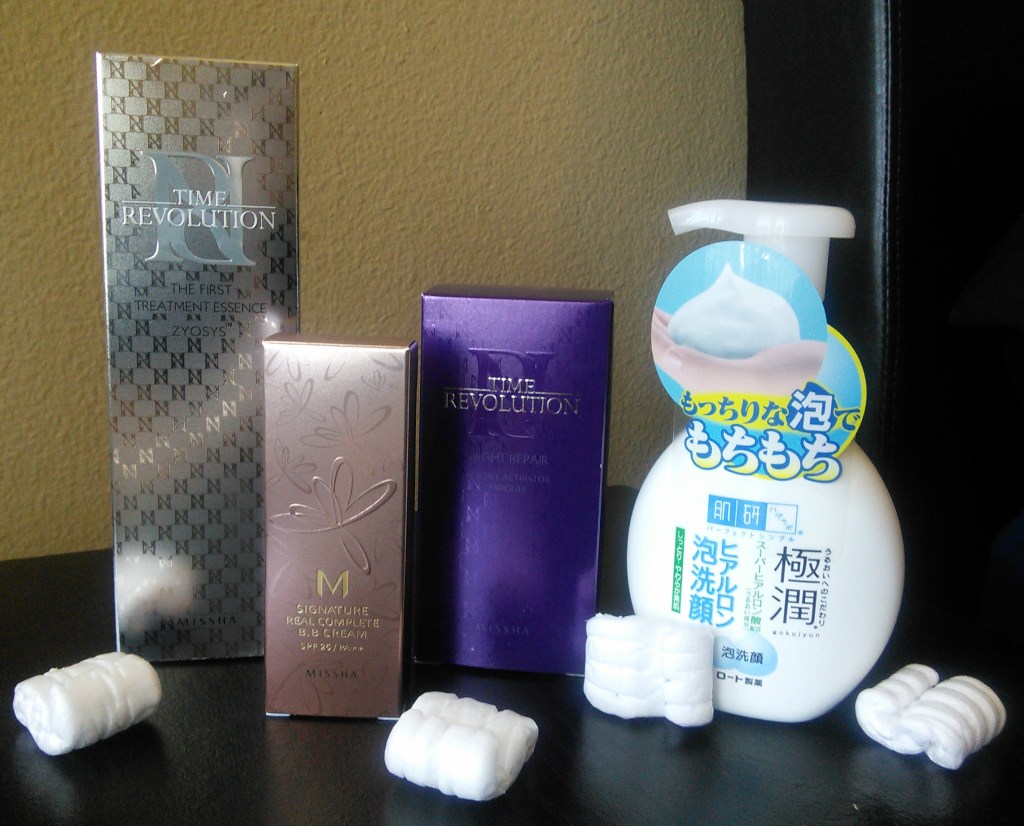
  • February’s Missha and Hada Labo Haul. Reviews Coming Soon!

    The beginner stage of the Asian skin care journey can be an expensive one. Skin care is so YMMV that it’s almost inevitable you’ll end up trying and discarding at least a few products before finding the right ones for you. For a few months early last year, I felt like I was constantly receiving packages or waiting for them to arrive. Sample sets like the kind sold by Korean cosmetics shopping sites TesterKorea and RoseRoseShop do make the trial-and-error stage a little cheaper, and cosmetics swaps (and receptive friends) are helpful for getting rid of rejects, but the simple fact is that you’ll probably end up hauling a lot. At least at first.

    It doesn’t have to stay that way if you don’t want it to, though. Once I established my routine, my online shopping decreased significantly. These days, I only end up doing one small haul a month–if that–and the majority of my hauls are just restocks of products I already use, with maybe one or two new things to try. Here’s this month’s haul, which also serves as your sneak preview of upcoming Japanese and Korean skin care reviews!

    Missha and Hada Labo haul
    Not pictured: Missha Real Essential Deep Sea Water sheet masks x3, Missha Perfect Cover BB Cream no. 23 samples x 2.

    The Missha Time Revolution First Treatment Essence and the Hada Labo Hyaluronic Acid Cleansing Foam are restocks. This will be my third bottle of FTE and my second bottle of the Hada Labo cleanser. What I’m really excited about are the Missha Time Revolution Night Repair Science Activator Ampoule (sigh–again with the excessively long product names) and the Missha M Signature Real Complete BB Cream, which was a gift with purchase. Skin and Tonics gave the ampoule a rave review, favorably comparing it to Estee Lauder’s Advanced Night Repair Serum, and called the BB cream “hands-down my favorite BB cream.” I’ve already swatched the BB cream on my jaw, and it looks like the shade I got, No. 21 Light Pink Beige, is a perfect match. Score!

    I also ordered a few of the Real Essential sheet masks. I haven’t had the best luck with Missha’s sheet masks so far–one of them somehow dried the crap out of my skin so that I had to baby it for over a week to get it back to its normal condition, and the other one I tried was about as useful as a sheet mask soaked in plain water–but I just keep trying.

    Stay tuned for reviews of all these products! Have you hauled lately? Did you get anything exciting?

  • 5 Healthy Skin Habits

    In the quest for radiantly healthy skin, it can be easy to focus too much on skin care products and not enough on skin care practices. But in reality, what we do is just as important as what we use. When it comes to specific products, YMMV, but good skin hygiene and good health habits apply to everyone. Whether you’re fighting acne or aging, follow these five tips to get the best results out of your routine.

    1. Cleanse your skin every night

    In my opinion, regularly sleeping in your makeup and/or sunscreen is one of the easiest ways to ensure that your skin care routine fails. If left on for too long–like, say, overnight–makeup and sunscreen can clog your pores and dry out your skin. Neglecting to cleanse away the bacteria, sweat, oil, dirt, and pollutants your skin collects throughout the day can also lead to even more acne woes and long-term skin damage. Finally, if you don’t cleanse and do a skin care routine at night, you’re robbing your skin every day of the opportunity to soak up actives that work to improve its health and appearance. That’s why I believe that thoroughly cleansing your skin every night is one of the most effective ways to maximize the results of your skin care efforts.

    “Okay,” some readers are saying. “I’ll get some makeup wipes and use those. Easy peasy!”

    Eh, not quite. Makeup wipes aren’t the most effective way to remove dirt and makeup. If you don’t believe me, get some makeup wipes and a cotton pad or tissue. Try to take your makeup off with the wipes. Then dampen your cotton pad or tissue with some toner or even plain water and swipe it over your face. I bet it doesn’t come away clean. On top of that, what are you going to do about the cleansing solutions in the makeup wipes? Most substances capable of removing makeup aren’t substances that you want to leave on your skin all night.

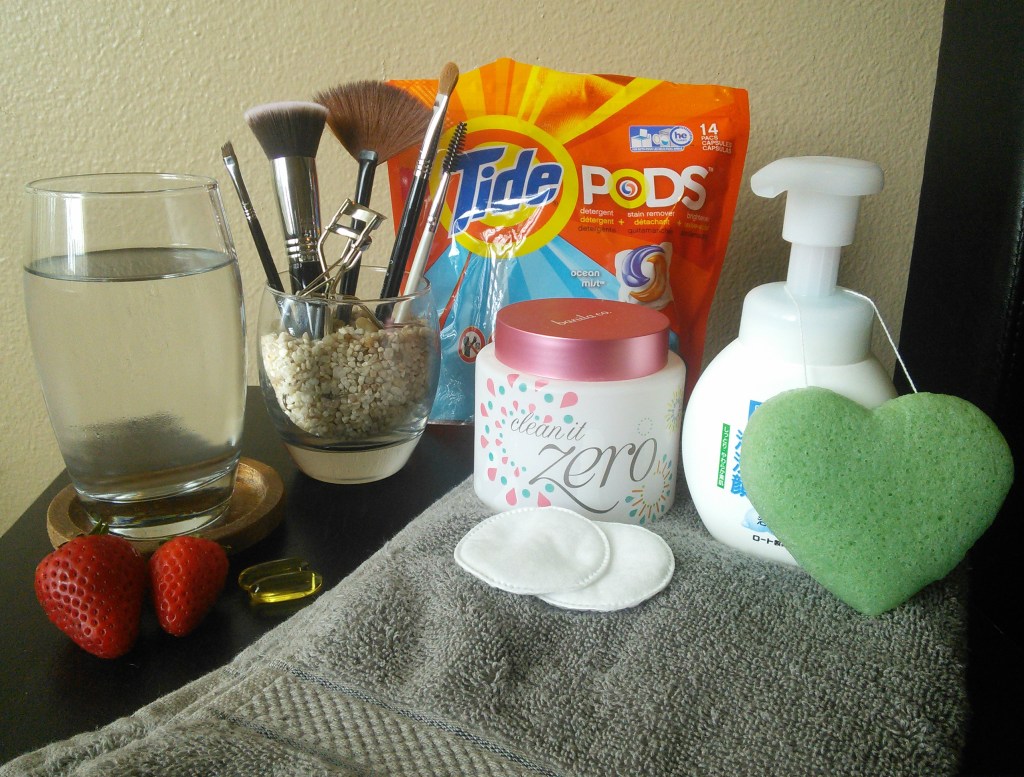
    If you wear makeup and/or sunscreen, double cleansing is the way to go. Double cleansing is the Korean skin care (or Japanese, depending on whom you ask) practice of first using an oil-based product, usually a cleansing oil or balm, to break up and lift off makeup and sunscreen, and then using a foaming cleanser to remove the rest of the makeup and oil residue. The oil helps to buffer skin against any drying effects of the foaming cleanser, and using a gentle, low pH foaming cleanser will further ensure that skin gets clean without getting stripped.

    Double cleansing is the foundation for a great skin care routine–don’t neglect it!

    2. Insist on fresh linens

    Speaking of cleanliness, don’t let dirty linens undermine your good cleansing habits. Acne starts with bacteria on your face, so your efforts to fight it won’t go very far if you dry your face on a grungy towel or sleep on a grimy pillowcase. Change out your towels twice a week. The combo of a damp towel and a warm, humid bathroom makes for great bacteria breeding conditions. Swap your pillowcases out for clean ones at least once a week, too. You may also want to cover your pillow with a fresh towel or old T-shirt every night to really protect against drool-borne germs of the night before.

    I have a tendency to take things too far, so I bought a set of hand towels that I’ve designated as “for my clean face only.” Because they’re small and only touch my face, they dry quickly, and using them only on my cleansed face–not hands or mouths or butts–cuts down on the amount of residual dirt and bacteria they might contain. I switch these towels out every two days or so and my bedclothes every time I do the laundry.

    3. Wash those hands, too

    Towels and pillowcases aren’t the only vehicles bacteria can take to your face. Your hands are perfectly suited for contaminating your skin. All day long, we’re touching things, things that probably harbor bacteria from the other times they’ve been touched by other hands or dirty hands, and then we’re touching our faces. Some of us, like me, touch our faces a lot. And if you’re a picker or a popper, those hands are also picking up bacteria from areas of your face that are already compromised and potentially spreading it around to other areas, too.

    I’m definitely not suggesting that you wash your hands 72 times a day. I’m not that much of a hand washer myself. But you should, at the very least, wash your hands before cleansing your face or beginning to apply products. And if you’re a picker or a popper, stop doing that!

    4. Clean your tools

    By now, I probably sound like an absolute clean freak. That’s not always the case, but it definitely is when we’re talking about things I use on my skin–and that includes makeup brushes. Think about it. A dirty makeup brush is applying more than just old makeup residue to your freshly cleansed skin. It’s also spreading old sebum around, and bacteria, too. If you want healthy skin with minimal breakouts, you’ll want to avoid contamination as much as you can, and that means keeping your makeup brushes reasonably clean. As an added bonus, a clean makeup brush gives a much better application than a dirty one. No more muddy colors!

    You don’t need a special brush detergent or brush-cleaning glove to keep your brushes fresh. I clean my brushes once a week with lukewarm water and a bar of baby soap. I wet the baby soap and the tip (just the tip) of the brush under the tap. I swirl the brush on the soap a few times, put the soap down, cup my palm under the running water, and swirl the brush on my palm until the water runs clear. After that, I just shake the brush out, dry and reshape it on a clean towel, and lay it down on the counter with the bristles over the sink so that it can finish drying overnight.

    5. Stay hydrated

    To get and maintain healthy skin, you’ll need to pay attention to more than just what you do on the outside. How healthy you are on the inside matters, too, and when it comes to skin, the healthiest habit you can have is the habit of hydration. If you’re dehydrated, it will show in your skin as dullness, dryness, and a loss of elasticity. Your moisturizing products won’t work as well, especially if you rely on humectants like hyaluronic acid. And any fine lines or wrinkles you have will look deeper and more obvious.

    It’s best to drink water. Drink to thirst. If you’re a toilet glancer, you can tell how hydrated you are by the color of your pee. The darker it is, the more dehydrated you are. Try to drink enough to keep your pee light yellow at the least.

    If all that pee talk is grossing you out, sorry about that. But just remember: “Water is the essence of wetness, and wetness is the essence of beauty.”

    By the way, while you’re busy hydrating, consider swallowing a fish oil capsule with that water. There’s evidence that omega-3 fatty acids, such as those found in fish, can improve skin health by encouraging cells to hold more water, leading to softer skin and a reduction in the appearance of fine lines and wrinkles. Fruits are also a great way to hydrate as well as provide antioxidants that can slow down the aging process by preventing free radical damage to cells.

    Healthy skin habits
    Everyone in my family loves strawberries. Even the chameleon.

    Does all this sound like a lot to do? It isn’t as arduous as it might sound. Once you’ve established your healthy skin habits, you’ll not only find that sticking to them becomes second nature, but also that you can’t imagine how you ever got along without them!

    What are your healthy skin habits?

  • Mizon Good Night White package copy
    I see what they’re trying to convey, but it’s just gone terribly wrong.

    Special Therapy Good Night White Sleeping Mask

    Okay, so far so good.

    Then…

    White as the snow comes onto your skin | Your ultimate skin and the purest skin will come true

    I never gave the snow permission to do that.

    Then again, if I let it do that, both my ultimate skin and the purest skin will come true, so.

    Thanks for the giggle, Mizon.

  • Star Ingredient: Hyaluronic Acid

    Crazy Snail Lady note: Updated on 6/18/15 with some information I recently learned about hyaluronic acid.

    Want to achieve plumper, firmer, smoother skin in an instant? Or just looking to relieve uncomfortably dry skin right now? Then your skin’s going to need a lot of hydration. And when it comes to hydration, hyaluronic acid is a star.

    Why hyaluronic acid?

    There are three classes of moisturizing ingredients. Occlusives do not penetrate, but rather sit atop the skin, sealing in the moisture and other active ingredients applied underneath. Emollients fill in the microscopic crevices on the outer layers of the skin, temporarily smoothing the surface. And humectants? Humectants bind water to themselves. If you want to ease dryness and get glowy, juicy skin, humectants are where it’s at.

    I consider hyaluronic acid to be the star humectant because of its incredible ability to hydrate skin. Hyaluronic acid/sodium hyaluronate and lower molecular weight variants like sodium acetylated hyaluronate and hydrolyzed hyaluronic acid (and some others, many of which are on display in products like the Hada Labo Gokujyun Premium Lotion) are capable of holding a whopping 1000x their weight in water! Whether they actually achieve their full potential in real-world settings is questionable, but their hydrating abilities are not.

    But Fiddy! you might ask. So what? What’s the point of that when most skincare products are chock full of water already?

    Here’s the thing: Without something grabbing on to them, water has this funny way of evaporating rapidly from the surface of skin instead of heading on in. What hyaluronic acid and its variants do is hold that water against your skin, keeping it there so that your skin’s natural water-grabbing mechanisms have a chance to grab it and make actual use of it. As my friend and fellow Snailcaster Chel of Holy Snails handmade skincare fame explained to me, hyaluronic acid grips the water and shoves it at your skin, shouting “TAKE IT! TAKE IT!! TAKE IT!!!” until your skin sighs, gives in, and accepts all that good H2O. Regular molecular weight hyaluronic acid does so from the surface of your skin; lower molecular weight hyaluronic acid penetrates into the extracellular matrix to do so from between the cells beneath the surface.

    In addition to its fantastic hydrating potential, hyaluronic acid may also have some cell-communicating, anti-aging abilities as well. In a podcast earlier this year, the cosmetic chemists behind The Beauty Brains revealed some surprising facts about hyaluronic acid.  For one thing, contrary to what many people in skincare communities believe, hyaluronic acid may actually be able to penetrate deep into skin despite its very large molecular size. And for another, a handful of studies demonstrate that hyaluronic acid may potentially act as a cell-communicating ingredient that may improve “cell to cell adhesion,” resulting in more taut skin, and may (may) be able to stimulate collagen production. For someone who has hyaluronic acid in nearly every step of her skincare routine, that’s fantastic news.

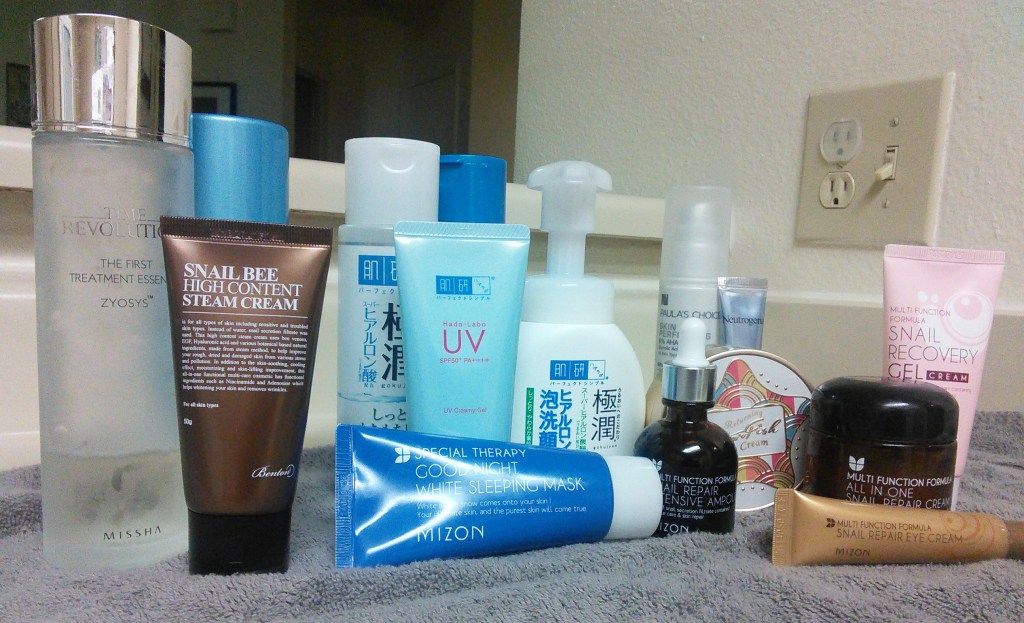
    I love hyaluronic acid and seek it out in as many skin care products as I can. Here are all of the products I use that contain hyaluronic acid or a derivative.

    Hyaluronic acid-containing Japanese and Korean skin care products
    I really, really like hyaluronic acid.
    OST C20 Original Pure Vitamin C Serum
    I forgot to include my C20 in the group shot, because it was chilling in the fridge.

    Since hyaluronic acid isn’t an exfoliant and doesn’t irritate or clog my skin, I “stack” it in my routine wherever I can. HA is naturally occurring in our tissues, but production decreases with age. Luckily, it’s a fairly common ingredient not only in Japanese and Korean skin care but also in Western products, so getting multiple doses of the good stuff isn’t much of a challenge. I’ve noticed a marked improvement in my skin’s overall texture and appearance since I started soaking it in HA.

    Hyaluronic acid tips

    HA isn’t foolproof, however. The first thing to remember is that unless you seal all that hydration into your skin at the end of your routine, moisture will escape. This is especially true if your skin’s natural moisture barrier has been compromised by harsh cleansers, scrubs, or treatments.

    To lock in HA’s benefits and keep your skin juicy and plump, make sure to layer at least a little bit of an occlusive moisturizer over your hyaluronic acid products. The moisturizer itself can contain HA (all of mine do) but needs to be primarily occlusive. If you want to be extra neurotic, like me, you can switch up your final moisturizers based on the day’s weather conditions. When the air is especially dry, I top my routine off with Benton’s steam cream, which is one of my richer moisturizers; when the weather’s nice and humid, I just swipe on a little bit of Mizon’s snail gel cream. When it’s extremely muggy, I stay inside and wallow in a puddle of sweat, whimpering into a plate of cookies.

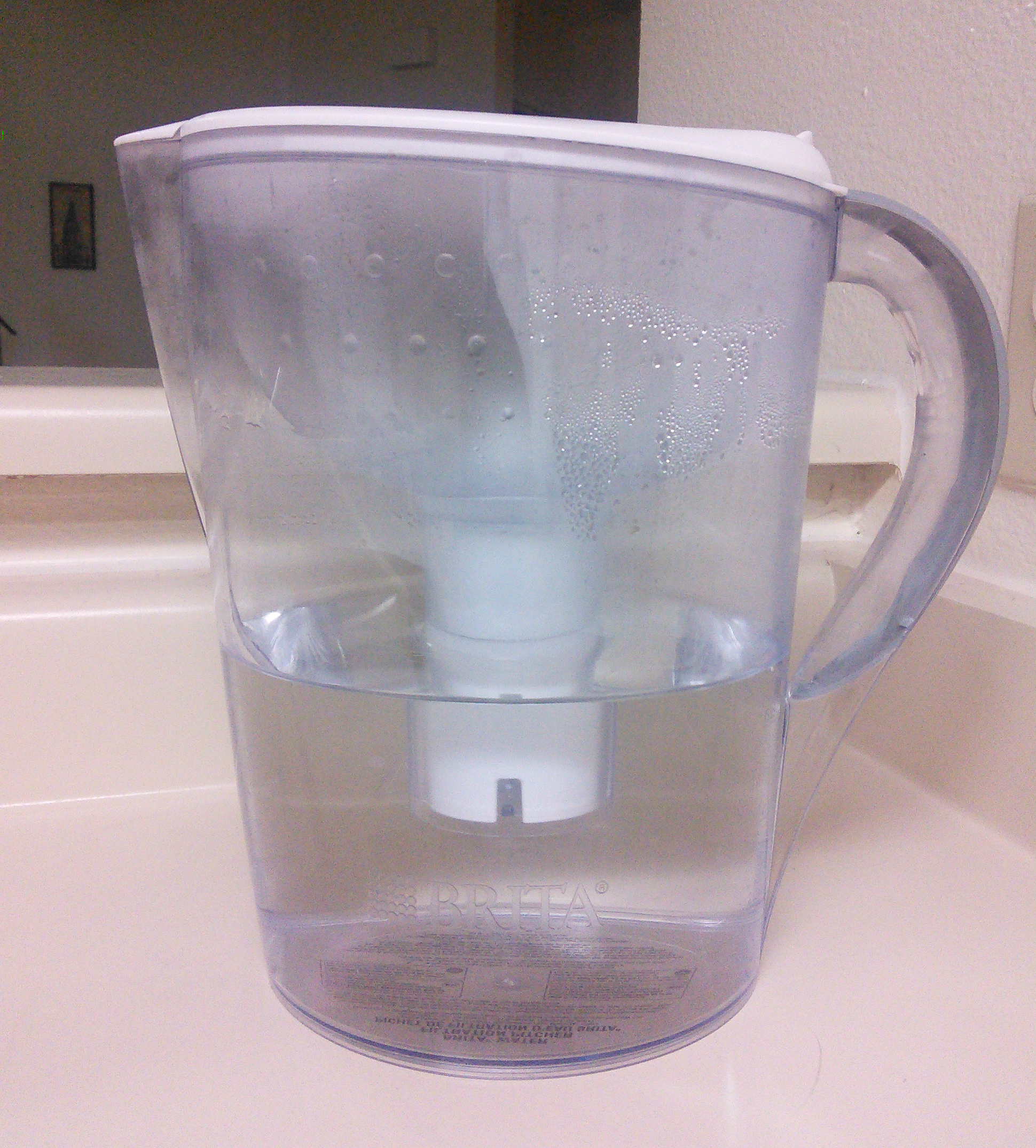
    Finally, make sure you’re also hydrating yourself from within! Drinking more water can also ease dry skin. Anecdotes are not data, but I’ve found that when I allow myself to get dehydrated, my skin condition deteriorates a little, no matter what I’m applying to it.

    Drink water for better skin
    Plus, water is good for you.

    And finally, an only slightly related rant: I’ve heard many people say that they don’t like the “dewy” look because it reads to them as greasy or sweaty. Dewy doesn’t equal the oil slick sheen of a coat of Vaseline! (At least in my opinion, and this is my blog, so I get to give my opinion.) Dewy, to me, is the natural smoothness, translucency, and radiance that really well hydrated skin has. It looks moist, but from inside. That’s the kind of dewy that a regimen of hyaluronic acid products and some attention paid to hydrating from within will provide.

    Do you use a lot of hyaluronic acid products? What are your favorites?

  • Hype Watch: Collagen

    Youthful skin contains an abundance of collagen. Collagen injections plump up and smooth away wrinkles and flatten out indented scars. So collagen in skin care products should also help fight aging, right?

    Wrong.

    Sadly, topical collagen products aren’t capable of changing anything more than the surface appearance of your skin, and what little effect they have will vanish as soon as the last of the product is washed off of your skin.

    Collagen is a protein and the main building block of the connective tissue in your body. In youthful skin, it holds everything tightly together, providing resilience and a firm, smooth texture. UV radiation accelerates the breakdown of collagen in your skin, aging it faster and leading to that loose and leathery look that lifelong tanners tend to get in middle age or earlier. If you want to slow down the aging process and prevent wrinkles, therefore, collagen is extremely important.

    Unfortunately, collagen molecules are too large to penetrate the skin. When used in topical products, they can temporarily create a tighter, smoother, and more moisturized surface appearance, but no amount of collagen creams are going to stimulate more collagen production in your skin.

    Keep that in mind as you search for your Holy Grail anti-aging products. Skin care brands all over the world sell products that feature collagen prominently on their packaging. The unspoken implication is that the collagen in those creams and lotions will somehow replace the diminishing collagen in your own. Now you know that it doesn’t work that way.

    Is collagen real or hype?

    Talk to the Hand

    Hype!

  • Review: Missha Super Aqua Oxygen Micro Visible Deep Cleanser

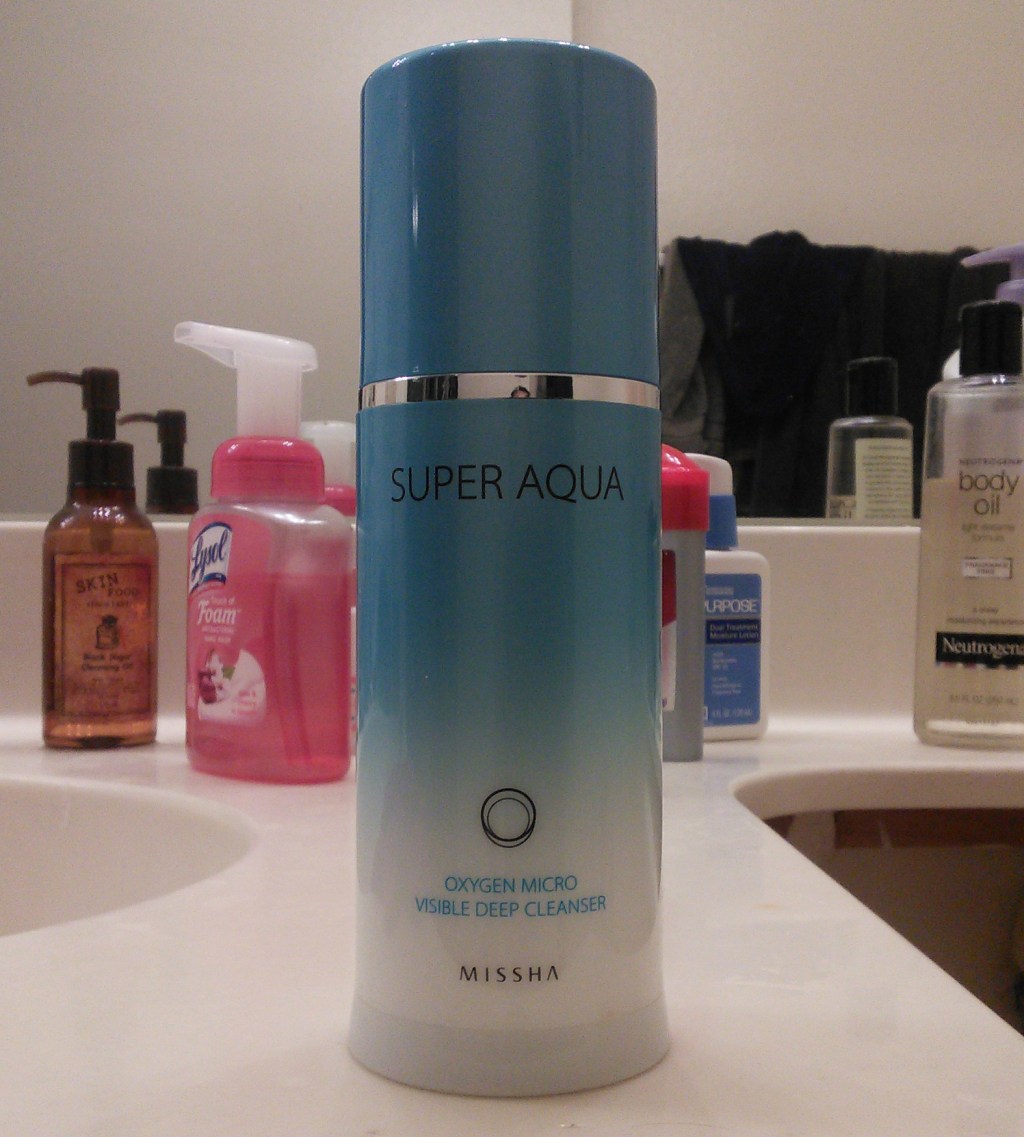
    Time for a review! Today we’ll be looking at the Missha Super Aqua Oxygen Micro Visible Deep Cleanser.

    I have a love/hate relationship with Missha. When I love their products–like the Time Revolution First Treatment Essence–I love them so much that you wouldn’t be able to pry them out of my hands if you were waving a steak in front of my face. But when I hate them–as with the Super Aqua Cell Renew Snail Gel mask–they make me want to claw my face off.

    Where does the Super Aqua Oxygen Micro Visible Deep Cleanser fall on this spectrum? And what is it with Missha and unreasonably long product names? Read on to find out the answer to the first question. I have no idea what the answer to the second question is.

    Missha Super Aqua Oxygen Micro Visible Deep Cleanser
    Bottle of Missha Super Aqua Oxygen Micro Visible Deep Cleanser

    Purpose: Missha Super Aqua Oxygen Micro Visible Deep Cleanser is a bubble cleanser designed to remove sweat, oil, dirt, and makeup from the skin.

    Do not use if: Your skin does not tolerate foaming cleansers or is sensitive or reactive to sulfates, hyaluronic acid, fragrance, or anything else in the ingredients list.

    When and how to use: In the morning or after the oil step of your double cleanse at night, spread a thin layer on dry skin. Wait about 1 minute for the product to foam up, then wet your hands and massage with either fingertips or cleansing tool. Rinse away thoroughly.

    Ingredients list: Water (Aqua), Ammonium Lauryl Sulfate, Cocamidopropyl Betaine, Acrylates Copolymer, PEG-8, Sodium Laureth Sulfate, Coco-glucoside, Methyl Perfluoroisobutyl Ether (I know I made a typo in there somewhere), Methyl Perfluorobutyl Ether, Polyhydroxystearic Acid, Isononyl Isononanoate, Ethylhexyl Isononanoate, Sodium Cocamidopropyl PG–Dimonium Chloride Phosphate, Sodium Hyaluronate, Arnica Montana Flower Extract, Artemisia Absinthium Extract, Achillea Millefolium Extract, Gentiana Lufea Root Extract, Hedera Helix (Ivy ooh a word I know!) Leaf/Stem Extract, Luffa Cylindrica Fruit Extract, Thymus Vulgaris (Thyme) Extract, Nymphaea Alba Flower Extract, Lilium Candidum Flower Extract, Sansevieria Trifasciata Leaf Extract, Sodium Palmitoyl Proline, Phenoxyethanol, Triethanolamine, Methylparaben, Fragrance (Parfum), Disodium EDTA

    Whew. That’s a long ingredients list, full of a lot of long science words. Respect to all the other bloggers who also type out product ingredient lists. Shit’s not easy. Moving on.

    Notable ingredients: Out of all those long science words, CosDNA only identified two as potential irritants or acne triggers. The pH adjuster Triethanolamine scores a 2 for acne but is so far down the ingredients list that I would consider it a nonissue–there is most likely not enough of this ingredient to have much of an effect on your skin. Higher up the list, Sodium Laureth Sulfate scores a 3 for acne and a 2 for irritation, so tread carefully and patch test if you suspect it might be a problem for you. It isn’t the only sulfate in this product, either.

    Sulfates are a controversial topic, due to the fact that they can be quite harsh and stripping and thus capable of exacerbating existing problems like acne. Some people swear off of them altogether, even seeking out sulfate-free toothpastes to prevent chin acne, while others (including much of the cosmetics industry) consider them just fine for the vast majority of users. I fall somewhere in the middle. I’ve never noticed sulfates causing me any problems, but when I switched to a sulfate-free shampoo and conditioner, I stopped shedding almost completely. Consider products that have given you issues in the past to make up your mind.

    Down in the lower half of the ingredients list, the Super Aqua Oxygen Micro Visible Deep Cleanser contains several different botanical extracts. I’m not impressed. In most cases, plant extracts in skin care seem to be used more for the way they fancify the product’s image, and in this case, their position on the list suggests that there isn’t much of any of them in there, anyway. Also rather hype-ish is the product’s claims of purifying the skin through oxygen bubble action. I’m going to guess that the actual cleansing ingredients in the product have more to do with however purer skin gets after use.

    On the plus side, Missha Super Aqua Oxygen Blah Blah Cleanser also contains Sodium Hyaluronate, the sodium salt version of hyaluronic acid, one of my favorite hydrating ingredients. I question just how much of an effect it can have, given that it’s in a wash-off cleanser, but my feeling about hydration is that your skin should take everything it can get.

    Finally, it’s important to note that Missha Oxygen Blah Blah Cleanser foams up to a pH of 5.5, which is great. pH is a critical consideration when it comes to choosing a foaming cleanser. If the pH is too high, you run the risk of damaging your skin’s natural moisture barrier, allowing moisture to escape and bacteria to infiltrate. 5.5 is pretty much perfect.

    Performance

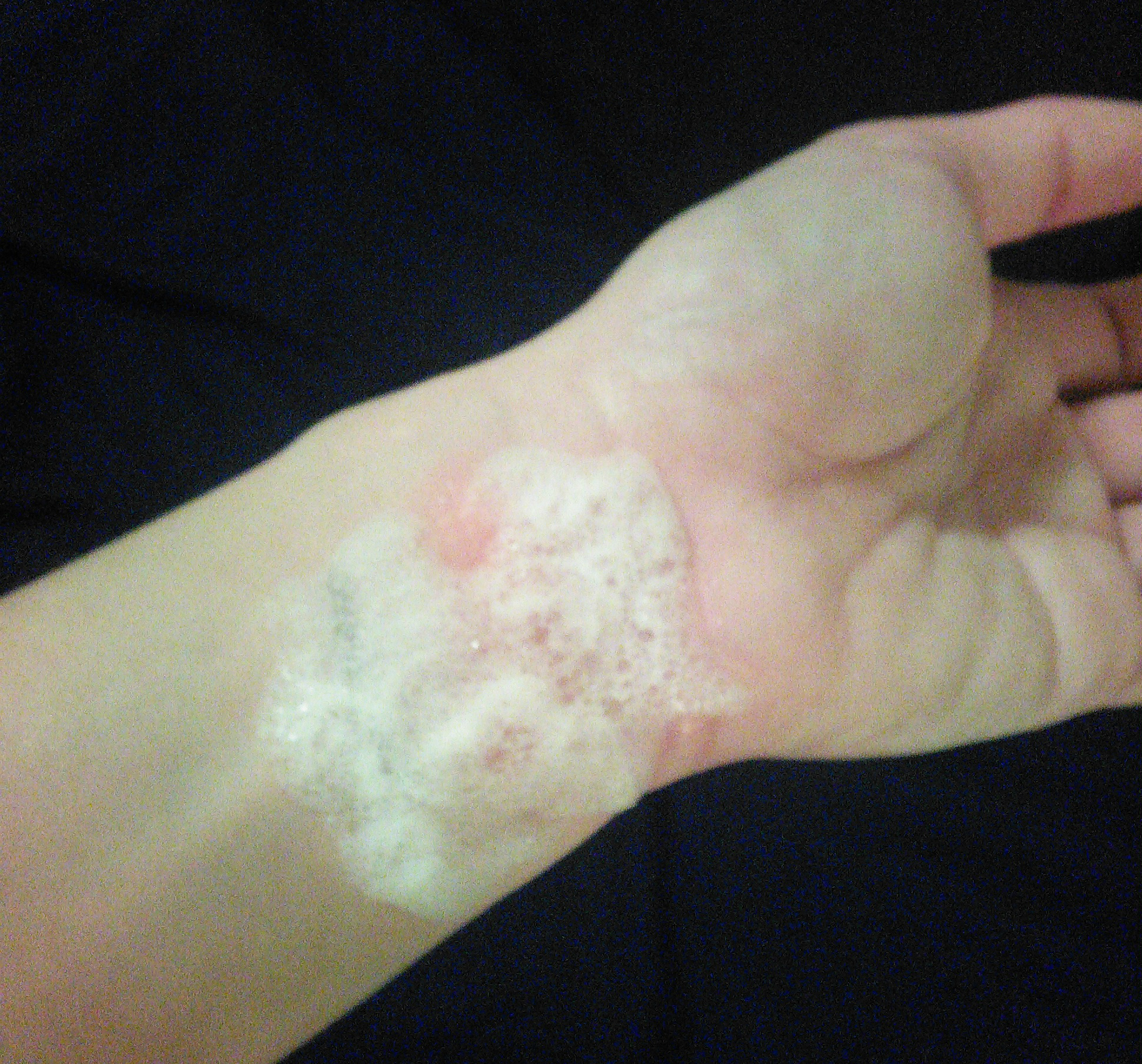
    Below, I’ve swatched Holika Holika Pro:Beauty Cheek Tok liquid blusher and a L’Oreal Infallible eyeliner on my wrist to demonstrate the cleanser’s ability to remove makeup.

    Wrist swatches for Missha Super Aqua Oxygen Micro Visible Deep Cleanser review
    This is what we’ll be hoping Missha Super Aqua Oxygen Micro Visible Deep Cleanser can remove.

    The product pumps out as a whitish gel, which you spread over dry skin.

    Missha Super Aqua Oxygen Micro Visible Deep Cleanser when first applied
    The gel is thin and easy to spread.

    After about a minute, the product will bubble up into a dry, airy white foam, and if you leave it on long enough, the bubbles will begin popping, a sensation that can be a little unnerving, but not as unnerving as the Missha penchant for upsettingly long product names.

    Foaming action of Missha bubble cleanser
    “Pop, pop, pop!” go the bubbles made by Missha Way Too Many Words Oxygen Cleanser

    When the foam has foamed, you’re ready to wet your hands or a trusty konjac sponge, massage the bubbles around a bit, and rinse clean. And while this cleanser won’t do much for waterproof makeup, it does indeed do a great job at removing less hardy cosmetics.

    After cleansing with Missha Super Aqua Oxygen Micro Visible Deep Cleanser
    Nice and clean!

    The cleanser does what it needs to do and doesn’t leave my skin feeling dry, tight, stripped, or irritated. As an added bonus, whenever I use this cleanser, the pores on my nose look markedly clearer after rinsing. The effect doesn’t last all that long, but it’s a pleasant bonus.

    Conclusion: I’ve been using this product for several months now, with no issues to report. It’s never broken me out or irritated my skin, and the only reason I’m transitioning to a new cleanser now is boredom. Well, boredom and the price point. At full price, Missha Super Aqua Wordy Name Oxygen Cleanser is $22+shipping on the Missha US website. The fact that Missha runs sales fairly frequently on their website does ease the pain a little, but it’s simply a lot to pay for a cleanser, especially one that only lasts about a month with twice-daily use.

    Rating: 4/5

    Rating scale:

    1 – This should be taken off the market.
    2 – Caused me some problems; would not buy again.
    3 – Meh. Neither great nor bad.
    4 – Pretty good. Would buy again unless I find something better.
    5 – I’ll never be in the market for a replacement unless this one is discontinued.
  • The Best Wrinkle Cream is Sunscreen

    Note from Auntie Snail: This post was updated on 4/23/2015 to reflect some new information I’ve read about effective sunscreen quantities.

    I spent most of my twenties wondering why my face was still getting tanned (sun damage) and why I was still getting dark spots on my cheeks (sun damage) even though I tried to wear a moisturizer with SPF every day and sometimes even a CC cream with SPF. Then my thirties hit, and all that SUN DAMAGE (and my one really, really misguided year working in a tanning salon and using the tanning beds after closing up several nights a week) caught up to me.

    The thing I didn’t know–and that a lot of people don’t yet know–is that when it comes to sunscreen, quantity matters. The bottle might say SPF 15, but unless you’re using at least the correct amount, you aren’t getting anywhere close to SPF 15 protection. You’re not going to get SPF 15 if you only use a few drops of your SPF 15 daily moisturizer, and you’re not going to get SPF 15 just because you dabbed on a bit of SPF 15 foundation or powder. Also: You’re not going to get SPF 15 (let alone 30, or 45, or 50) by layering on a little drop of SPF lotion here and a little swipe of SPF powder there. It doesn’t add up that way.

    If you want to prevent wrinkles and sunspots, you need to protect yourself from the sun, and if you want to protect yourself from the sun, you should be protecting yourself with adequate amounts of sunscreen every time you expose your face to the sun.

    How much sunscreen do I need?

    What’s an adequate amount of sunscreen?

    It’s a lot.

    To get the advertised amount of SPF protection on a product’s label, whether it’s foundation or moisturizer or dedicated sunscreen, you need to wear about 2 mg/square centimeter of it just for your face. Hoojoo Beauty has a great, in-depth explanation of sun protection to prevent sun damage, complete with graphs and discussion of other sunscreen technicalities, but what it boils down to is this: The general guidelines suggest that you need about 1/4 tsp of sunscreen for your face. These calculations were done using the facial surface area of men whose face sizes are in the 95th percentile, however. It is entirely possible that you could need less due to having a small face. In my opinion, though, it’s better to be safe than sorry (and sun damaged), and there isn’t that much variance in face sizes unless you’ve got a gigantic giant face or a teeny tiny itty witty bitty little pixie face, but keep it in mind and don’t get stressed if you think you’ve put on less.

    1/4 tsp can really seem like a lot the first few times. Get a 1/4 tsp measuring spoon and measure out any kind of lotion you have on hand.

    See?

    I’m used to it by now, so I just eyeball about a nickel-sized amount every day and apply it at the end of my morning skincare routine. I rub it between my hands to distribute it on my palms, then swipe it over my face, avoiding my eyes, rub it in a bit, then let it absorb for about 15 minutes or so.

    Unfortunately, many people find that the sunscreens available to them at the drugstore just aren’t pleasant to use in the correct quantities. Thanks in part to the FDA’s slowness at approving newer sunscreen ingredients and in part to Western culture’s appreciation of a good tan, US sunscreen formulations tend to be less advanced and less cosmetically elegant than their counterparts manufactured by the Japanese and Korean skin care industries. Mass-market US sunscreens are often thick, greasy-feeling, and smell strongly of sunscreen. They also often leave a chalky white cast that just really doesn’t look right on anyone who’s not currently performing as a geisha.

    This is why many Asian skin care fans choose to import Japanese and Korean sunscreens by buying them online or having friends and family in Asia ship the good stuff over. Asian sunscreens are generally more pleasant to use in the recommended quantities: less greasy (some are even strongly mattifying), with less white cast or no white cast at all, and without that distinctive sunscreen smell that screams “I just went to the pool and my mom dumped a bottle of Coppertone on me.” I’m no expert, but I’m guessing that the reason Japanese and Korean sunscreens are so much better is due at least in part to the fanatical East Asian love of fair skin, which is in direct conflict with many Asian complexions’ tendency to tan easily.

    Another reason to look at Asian sunscreens is the fact that UVA protection is measured and printed on the labels. You’ll find it expressed as a PA rating with one or more plus signs after it, from PA+ up to PA++++.

    UVA protection and PA ratings: Why do they matter?

    In the US, sunscreens only need to show their SPF rating. SPF is a metric used to measure a sunscreen’s level of UVB protection. UVB rays are responsible for tanning, burning, and skin cancer, so SPF certainly is important. But UVA is also important, and apart from the “broad spectrum” designation that shows that a sunscreen has some UVA protection, US sunscreens don’t give any indication of just how much UVA protection they provide.

    Like UVB rays, UVA rays cause skin cancer. They’re also a prime contributor to sun damage and photoaging, so if you want to prevent wrinkles and slow down your skin’s aging process, you absolutely must have a good level of UVA protection. Also, UVA is still present in bad weather, since UVA rays penetrate cloud cover, so keep that in mind when you’re tempted to skip the sunscreen because it’s raining out.

    Hoojoo Beauty explains UV rays in more depth here. For our purposes, the key takeaway should be to look at the PA rating on the Japanese or Korean sunscreen bottle. More pluses equals more protection. Japanese sunscreens go up to PA++++; Korean sunscreens only label up to PA+++, though that is more thanks to regulatory reasons and not because there are no Korean sunscreens with PA++++-equivalent protection. Since there’s not really a reliable way of knowing which Korean sunscreens are labeled PA+++ but actually equivalent to PA++++, however, I stick to Japanese sunscreens like Biore and Hada Labo for now. (Also, Biore and Hada Labo sunscreens are easily found on Amazon.)

    How do the different levels of PA protection break down? Here’s my take:

    • PA+: I wouldn’t wear this unless it was my last option and the zombie apocalypse had already happened so the state of my skin doesn’t matter anymore because I’m about to die. (Though I would like to know how Glenn is maintaining his smooth and undamaged skin in those zombie-riddled Atlanta summers.)
    • PA++: I guess it’s okay, if I’m in a pinch and have literally no higher sunscreen options to choose from. I’d definitely be sticking to the shade as much as possible.
    • PA+++: This is decent. I’d be afraid that the sunscreen I have is on the lower end of the spectrum, though, so I still avoid this.
    • PA++++: Ride or die.

    To sum it all up: If you want to prevent wrinkles, don’t rely on half-assed measures like a pearl-sized amount of SPF lotion. Cover your face in 1/4 tsp of a high-SPF, high-PA sunscreen every, rain or shine. I’ve been doing that for over a year now, and my skin condition has improved by leaps and bounds, with no new sun damage as far as I can see, while the rest of my routine assists in repairing the old sun damage I accumulated during my Lost Decade.

    And don’t forget to wear your shades! They’re the easiest way to prevent sunspots around your eyes and crow’s feet from squinting in bright light.

    Sunscreen prevents wrinkles
    Sun can’t hurt me when I’ve got my PA++++ sunscreen and shades on.

    Do you wear sunscreen every day? What’s your favorite brand?

  • Sheet Mask 101 and My Beauty Diary Brand Spotlight

    It seems appropriate to use the first post of my Asian skin care blog to talk about the product that got me hooked on Asian skin care in the first place. Sheet masks are the gateway drug for many Asian skin care fanatics: their results might be temporary, but they’re also instant. When you want to revive a complexion that’s looking tired and dull, instant results are hard to resist.

    What are sheet masks and what do they do?

    Sheet masks are ovals of cotton large enough to cover the face, with cutouts for the eyes, nose, and mouth. They look freakish and feel like heaven, especially if chilled before use. Typically individually packaged, they come soaked with essence and are meant for use in your evening routine, after cleansing and before moisturizing creams. All you have to do is unfold the mask, fit it over your face, and leave it on for however long the instructions specify (or longer, which is what I like to do). I like to pass the time playing “serial killer wearing the face of my latest victim” and scaring my family while I wait.

    Sheet masks encourage maximum absorption of the essence both by preventing it from evaporating into the air and by keeping it in contact with your skin in a larger dose and for a longer period of time than daily products allow.

    But what does that essence do? If you believe the claims on the packages, sheet masks can do just about anything. In my experience, they’re primarily useful for intense hydration and temporary brightening. Sheet masks are also an affordable indulgence, with some high-quality masks available for around $1 or $2 USD per mask. Having a variety on hand helps to spice up your skin care routine. It’s no wonder that a sheet mask is often the first step towards an Asian skin care addiction.

    In my opinion, the ultimate Asian skin care gateway drug comes from Taiwanese brand My Beauty Diary, which specializes in sheet masks.

    MBD Imperial Bird's Nest and Black Pearl sheet masks
    My Beauty Diary sheet masks in Imperial Bird’s Nest and Black Pearl

    What’s So Special about My Beauty Diary?

    Out of all the sheet mask brands I’ve tried, from Lululun to Missha, My Beauty Diary has been the most consistently effective and reliably pleasant to use. By far. I have tried about a dozen MBD masks and enjoyed good results from all but one–and the one that failed for me contained an ingredient, topical collagen, which I later realized irritates my skin but is fine for many other people.

    The secret to MBD’s success (at least on my skin) is the basic formula upon which they build their essences. Heavy on the glycerin and hyaluronic acid, the MBD essence hydrates like crazy but doesn’t leave a sticky or oily residue the way some other sheet masks do. Plant extracts add extra anti-inflammatory, antioxidant, and moisturizing powers to each essence. After using a My Beauty Diary mask, my skin always looks and feels incredibly smooth, soft, even-toned, and dewy. You can almost see the hydration plumping up every layer of skin from within.

    MBD masks come in an assortment of “flavors,”* named after each mask’s star ingredient, and address a range of skin issues. Some claim to hydrate dry skin, others to clarify oily skin. You can find masks that promise to tighten up sagging skin or brighten up lackluster complexions. The company also makes limited edition masks and, if you can’t commit to a full-size box of a single flavor, variety packs so you can sample several.

    They sound great, right? Plenty of people agree, enough to make My Beauty Diary one of the most popular sheet mask brands around. They’ve broken out of the confines of Asian supermarkets and established a presence in the warehouses of major retailers, including Amazon (affiliate link) and even Walmart.com! Online, a box of 10 MBD masks usually costs about $14, a decent deal considering that most people will only use a mask once or twice a week.

    The best My Beauty Diary masks

    The MBD masks I find myself recommending to people most frequently are the two pictured in this post: Imperial Bird’s Nest, a favorite over at the excellent Skin and Tonics skin care blog, and Black Pearl, which was the first MBD mask I ever tried. Both provide that signature MBD hydration. Imperial Bird’s Nest is nourishing, soothing, zit-shrinking, and redness-reducing. Black Pearl produces an intense brightening effect, giving a radiance that lasts through the next day. The morning after I use either of these masks, I wake up absolutely glowing–a true #WokeUpLikeDis moment. After years of disappointment caused by overpriced masks that did either nothing or made my skin worse, it’s refreshing to find products that do what they’re supposed to do, every time.

    Have you tried any MBD masks? Which are your favorites?

    * Do not attempt to eat.