• Productivity in the Time of Coronavirus: Work from Home Tips for Newly Appointed Remote Workers

    Right now, much of the world is fucked up. The COVID-19 global pandemic has turned our lives upside down (or at least it feels that way to me). The empty shelves at the grocery store sent me into a silent emotional meltdown the first time I saw them, and I know I’m not the only one.

    As the infection and fatality numbers continue to rise in many of our countries, the best thing most of us can do is practice social distancing and respect the fact that even if we personally aren’t high-risk, others are. Taking precautions to limit our chances of spreading the virus helps to protect the vulnerable, which is why regional and national governments have been implementing emergency restrictions on public gathering. Many companies have stepped up by allowing employees to work from home. Based on current projections, at least in the US and Canada, we might be here a while. That brings us to this blog post.

    Working from home is going to be a new experience for a lot of you. It’s not always easy, either. I’ve been fortunate enough to work from home full-time since 2013, so I’ve got my personal routine down, with lots of tips to share. I also happen to know many other full-time remote workers, who’ve contributed their thoughts and tips to this post. Let’s get productive while staying healthy and socially distanced!

    Working from home: Your workspace

    So. Your office is now at home. That means that it’s time to designate a space in your home as your office, if at all possible.

    Our brains tend to wire themselves around our habits, linking specific locations with specific activities and more efficiently shifting into readiness for those activities when we enter the locations we associate with them. That’s why sleep experts recommend that we only use our beds for sleep and adult fun times, to train our brains to be ready for sleep (or adult fun times) when we get in bed. It’s also why trying to work outside of the workspace we’re accustomed to can be a challenge.

    Designating a workspace in your home is the first step to rewiring your brain for the new current reality. Ideally, you’d be able to dedicate an entire room or at least a desk as your new home office. To establish this as Your Workspace, set it up as such. This is not a place for stacks of household bills, grocery lists, the kids’ homework projects, or anything else that will remind you that you are working from home. Clear away as many reminders of domesticity as you can. “Creating a physical delimitation of where you work within your home really helps separate work time from the rest of your life,” says Mariève Inoue, freelance beauty journalist and translator (and amazing illustrator) at By Minoue and @by.minoue.

    Set yourself up as much as you can for success. Stick with “wired Internet—do not play with WiFi” if you can help it, says Tracy Robey, a Renaissance historian, journalist, and beauty blogger whose productivity powerhouse status always awes the rest of us in the Snailcast group chat. In addition, Tracy suggests “a bed for your cat (if you have one) on your desk so they let you work” as well as “a computer that’s fast enough to power like…NASA.”

    Not everyone now working from home will have the luxury of a full home office or even a spare desk, however. Over on my Instagram, several of you asked what to do if you can’t set up a physical workspace.

    The lack of a settled, dedicated workspace in your home doesn’t have to be a productivity killer. Instead, find other ways to establish your work routine and boundaries. I actually do most of my work from a corner of our dining table, because a single income in a high cost of living coastal area doesn’t really buy me an extra room, and I prefer to use the one free space in my place for yoga instead.

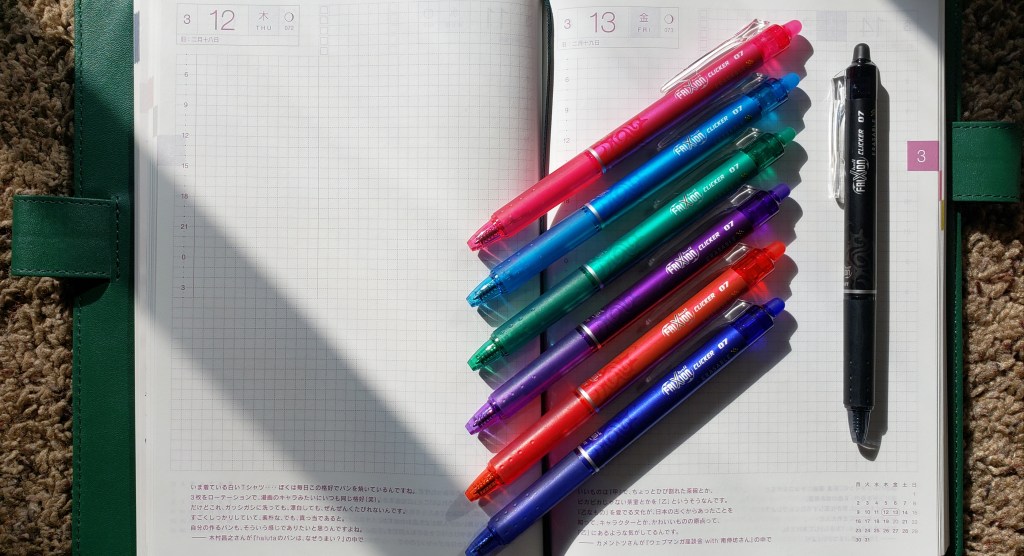
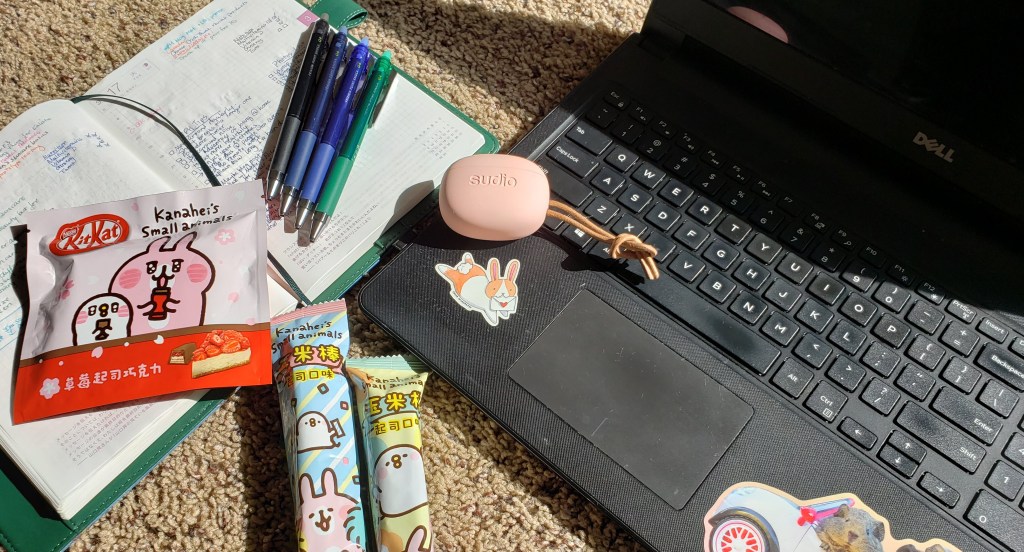
    What I’ve done is make a work “kit”. I keep it handy so that I can have it with me whether I’m at the table or sitting on the sofa. My kit contains my Hobonichi planner and pens, my phone and charger, my wireless headphones, sometimes some snacks, and whatever products I’m currently tasked with writing about. Yours will look different, but the concept remains the same. Keep your kit in a small basket or similar container, along with your laptop. This is now your office.

    Have pens, will travel. And by the way, these 0.4mm Pilot Frixion Point Knock erasable gel pens that I was gifted from JetPens are incredible. As are the Piske and Usagi corn sticks a friend brought me from Taiwan.

    One important caveat for those of you with limited options: the bedroom should be the last resort. As freelance writer and beauty blogger Ali from Queen of Wrong Style put it, “If you can help it, don’t work in your bedroom. I did this the first several years I worked remotely and it started to feel like I couldn’t escape my work because I used my bedroom as an office.” Associating your bedroom with work can inadvertently train your brain not to relax fully there. Conversely, it can also reduce your focus and energy, thanks to the temptations of the warm cozy bed.

    Working from home: Creating a productivity- and creativity-boosting routine

    Establishing a workspace or work kit is only the first step to rewiring your brain for maximum productivity and creativity during your stint as a remote worker. Equally critical are the habits you build to delineate the beginning and end of your workday.

    It’s easier when you work outside the home. You get dressed, leave the house, commute to your workplace, and settle down at your desk. Those physical movements and actions are a daily ritual that tells your brain it’s work time. A two-second commute doesn’t offer quite the same automatic delineation between work and home.

    As with skincare, productivity is very YMMV. The specifics of what you do to tell yourself that you’re now in work mode will vary from person to person. What won’t vary is the effectiveness of having a set pre-work ritual to get you into work mode.

    Many remote workers suggest getting dressed as if for the office, even if the office is at home and no one will see you due to Social Isolation. My number one beeb Sean, a NYC art director, told me that “when I have to work I like to get dressed. Easier to work if you’re not in PJs.” Many others concur.

    On the other hand, I personally like to be as comfortable as possible when I’m working. That means no binding, restrictive clothes. (Maybe my problem is my preference for the look of binding, restrictive clothes?) Certainly no bras if no one’s going to see the headlights anyway. “Don’t wear pants unless your chair is sweaty,” says Cat Cactus, the blogger behind Snow White and the Asian Pear, who worked from home full-time for several years.

    So I don’t get dressed. I do, however, always wash my face, apply skincare, and do light makeup (brows and blush usually), even if I’m expecting to stay in for the vast majority of the day. Then I spend a few minutes reviewing the day’s page in my planner so that my task list is fresh in my mind. This ritual gets me out of lounging mode and into “sane and productive member of society” mode.

    Nicole Hopkins, a freelance writer who blogs about beauty and yoga over at Ms Merriam (and who is a founding member of the No Pants No Bra Work From Home Club with me and Cat), shared her work prep routine:

    It’s especially helpful for days that I’m feeling overwhelmed by the amount of work I have to do or just really not feeling it. I set up my computer screen with whatever work I’m going to be doing and close everything else, then set up my Pomodoro timer. I silence my phone and put it out of sight, then take about 20 seconds to just do a couple of deep breaths and get in a headspace to be productive. Just doing that quick couple of minutes more than doubled my productivity.

    Speaking of Pomodoro timers, using this simple time management system has increased my productivity massively over the years. I’ve found it helpful for boosting motivation, creativity, and overall output. It’s also a fantastic procrastination killer. While it may not be feasible for remote workers bound to customer or client calls or frequent meetings, it works great for solitary tasks.

    The Pomodoro technique is simple. Procrastination often results from dread of a task, typically stemming from how long we think it’s going to take or how complex it is. Similarly to how bullet journaling helps us by breaking down large projects into smaller and more manageable tasks, Pomodoro timers break down the workday into smaller and more manageable chunks. The method involves working in short bursts (20-25 minutes generally), with five-minute breaks in between and a longer break after several of the short work sessions are completed.

    It’s amazing. Knowing that you’ll only have to work on something for less than half an hour and then you’ll get a break is often enough to clear away the dread and get you to work. There are desktop and mobile apps to handle the timer aspect—I use the Pomodoro Timer Pro app.

    Clean and simple.

    If possible, also try to block out the ambient noise of your home with some background noise. Preferences vary here–I like the gentle sounds of the Hogwarts Library. Rachel @noonatown, who has been telecommuting full-time for about six years, uses standard white noise to improve focus. On the other hand, her husband, who’s been working from home for 12 years, prefers podcasts and music while working. And video game soundtracks are amazing focus boosters, since that’s exactly what they’re composed for.

    Between your start-of-the-workday ritual, productivity hacks like a Pomodoro timer, and some good background noise to shut out your domestic surroundings, you should be better equipped now to get the most out of your home-based workday. But that’s just the beginning.

    Encouraging productivity and balance with a consistent schedule

    Many remote workers struggle with maintaining a healthy separation between work time and leisure time. I’ve definitely had that problem. When your office is in view of your sofa and your sofa is in view of your office, it’s easy to make yourself too available to work even outside of your regular business hours, which can be detrimental to both mental health and family relationships. If you’re not feeling particularly engaged with your work, the converse can be just as true: being at home presents many temptations to step away from the desk and not come back.

    If your job requires you to adhere to a set schedule while working from home, that makes things simpler. You know your start time, your break time, and your end time. Commit to showing up on time and ready to work–and commit to walking away at the end of your shift. Make it clear to anyone you share your home with that in between your start and end times, you are working and should be treated as if you aren’t home as much as possible.

    Make it equally clear to yourself that once your workday is done, you are not working and don’t need to go back to your workspace until your next shift begins. If possible, leave your workspace altogether and don’t come back until the next day. Alternatively, put your work kit away. I also like to finish the workday by reviewing my planner and creating my task list for the next day.

    If your job is relaxed in terms of scheduling, with expectations centered around the completion of deliverables rather than the logging of hours, you’ll have to put more effort into establishing your work-life balance. I strongly suggest you set yourself a consistent workday schedule anyway, based on the number of hours you estimate you’ll need each day to complete your tasks. Habit is a powerful thing. The more you can get into the habit of sitting down to work at X time and expecting to stay there until either Y time or until you’ve completed your tasks for the day, the more efficient you’ll be. Otherwise, it’s too easy to start sliding down the slippery slope of starting a little later every day until you’re fully on Quarantine Time and chained to your desk until midnight.

    Choose rewards for yourself to encourage punctuality and productivity. They don’t have to be huge, but they should be something you look forward to enough to earn them. Maybe you’ll order yourself a box of sheet masks after starting on time for a full week; maybe you’ll give yourself a Lindt chocolate truffle egg for each day you complete all your tasks. (Did you know those are a thing? I didn’t before, but I do now. They’re delicious.)

    Staying alert and healthy while working from home

    Several Instagram followers asked me how they can avoid sluggishness and the temptation to nap during the day, especially if they’re struggling with depression already. These are struggles I’ve had too. I’ve developed several mechanisms to prevent them.

    The most helpful trick I’ve found is to stay physically active during the day. Remember those short and long breaks bestowed by the Pomodoro technique? I use those to get up and move around, taking a couple of minutes out of my chair and away from my desk. I’ll often go look out the window or step onto the patio for some sunlight and fresh air. An excessively sedentary lifestyle is detrimental to both physical and mental health, so any movement helps.

    I also often stretch. One major benefit of working from home is that you don’t have to worry about coworkers witnessing your stretch breaks. I find that stretching my hamstrings with standing or seated forward folds and my hip flexors with deep lunges helps prevent lower back tightness. Upper back and shoulder stretches also keep my back from turning into one massive sheet of pain by the end of the day. As a bonus, the effort and sensation of stretching wakes me up when I’m feeling sleepy.

    I’ve got a personal list of helpful stretches for my particular back problems, which I mostly learned from the Daily Yoga app that I use. Daily Yoga even has an easy office yoga program to help counteract computer back and desk legs.

    They also run frequent sales and have a 7-day free trial that unlocks all the videos and Gold Pro subscription features.

    I follow some Instagram physical therapists. @dr_jacobpt and @joetherapy post super helpful video demos of their recommended exercises and provide great explanations–check them out if you need ideas.

    Making sure to move around regularly during your workday counteracts sluggishness and fatigue, but there are other things you can do, too. Many people find that limited food options at work cause them to eat unhealthily. Taking advantage of your full kitchen for your snacks and lunch can give you a leg up. I know I put Kit Kats and cartoon character corn sticks in my work kit photo, but being at home also means I have access to all the fresh meat and produce in my fridge to make healthy meals that won’t leave me drooping after lunch.

    Try not to rely on caffeine too much if you can help it. That can disrupt your sleep at night, making you feel progressively worse and more dependent on caffeine as time goes on.

    Having fun working from home

    Until now, we’ve been pretty serious about establishing good professional work habits and environment. But let’s face it–you’re working from home. There is a flexibility inherent in working from home, and as long as you’ve established your baseline productive work habits, you should take advantage of it!

    Earlier, I mentioned establishing a set work start and end time even if you’re not on a shift schedule. I never said it has to be 8-5 or 9-6 or anything like that. If you’re naturally more nocturnal and you don’t need to be present in the mornings specifically, feel free to play around with your schedule, starting later and ending later than standard business hours if you feel it would suit you more.

    Unless I have meetings in the morning, I personally like to start about 11. If you naturally get up earlier, meanwhile, you could always start earlier and end earlier, leaving yourself with a lot of the day free afterwards. I also build a couple of longer breaks into my day, rather than just a half hour lunch; the longer breaks are for making meals and doing things with my son. Then I just end my workday later in the evening.

    Sheet mask at your desk if you want. Hell, do entire skincare routines at your desk if you want. Give yourself an exercise break over lunch. Within the limitations of Social Isolation, you can find plenty of freedom to craft a workday that perfectly suits your needs.

    Sometimes I do multiple masks at my desk in a row. The cold wet mask also helps keep me awake if I feel groggy.

    And try to stay positive overall. There’s definitely a lot of internal screaming in my head, and plenty of external screaming in the group chats I keep open with friends so we can connect and have some adult human interaction and fresh cat memes throughout the day, but at the end of the day, those of us able to work from home are very lucky and very privileged to do so.

    As a final note, several readers asked what they can do to help support loved ones who are not able to work from home–first responders, medical personnel, and others in positions deemed essential. I think finding ways to help reduce the time they need to spend away from home outside of their jobs is a great place to start.

    Offer to pick up groceries and household supplies for them when you’re doing a supply run or online order for your household if you’re in a position to do so. You can still minimize social contact by agreeing on a pickup time and leaving their items by your door or in some other place they can access at that time. Keep in touch and check on them via text or phone–not just their physical health but their mental health as well. And simply find ways to be a friend (or sister or brother or whatever your relationship is) whenever you can, in whatever ways that means to you.

    We really will get through this.

    These times are insane. My head spins on a more or less constant basis at the speed with which life flipped upside down here in the States, where I live. But I do believe we will get through this somehow. The more we adhere to best practices for keeping ourselves, our families, and our fellow humans safe and healthy, the more likely it is that we’ll get through this with society fairly intact, and sooner rather than later. We may even come out of this with some better habits than before.

    Be kind to yourself. Give yourself space and permission to fall apart if you need to. Just remember to catch yourself if you’re falling into real despair.

    If you need someone to talk to, even just to vent about the state of the world or the state of your pantry or toilet paper stash, and you don’t feel like you have anyone to turn to, please find me on Instagram and DM me! I try to get through most DM requests when I have spare time and I would be happy and honored to listen and help if I can. I’m also fully on Quarantine Time now and find myself waking up in the middle of the night for an hour or more, so that’s extra time I’ll probably use to field messages anyway.

    I love you guys. Be healthy and safe and do your best to stay sane!
  • Guest Post: A Visit to the Sulwhasoo Spa in Hong Kong
    Note from Fiddy: Today’s post is brought to you by my friend Karen. Karen recently visited the Sulwhasoo Beauty Lounge in Hong Kong, and I wanted to share her experience. Enjoy!

    Hi hi! I’m Karen, otherwise known as @skin_karen on Instagram. I recently received a facial treatment at a Sulwhasoo Spa in Hong Kong, and Jude thought it would be cool for me to write about my experience!

    Awww she’s so cute :3
    Sulwhasoo has Spas and Beauty Lounges. Spas have full body treatments as well as facial treatments. Beauty Lounges have facial treatments only, although there is an option for stomach treatment add-ons during your facial. There are two Spas and two Beauty Lounges in Hong Kong. I went to the Sulwhasoo Beauty Lounge in Times Square, Causeway Bay. Since I went to a Beauty Lounge, I will talk about that experience. Note that since this was in Hong Kong, the estheticians speak Cantonese. I have the advantage of speaking and understanding Cantonese, so I was able to ask questions. I probably wouldn’t have been able to do this in Korea.

    Bookings

    There’s really no way to book online, and at the location I went to, you can’t just go up and make an appointment in person, either. It’s best to have WhatsApp, since that’s how most HKers communicate. There’s a security guard by the elevator to make sure you have an appointment. I ended up emailing customer service, gave them my WhatsApp number, and the Sulwhasoo Beauty Lounge contacted me. I told them what dates worked, they gave me a time, and that’s that! Fairly painless!

    Arrival

    I went upstairs to the 15th floor. I actually walked into the Spa first, but they directed me to the Beauty Lounge. Upon arrival, they greeted me, asked for my name, and offered me a beverage. While I sat down and enjoyed my tea, they went over the various facial treatments. I originally wanted to do the Plum Blossom Vitalizing Treatment using their Bloomstay Line. However, I told the estheticians that I had dry skin and have been flying on airplanes, so we decided to go with the Ginseng Rejuvenating Treatment.

    All ready for a Luxury Hanbang Experience.

    The Facial

    The esthetician, we’ll call her H, led me to the room, helped me change my shoes to slippers, gave me a robe, and showed me the closet and the sink, where I could refresh myself after the treatment. H left me to change. When I was ready, she helped me onto the bed (it was heated 👌) and got started.

    H started with the first cleanse, using the Gentle Cleansing Oil. It was already so relaxing as soon as she started massaging the product onto my face. She really took her time to massage the product into my face. After removing the oil, she did a second cleanse using the Gentle Cleansing Foam. Again, H really took the time to massage the product onto my face.

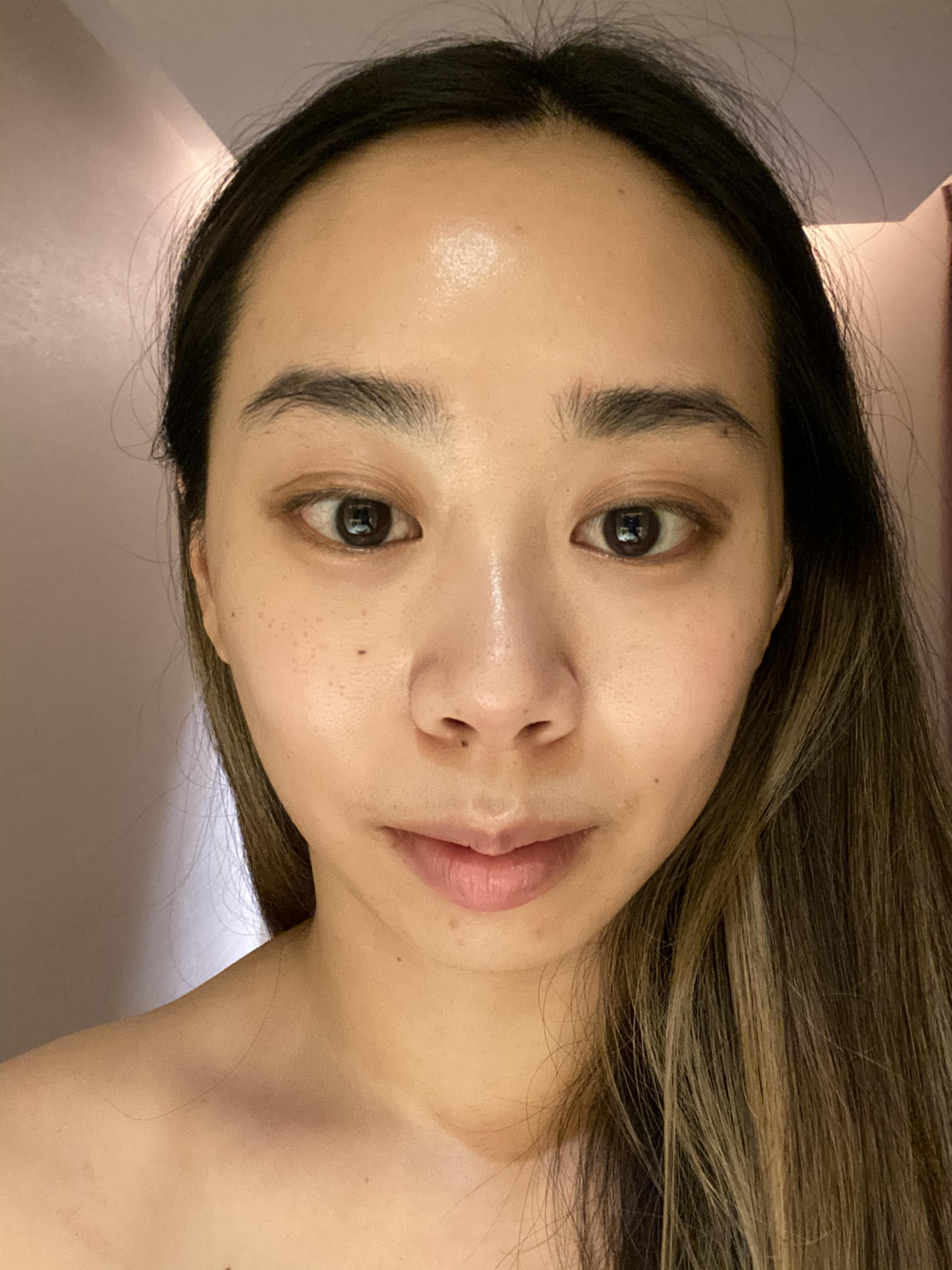
    After cleansing, H gave me a hand mirror and talked me through my skin. My skin overall was not too bad. My forehead had enlarged pores. My nose had some clogs, and the pores near my nose were also enlarged. Sallow complexion and some redness on the cheeks. My chin area and neck was a little puffy due to water retention.

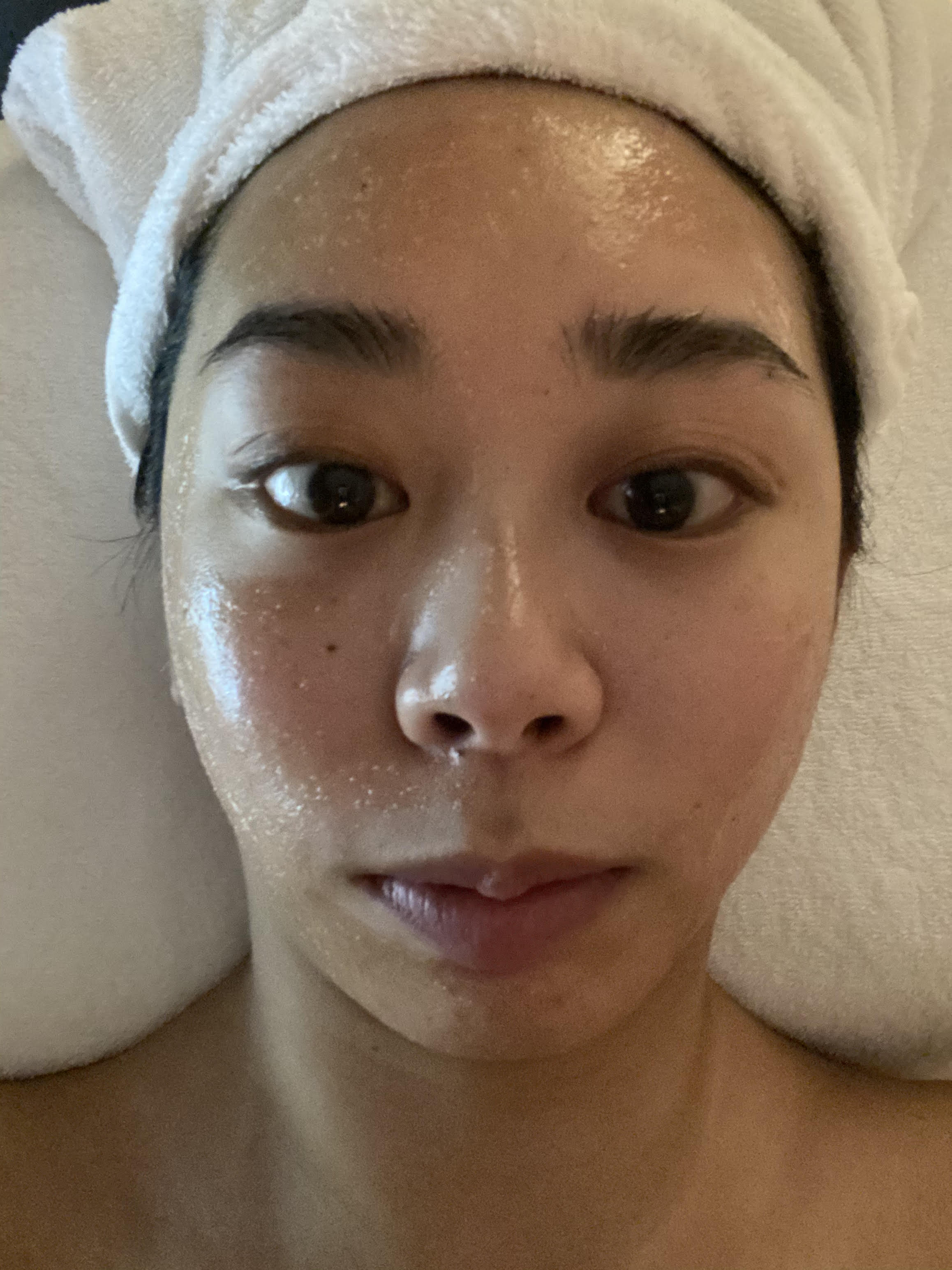
    Before starting, H held some essential oil (Eucalyptus?) and had me take deep breaths in and out. This really helped set the mood. Afterwards, H used the Snowise Brightening Exfoliating Mask and steamed my face.

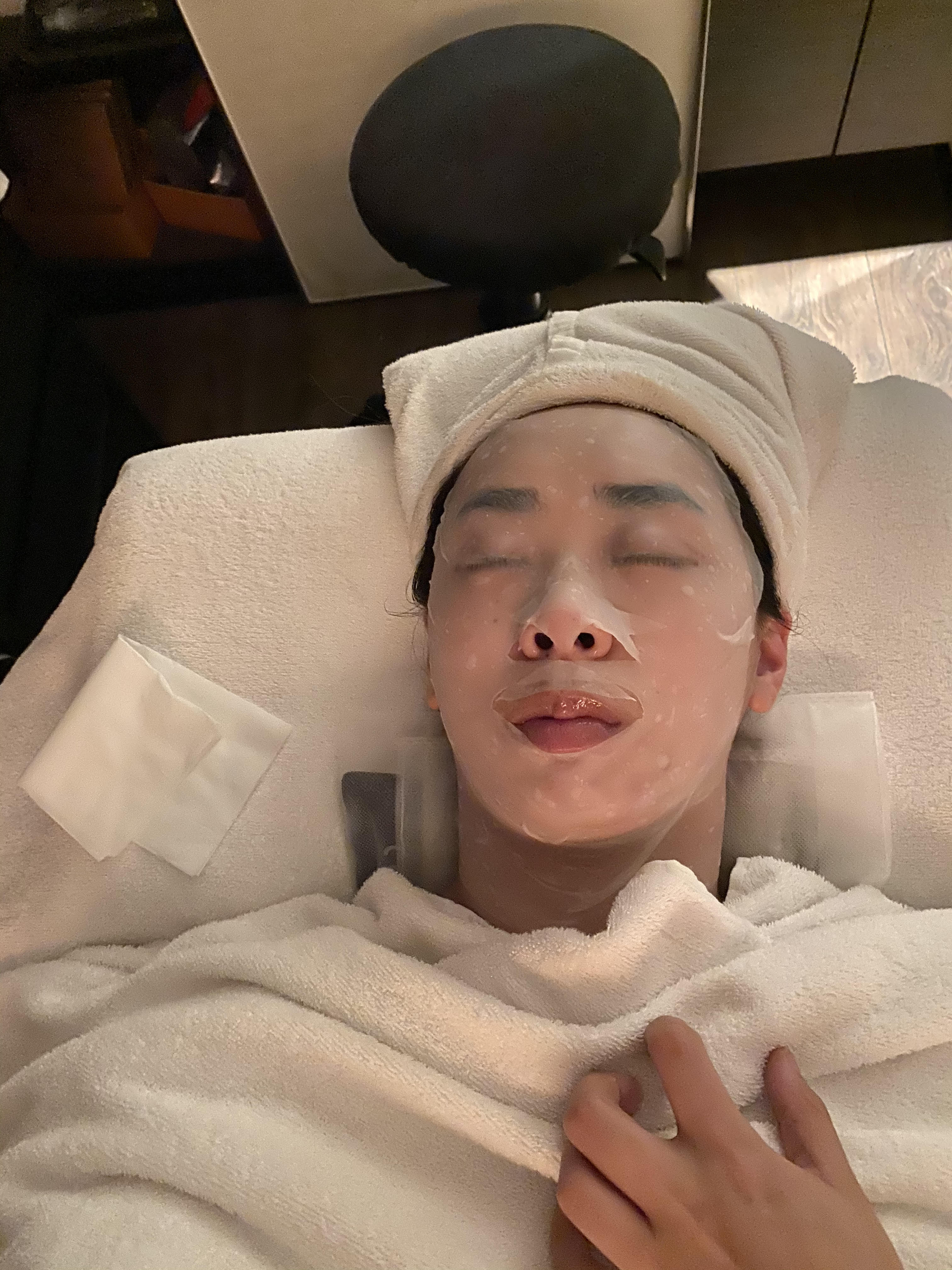
    Mask on.
    While waiting, she asked me how I heard about Sulwhasoo and whether I’ve used any of their products. I found out that she’s been with the company for several years now. Anyone Sulwhasoo hires as an esthetician must have had previous experience, and then there’s additional training before they can work with clients.

    After removing the exfoliating mask, H worked on doing extractions. This was a pleasant surprise for me, since I wasn’t expecting it. When I got a facial in Korea a few years back they didn’t really do extractions. H was very gentle; I don’t know if it was the product or her, but I barely noticed the extractions. As you can see in the before and after photos, she got rid of a big clog on my nose and removed all the hormonal congestion on my chin without leaving a mark. 👌 Following the extractions, H used a high frequency violet ray wand on my face to kill off bacteria.

    Next, H applied a lip balm and eye cream before putting on a First Care Activating sheet mask. When I asked why a sheet mask first, H explained to me that it’s the First Care Activating sheet mask, so like the First Care Activating Serum, it helps boost subsequent skincare absorption, usage, and effectiveness. While the sheet mask sat on my face, H used the Radiance Energy Mask (which I’ve personally used and love), mixed with an oil that they only use in the Beauty Lounge, to give me a décolleté and arm massage. Let’s just say I will start incorporating the neck and chest massage into my skincare regimen at least once a week!

    Once H was done with the décolleté and removed the sheet mask, she used the Concentrated Ginseng Renewing Cream mixed with Concentrated Ginseng Renewing Facial Oil to give me a facial massage. I’m pretty sure I fell asleep at this point. Why is it that a facial always feels better then doing it yourself? I will never wash my face the same way no matter how long I try to stand there and massage the product onto my face.

    I managed to wake myself up for H to explain it was time for a second sheet mask. However this time it was going to be sort of DIY. It was some sort of material (I wasn’t too sure what it was in English) with the mouth cut out and a nose slit. As you can see it covers the eyes. Once H applied it to my face, she saturated the mask with the Essential Balancing Water. Whatever the material was, it really hugged the skin. I’ve never felt a sheet mask hug the face so well. While the sheet mask sat on my face, she gave me a heated neck pillow filled with Chinese herbs. The herbs were good for drawing out water. H left the room so I could relax. Again pretty sure I fell asleep.

    I would fall asleep blissfully, too. -Fiddy
    When H came back in, she removed the mask and then actually gently wiped my face down. Internally I panicked because I thought we were done. I will say that even after wiping my face, my skin felt hydrated. H handed me the mirror and had me look at my face after. My pores were definitely smaller and my nose pores were clear. #whatarenosepores I couldn’t tell much difference in the neck area, but she laughed and told me the swelling had come down. Here’s the before and after so you tell me if you see a difference!

    Luckily I internally panicked for no reason. Because H told me it was time finish the rest of the facial. She started off with the First Care Activating Serum, followed by the Concentrated Ginseng Renewing Water and Concentrated Ginseng Renewing Emulsion. She finished with the Concentrated Ginseng Renewing Eye Cream and the Concentrated Ginseng Renewing Cream. I will say all these products have a light ginseng scent, but nothing heavy or appalling. H asked if I wanted to apply sunscreen, and since the sun hasn’t set yet, I said yes. She used the Hydro Aid Moisturizing Soothing UV Protection Fluid SPF50+/PA++++.

    H thanked me and asked if I wanted tea or water. She then left me to get dressed. When I went to the front, she gave me a cup of tea while the receptionist prepared my receipt. H also gave me a little welcome packet with samples of the products she used on me during the facial.

    Cost and final thoughts

    The facial was 90 minutes and costs HKD1,200, or around $155.00. However, with the promotion it was HKD960 or around $124. This is comparable to a facial in the San Francisco Bay Area with tip, but when they use all Sulwhasoo product it’s 👌👌. Also I don’t think most facials are that length for that price. Overall, if you ever have the opportunity and the financial means, I highly recommend treating yourself and getting a facial from Sulwhasoo. I swear, four days and an international flight later, my skin still looks amazing. I definitely would go back in the future.

    Still looking radiant 3 days later!
    Thanks for reading! Here’s a stray HK kitty, at Fiddy’s request.

    Final note from Fiddy: I still stand by what I said in my very old post about why I don’t get facials, except…I would totally get a Sulwhasoo facial. It wouldn’t involve the risk of having a bunch of unfamiliar products slathered on my face, since apparently they use products I’ve already used and already love. Also I think I need to go get a Sulwhasoo facial.
  • Review: Sulwhasoo Timetreasure Invigorating Sleeping Mask

    I’m upset.

    I’m upset to have fallen in love with a product.

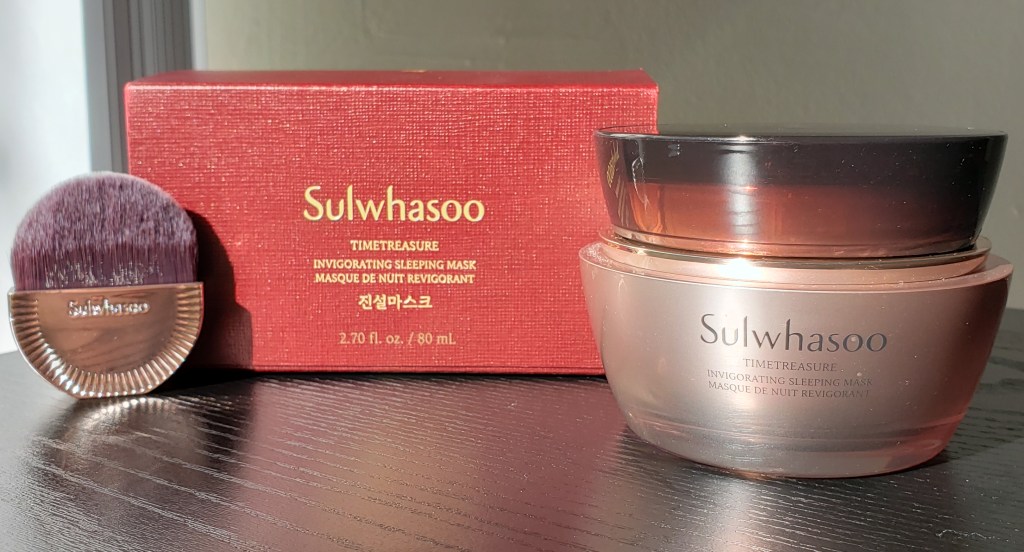
    I haven’t been this upset since the last time I fell in love with a lavishly priced Sulwhasoo mask, the Sulwhasoo Concentrated Ginseng Renewing Creamy Mask, and that was back in 2017. The only reason I’m not more upset right now is that while the Sulwhasoo Timetreasure Invigorating Sleeping Mask is a solid $80 more than the ginseng sheet masks, at least the $200 Timetreasure sleeping mask is a nice big 80mL jar, which lasts me a lot longer than a $120 box of five sheet masks. So that’s something. (more…)

  • How Bujo and a Hobonichi Planner Help Me Keep My Shit Together

    Having trouble getting your shit together? Yeah, me too. And so does just about everyone else, no matter how effortless their lives look from the outside. For most of us, the ability to get (and keep) our shit together is a hard-earned skill, not an innate talent.

    I’ve obsessed over productivity systems for years, looking for a way to keep my depression, anxiety, and crippling perfectionism from cockblocking my ambitions. Then, sometime in late 2016, my good friend and highly accomplished professional badass Tracy (of Fanserviced-B and Snailcast fame) introduced me to bullet journaling and Hobonichi planners. The combination has gotten my disorganized mind under control, allowing me to better juggle daily obligations while working towards larger goals. A lot of you asked me about my bujo practices when I showed a few pages of my planner on my Instagram story recently, so let’s do this!

    And let’s do it with fun colors (if we want to)!

    (more…)

  • Off-Blog: Book Update and New COSRX Reviews

    Lately it feels as if all of my writing is for outlets other than this blog, whether it’s for my Instagram (home for reviews and rants that can fit into a single caption and usually only require one picture) or for other sites (which I do have to do, because bills). But I am writing, and I’m trying to make sure those of you who visit the blog first don’t miss anything you might want to read!

    Speaking of writing, the edit of my book is taking much longer than expected. I should have known better than to think that finishing the original draft was the bulk of the work–I’ve been around this block before! Between editing, rearranging, trying not to chew my nails down to stubs in fits of anxiety and self-doubt, and going through some personal things which have taught me lessons that I’d also like to add to the book in the form of at least one more chapter, things are going slowly.

    I so appreciate the patience you guys are showing. I’ve got the pre-order records and will think of something extra for those of you who jumped in early and are waiting for your copies!

    In the meantime, I’ve written up some new COSRX releases that I think some of you may be interested in.

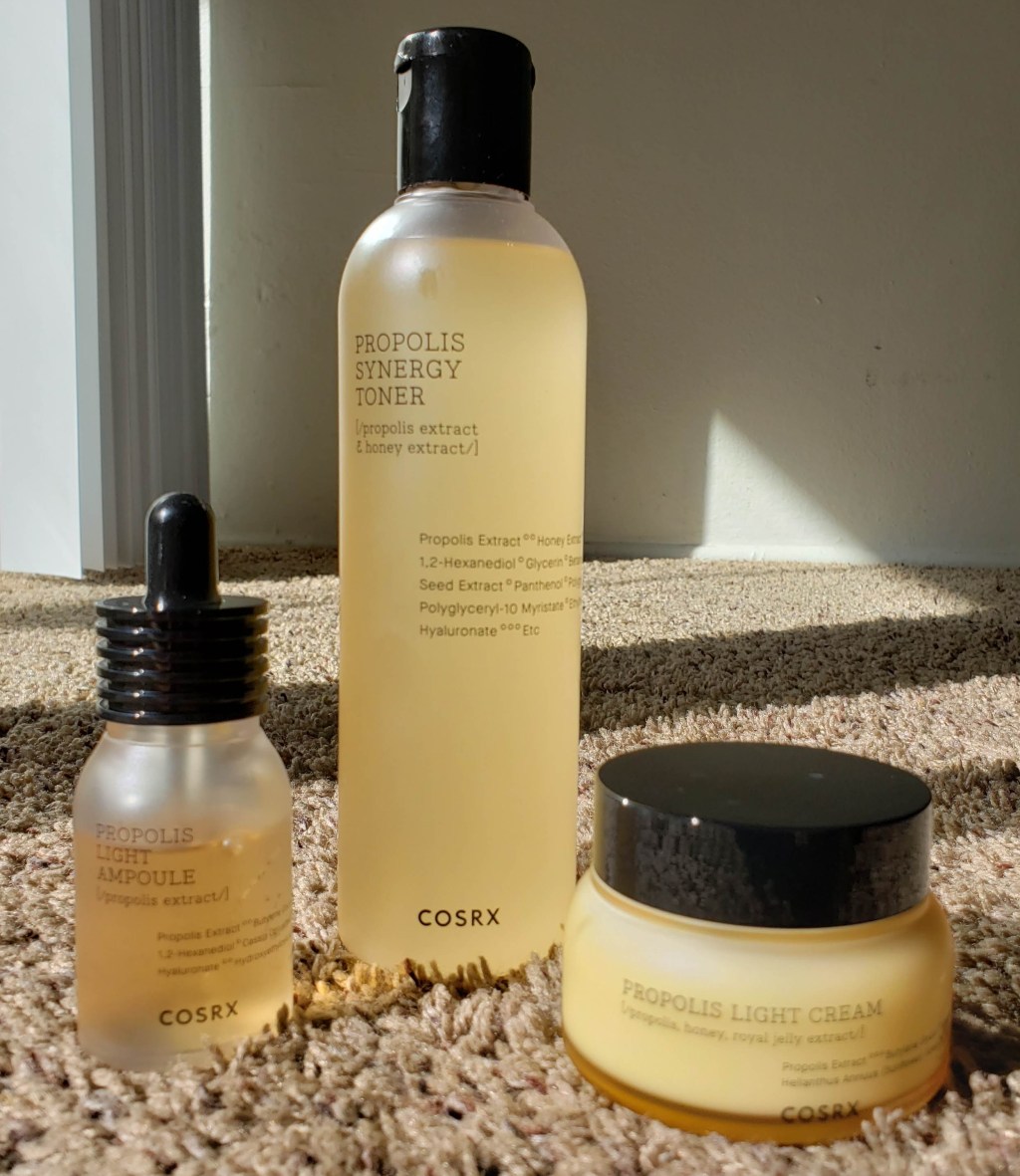
    First up is the new COSRX Full Fit propolis line. I’ve tried the ampoule before, but the toner and cream are new to both me and our market here in the US, and I was really excited about them!

    COSRX discloses the concentrations of their bee ingredients a little differently for the cream. The box states that the product contains 65.69% “Full Fit Pro-Barrier Complex,” which combines propolis, honey, and royal jelly extracts. I’m guessing here that the propolis makes up the vast majority of the complex, with the honey and royal jelly extracts present in far smaller amounts that might look silly listed out on the label. In any case, as long as the product performs well, that’s fine.

    Read it here.

    And second up is the new COSRX Advanced Snail Peptide Eye Cream. We all know I’m no stranger to using snail cream around my eyes, but now there’s a dedicated product for that.

    I’ve been using the COSRX Advanced Snail Peptide Eye Cream on my left eye and the original COSRX Advanced Snail 92 All In One Cream on my right eye for two weeks now, and I have some thoughts. So let’s dig in.

    Read it here. (By the way, I’m still using the new cream on my left eye and the original snail cream on my right, and my feelings remain the same.)

    Thank you all for bearing with me through quiet periods and outside projects and book editing delays. I appreciate all of you! And I can promise very exciting developments in 2020…more on that to come when the time is right!

  • Off-Blog: Sheet Mask Ingredients, Anti-Aging Lessons, Acids Prep

    I don’t post nearly as much here as I do on Instagram, but I am always writing something! Here are my latest articles on other sites.

    GlowieCo and I have developed a good relationship primarily based on our shared love of Taiwanese sheet masks. I’ve wanted to write a big sheet mask ingredient guide for a long time, so I wrote one for them.

    As with skincare in general, the best starting point for choosing your masks is the ingredients. Ingredient awareness will enable you to quickly narrow down your choices to the options most likely to help you achieve your skin goals. Ingredient awareness can also help you avoid ingredients that are incompatible with your skin or your skin goals.

    It’s got a nice hyperlinked list of ingredients right near the top, so if you’re just curious about one particular ingredient, you can skip right to it. Or read the whole thing for an overview! Read it here. And if you want to shop them afterwards, don’t forget to use my affiliate code FIDDYSNAILS for 10% off your order.

    Over on Beautytap editorial, I contributed a couple of articles, too. First up are the anti-aging lessons I’ve learned on the way to forty (which is coming up soon for me).

    We can get into a whole other discussion on society’s beauty standards and the self-reflection it takes to meaningfully challenge those ingrained expectations, but this isn’t the article for that. For now, let’s just say that the appearance of my skin did impact my confidence and self-image. I am a big believer in doing something about the things that make us feel less than great in our own skin, so I did.

    Read it here.

    And second is the first in a two-part series of things to know before you begin using acids.

    For many people, chemical exfoliation is a holy grail part of their skincare routine, the secret weapon to keeping skin smooth, clear, and fresh. For others, acids can be a nightmare. Which one will it be for you? These nine things will help you make acids work for you, instead of working against every goal you have for your face.

    Read it here.

    Thanks for reading! I’ll be back with some actual blog posts on this actual blog soon!

  • Sponsored: We Came, We Saw, We Slayed.

    This post is sponsored by Reflect Beauty.

    By the Reflect Beauty Team

    Let’s Recap

    The last 4 weeks were pretty epic. We identified and honored the very best in makeup, hair, and skin products that meet the unique beauty needs of multicultural women, aka the products WE use on the regular!

    Each week, the Reflect Beauty influencers and editors shared trending and classic looks (like the warm-glam makeup look by @ulovemegz, and the “bodylicious” blow-out on @itslesliealvarado) among others. We also tackled our biggest beauty-related challenges, discussing the most effective solutions for us and the winning products that get the job done.  The best part—our judges chose and shared the products that they actually use and love! So be sure to shop the complete list of Reflect Beauty Award winners, HERE!  #YourFavesFaves

    Own the Conversation, Drive the Change

    The first ever Reflect Beauty Awards provided a platform for leading multicultural voices to own the conversation on beauty inclusion, and drive change. With that, we want to give a special thanks to our powerful collective– top influencers Jessica Pettway, Megz, Sandy Lin, Ada Rojas, Sheba Snow, and Leslie Alvarado; the ReflectBeauty.com editors and the Mirror Digital team, partners like Clinique Even Better MakeUp, CliniqueID, and Uoma; and leading publishing partners like xoNecole, Quien, Hype Hair, Vida Latina, and 50 Shades of Snail — for reminding the world that every woman deserves an equal opportunity not only to embrace and find confidence in the hair and skin she’s in, but to see herself reflected in popular media.  Together, we are making this radical but necessary shift from a collective beauty standard, to an inclusive conversation where every woman is encouraged to define her own beauty.  And it starts right here, right now… it starts with YOU. So we’re shouting you out, too! Thanks for joining the movement!

    What Now?

    Follow @_reflectbeauty_ on IG and FB, and head over to Reflect-Beauty.com to keep the conversation going, year-round! Reflect Beauty is your platform, a consumer-led community, and safe-space where you can share your experiences, frustrations, and triumphs of being your naturally gorgeous self.  We are your mirror in the beauty, fashion, health, and wellness arenas, and strive to celebrate, uplift, and educate women of color, around the world.  Let us help you be a reflection of your best self.

    In the comments below, tell us the brands and products you’re loving and why! 

  • Sponsored: My New Holy Grail Moisturizer – Clinique iD™

    By Nikki Walton

    Sponsored by ReflectBeauty.com

    A few years ago, in the hopes of preserving my sexy, I sat down and consumed a ton of those trending, ‘What Would You Tell Your 20-Year-Old Self?’ beauty articles, and found that no matter her race, or ethnicity, she was basically like, “drink your water, stay SPF’ed, don’t sleep in makeup, don’t let no man stress you, and identify your skin type and moisturize accordingly.”  My product junkie self was solid on every commandment, except for that last bit. If the people were raving about a new holy grail, age-defying moisturizer, I was buying it, periodt.  But my unchecked case of skin care FOMO always ended the same—with expensive, unused product that at best didn’t work for me, and at worst, caused new problems. Luckily, a new era of personalization is here, and it goes by the name of Clinique iD – a custom-blend hydration system.  Now, I keep my moisturizer tailored to my skin type and unique concerns, by keeping my Clinique iD™ cocktail on deck, and the results are brilliantly obvious.

    How it works:

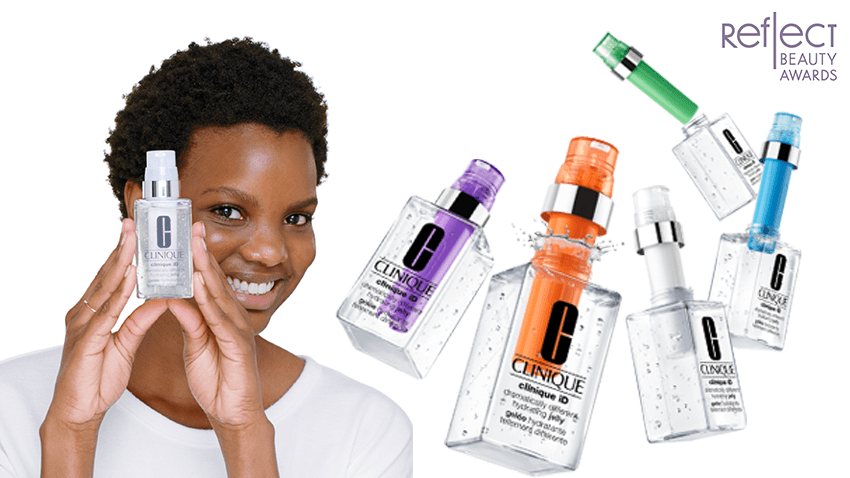
    When it comes to your skin care routine, you now have the choice to customize, effectively!  It is skin care made easy and effective, full of nourishing ingredients at a budget-friendly price. Simply choose your Hydration Base (lotion, jelly or gel), and one of the five Active Cartridge Concentrates (Irritation, Fatigue, Lines and wrinkles, Uneven skin tone, Pores and uneven texture) to create your very own Clinique iD™ custom-blend hydrator. That equals 15 possible combinations to hydrate your unique skin type and treat your main skin concern.

    My experience:

    I use the oil-free Dramatically Different Hydrating Jelly to deliver light-weight, effective hydration in this Florida humidity. It gives me fresh, smooth, moisturized skin without a tacky or greasy feel (even when I’m sweating).  It absorbs quickly and plays nicely with my SPF and occasional foundation. Plus, it contains my all-time favorite, skin-plumping ingredient– Hyaluronic Acid–which instantly diminishes fine lines and gives me that GLOW!

    Finally, I’m a Purple Active Cartridge Concentrate girl (for lines and wrinkles – shout out to Prince), and can I just say… this serum, jelly combo leaves me with the bright, extra hydrated, youthful skin of a woman who hasn’t been sleep-deprived for the last 9 years, chasing behind two whole kids!  It’s an absolute win, and has been upgraded to ‘regular’ status in my routine. No mo’ FOMO.

    Have you tried Clinique iD™? What’s your combo? Tell us in the comments!

  • Sponsored: Vibrant Fall Makeup for Asian Faces

    This post is sponsored by Reflect Beauty.

    Ready to discover the best of makeup, haircare, and skincare for the needs of multicultural women? Welcome to Makeup Week of the first-ever Reflect Beauty Awards! Here’s my perspective on makeup, as an Asian American woman of a certain age.

    The YouTube and Instagram beauty guru trend of the 2010s has its problems. But look past the controversies around undisclosed sponsorships, excessive editing, and the glorification of consumerism, and you’ll find one huge benefit that traditional beauty media has never offered before: No matter what shape, size, or color you are, you can find advice tailor-made for your features and your skin tone, from someone who knows what they’re talking about, because they actually look like you.

    For me, this is a huge deal.

    Growing up Asian-American in the dark ages before beauty blogs and YouTube makeup tutorials, I had no idea how to make makeup work for my features. Designed for Caucasian faces, the diagrams on the backs of eyeshadow palettes bewildered me. Where does the crease color go when my eyes don’t have creases? The instructions given in the glossy pages of magazines didn’t help me either. It’s hard to follow instructions for bringing out bone structure when the bone structure being emphasized is completely different from mine.

    The frustration I felt at never achieving the advertised looks made me feel inferior in my own face, as if my features were the problem.

    It wasn’t until I discovered video tutorials from makeup artists like Pony and Jung Saem Mool and blogs like the now-inactive B for Bun Bun that I learned my face wasn’t the problem; the problem was trying to follow advice that wasn’t intended for me.

    Individual tastes and aesthetics vary, of course, but here are some of the things I’ve learned, both from watching East Asian makeup artists and getting to know a few in my offline life:

    • A softer, straighter brow flatters my smaller, flatter features better than the more sharply arched and dramatically tapered brows that I’d been attempting for years. Instabrows are better for emphasizing stronger and more prominent bone structures than mine.
    • Speaking of bone structure, contouring in the Western style is next to pointless on my very traditionally East Asian face. Faking angled planes and deep hollows that aren’t there requires a lot of work and a lot of product for very little payoff, when I can instead play with soft washes of blush and highlight to achieve subtle, natural-looking dimension.
    • A vertical gradient of eyeshadow shades defines and deepens my monolidded eyes in ways that my struggles with “crease colors” never could.

    Attempting to replicate makeup looks designed by non-Asians for non-Asians always felt like trying to emulate non-Asian features. Discovering makeup advice from Asians, for Asians, has taught me how to enhance and love the features I already have. That, to me, has been a game-changer.

    Of course, the diversity of the current beauty guru landscape doesn’t only benefit East Asians. While South Asian bone structures more closely align with Western ones, differences in skin tone and overall coloring also create makeup challenges, which South Asian makeup artists are addressing beautifully.

    Reflect Beauty and the Reflect Beauty Awards celebrate the diversity of today’s beauty community. Those of us who were once left out of the makeup conversation are now joining in, using our platforms and our voices to show others how we make the products and trends work for us. As a beauty blogger and Reflect Beauty’s Asian editor, I’m so proud to be a part of this conversation by introducing the winners of our makeup awards.

    Ready to find your winners? Watch East Asian makeup artist Sandy Lin use Dollywink eyeliners, Ardell Wispies false lashes, and the Karity Rose All Day Palette to achieve a dramatic editorial eye look that’s perfect for East Asian Eyes, and check out the depth and richness of color in the Anastasia Beverly Hills Jackie Aina Palette that South Asian MUA Sheba Snow uses for her lids.

    It’s about time we stopped trying to change the shape of our features to fit someone else’s ideal. Learning from artists who look like us is the first step to embracing our own unique beauty so that, whoever we are and wherever we’re from, we can shine.

    Shop the Reflect Beauty Award winners!

  • Sponsored: Styling Product Winners for Asian Hair

    This post is sponsored by Reflect Beauty.

    Much like makeup and skincare, haircare needs can vary by ethnicity. The Reflect Beauty Awards celebrate the best of beauty for women of all ethnicities, so here are my two cents on Asian hair and what many of us need!

    It’s impossible to boil down the diversity of Asian women into one single hair type (or foundation shade or skin profile), but my hair type is fairly common among East Asian women: thick strands that grow in stick-straight. Shine isn’t an issue as long as I don’t damage it too much with bleach or heat styling, but volume always is, since my hair prefers — above everything else — to lie perfectly flat on my head. On top of that, my scalp produces plenty of oil, further exacerbating the flatness problem.

    At this point, I think I’ve conquered my basic haircare issues. Occasional use of an exfoliating acid on my scalp helps to control oiliness and keep my scalp clear and unclogged, while Olaplex conditioner handily repairs any damage I do to it via the Dracarys-level heat that I have to turn my curling iron to in order to get a curl to stay. Styling products remain a mystery to me, however, so I’m excited to call attention to the products our Asian influencers have picked for this round of the awards.

    East Asian influencer Sandy Lin picked Briogeo Dry Shampoo as one of her winners. I can see why. I’ve never been able to stand going more than a day without washing my hair, and after some informal polling via my personal Instagram and friend group, I’ve found I’m far from the only East Asian who feels that way. Our scalps often get oily quickly, making our hair look limp (and smell less than beautiful) too quickly to allow for less frequent shampooings.

    Unfortunately, daily shampooing can dry out hair strands as well as add extra styling time to already busy beauty routines, so dry shampoos can come in handy. Briogeo’s Scalp Revival Charcoal + Biotin Dry Shampoo uses rice, corn, and tapioca starch as well as kaolin clay to absorb excess oils. Meanwhile, biotin may help improve hair growth, while the fragrance in the product helps freshen the scent of your hair.

    Lack of volume is another common issue for East Asian hair, which really wants nothing more than to lie flat on our skulls all the way down to wherever we’ve chosen to cut it. That is at odds with my desire for my hair to have an actual shape and style. Texturizing sprays help by altering the texture of hair strands so that they stand out from each other more, giving body and shape to otherwise limp hair. Sandy chose Bumble and Bumble Texturizing Spray as another winner; my hairstylist also uses this on me with great results.

    Of course, East Asians aren’t the only Asians in the world. I was happy to see that Reflect Beauty included South Asian beauty influencer Sheba Snow. South Asian hair tends to be very different from East Asian hair, but one of Sheba’s picks, the Redken Heat Protection Treatment, is also relevant for East Asian hair.

    As I mentioned before, I need to crank my curling iron up to the Dracarys setting if I want my curls to last longer than 20 minutes. Sadly, this means inflicting copious amounts of heat damage to my hair. Heat protectants work by coating the hair, slowing down and reducing heat transfer, as my friend, chemist Michelle Wong over at the Lab Muffin beauty blog, explains. This is absolutely critical to preventing high-heat styling from destroying hair.

    No matter what ethnicity we are, we live in a time where there are beauty products available to address our specific needs. Let our experts be your starting point to finding the perfect products for your hair, no matter what kind of hair you were born with!

    Shop the Reflect Beauty Award winners!