Finding the best skin care products since 2014. Started with a focus on Korean skincare and grew from there. Skincare tips and beauty tips that work, maybe some hamster butts too
Lavender is one of my favorite colors (and fragrances), but I had a hard time finding wearable lavender makeup until I started checking out Asian products. Today I went for light lavender eyes and lavender blush to liven up a black T-shirt on a spring day. I call this look “I used a very light hand, good luck finding the lavender, but I know it’s there, and that makes me happy.”
I promise I’m happier than my pictures make me appear.
Lids: Too Cool for School Dinoplatz Eye Shadow on Flatiron, #1 Lavender; Lioele Color Eye Shadow 25 Brown Violet
Liner: Etude House Play 101 gel pencil, creamy black
Lips: Innisfree Creamy Tint Lipstick, #1 Bud Pink
Highlighter: Benefit Watt’s Up
Swatches and mini-reviews
The Too Cool for School Dinoplatz Eye Shadow on Flatiron is a cream eyeshadow packaged in an adorable tube.
Brontosaurus!
Out of the tube, it has quite a lot of shimmer but not much color payoff, which works well for me as a base shade. It applies easily with a fingertip and lasts all day.
The amount I use on lids as a base shade.See? Very sheer.
I love the Lioele Color Eye Shadow Single in Brown Violet as a softer alternative to liner. I apply it with a stiff eyeliner brush. The color payoff is good, but be warned: this shadow has some fairly intense glitter fallout, so apply early in your makeup routine so that you can wipe off any stray flecks of sparkle. I wear this all day without touching up, though it will fade around the 6 hour mark without a primer or creamy base like the TCFS cream eyeshadow.
Cute, portable container.A nice smoky, subtle purple with a LOT of glitter.
The Lioele Color Eye Shadow single in Brown Violet is available on Memebox for $5.00.
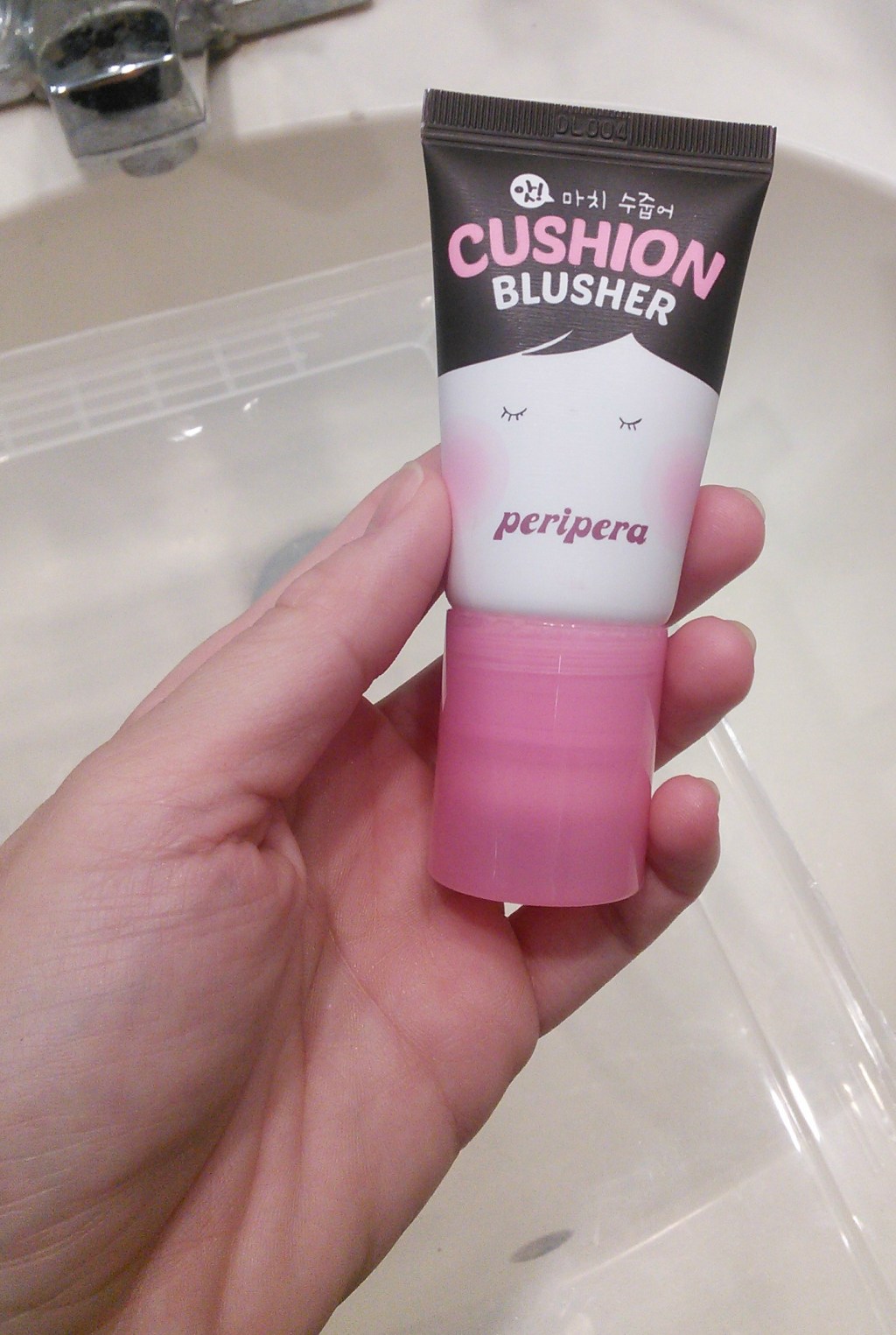
And finally, my favorite blush of the year, Peripera Ah! Much Real My Cushion BlusherinLively Lavender! This blush is exactly what I wanted out of a lavender blush: pastel color that stays true lavender on my skin instead of turning pink or mauve, easily blendable and buildable coverage (I went with only one layer for today’s FOTD because I didn’t want to conflict with the Innisfree lipstick), and a soft finish that lasts all day. Love it. I’ve used it almost every day since I got it.
Ah! Much lavender. Many pretty. Wow.Swatched.
Peripera Ah! Much Real My Cushion Blusher in Lively Lavender is available on Amazon with Prime shipping for $12.98 (affiliate link).
This may sound strange coming from someone as vain and skin-crazy as I am, but I never get facials. You see, I don’t think they’re worth it. In fact, I think that in almost all cases, the risks far outweigh the rewards.
Now, I’m not talking here about serious procedures that must be performed by professionals in clinical settings, like microneedling (which I believe shouldn’t be done at home due to its many risks), strong chemical peels, or dermabrasion. The kind of facials I’m referring to in this post are the garden-variety facials you might get from an esthetician at your local full-service beauty salon or day (D-A-I-Y-E) spa, maybe because you got a gift certificate, or feel like splurging on yourself a bit, or have a special event coming up and want to look your best. In my opinion, those facials just carry too many risks to make them a smart skin choice–especially when you have a special event coming up. Let’s talk about why.
The potential benefits of a spa or salon facial
Okay, so you take the plunge and book a facial appointment at a local spa or salon with good Yelp ratings or word-of-mouth. Your face is lovingly steamed and oiled and massaged and treated with nice-smelling lotions and potions while you doze off to the lilting strains of Enya playing in the background. Everything goes well. Then what? What results can you hope to expect from a successful once-in-a-while spa facial?
Well…your skin will look nicer, maybe for a couple of days or a little longer.
That’s about it. With the exception of the clinical procedures I mentioned above (microneedling, chemical peels, laser treatments, dermabrasion), you aren’t going to see any significant, lasting, or permanent results from the occasional facial, just a little temporary boost.
“But that’s what I want!” you might think. “I want to look my best for prom/high school reunion/my wedding!”
Okay. But do you want to look your worst for a special event? Because that’s one thing that could happen.
The risks of spa and salon facials
If you’ve been reading Asian beauty blogs for a while, you may already be familiar with the horrific experience beauty blogger Juli of Bun Bun Makeup Tips suffered when she went for a facial. If you haven’t, here’s the quick rundown: she went to get a facial and had a very very bad reaction (VERY VERY VERY BAD, I AM NOT KIDDING, LOTS OF NSFL PICTURES) that got much worse and took months, I believe, to get better.
Juli’s experience is an outlier, obviously, or no one would be getting facials. But it serves as a useful illustration of why I don’t advocate spa facials. Here are some reasons why:
You don’t know what they’re putting on your face. As my product reviews show, I strive to be very ingredient-conscious, and I hope that I’m encouraging you guys to be, too. As a very smart person once said on Reddit, “skin does not respond to product labels it responds to ingredients.” When you get a facial, you likely have very little idea what the esthetician is putting on your face. (I suppose you could ask the esthetician to give you a full list of products and complete ingredients lists beforehand, but honestly that seems like a lot of work and hassle to prepare for an experience that’s supposed to be relaxing.) Are there ingredients that will irritate your skin or trigger a breakout? You don’t know.
You don’t get a chance to test what they’re putting on your face. Going along with my first point, you rarely if ever are going to get a chance to slowly introduce and test each product the esthetician plans to use on you. I strongly advocate that people introduce new products into their routines one at a time to make sure that each product is safe for their skin and to make identifying irritating or clogging products easier. Skin care is very YMMV, and it’s impossible to know whether a product will be good for your skin unless you try it in a controlled fashion. At a facial, on the other hand, the esthetician is going to be smearing multiple new products onto your face in one session. If your skin is at all sensitive, reactive, or acne-prone, that’s kind of a recipe for disaster.
They’re doing things to your face that may not be good for your face. Many spa facials involve treatments such as steaming of the face or laying a hot damp towel over the face. I’m not a fan of facial steaming. People claim that it “opens the pores,” which is simply not true, and the prolonged exposure to heat can dry out or irritate your skin. Extractions–both of whiteheads and of the sebaceous filaments that most people think of as blackheads–are also common, and those can cause scarring and permanently enlarged pores, neither of which are desirable outcomes.
You can’t be sure your esthetician knows what they’re doing–or cares. Okay, I don’t want to knock estheticians as a whole. There are many, many wonderful estheticians who took their training seriously, make time to stay up-to-date on skin care, and treat every client with the utmost care. But there are also some who aren’t quite so dedicated or awesome. Think about it. In every profession, there are people who aren’t doing the best they can for every client. Maybe it’s just a job to them, not something they came to out of passion. Or maybe they used to love it, but got burned out over time or because of unpleasant experiences with clients. What happens when someone is burned out or not particularly invested in their job? Often, they won’t care as much, won’t make the extra effort to do a great job every time, and may make careless mistakes. Your face is not a place where you should be risking others’ careless mistakes.
Facials are a very common indulgence right before a special event, but in my opinion, right before a special event is exactly the worst time to take such a risk with your face.
What should I do instead of getting a facial, then?
If what you’re looking for is significant, long-term improvement of your skin, it makes a lot more sense to invest in optimizing your daily skin care routine instead of expecting a one-time or occasional facial to work miracles. Much like weight loss, results in skin care come from healthy habits and commitment to a serious regimen, not from quick-fix tricks.
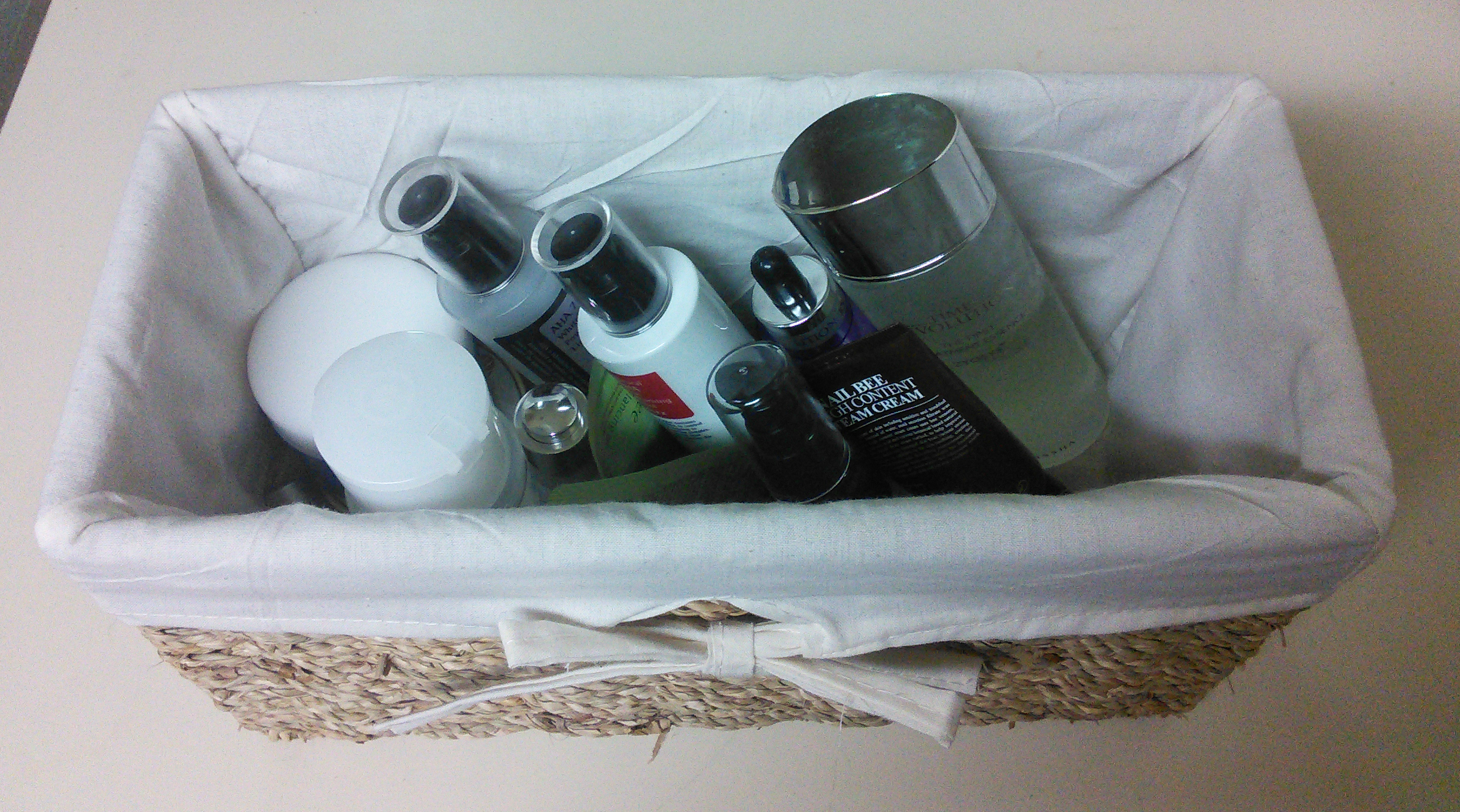
The stuff and things in this basket make my skin happy.
And if you really, really want that extra boost of radiance for an upcoming event, why not make a spa night of it? Clear out your pores with my BHA/clay mask/oil massage technique, exfoliate with a skin-friendly scrub, and plump up and brighten your complexion with a nice sheet mask or indulgent hydrogel to finish it off. And take the money you were going to spend on a facial, and apply it towards a massage! That’s one spa treatment I can’t get enough of.
Do you ever get facials? What have your experiences been?
So I tried out the My Beauty Diary Platinum Mandelic Acid Brightening Mask for the first time tonight, and I was pissed off for the entire 30 minutes I had it on because of the mask sheet material. The blue mask sheet was thick, stiff, and would not conform to my features or adhere to my face. Especially on my chin.
So upsetting.
Then I took the mask off and tossed it in the wastebasket, and that’s when something thin, white, and flimsy fell off of it.
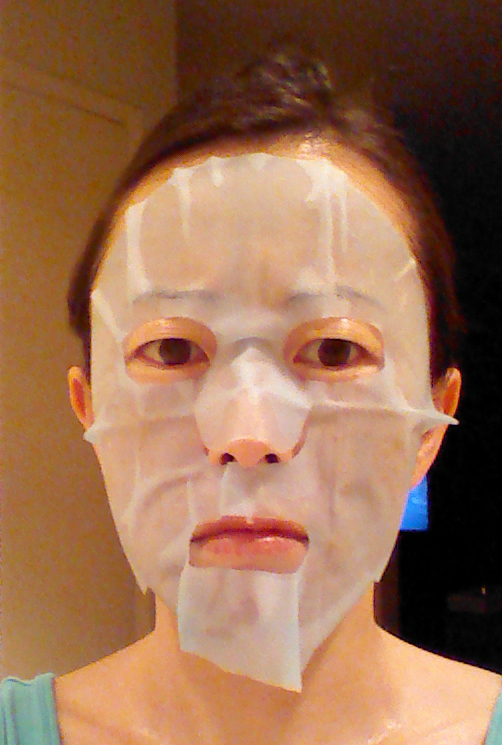
Uh…the thin white flimsy thing was the actual mask. I spent 30 minutes wearing one of the mask backings instead and getting all mad over nothing.
“Natural” and DIY skin care advocates have long recommended the use of straight lemon juice to brighten skin and fade dark spots. Unfortunately, that’s really not a good idea. Undiluted citrus juices can be far too acidic, even capable of causing chemical burns; they can also be irritating and photosensitizing, leading to increased sun damage after UV exposure. But can the controlled use of citrus juices in professionally formulated skin care products safely deliver some of the same brightening and dark spot-fading benefits that people claim to get from rubbing lemons on their face? Today’s Sheet Mask Battle Royale examines three citrus-based sheet masks to find out the answer!
The Contenders
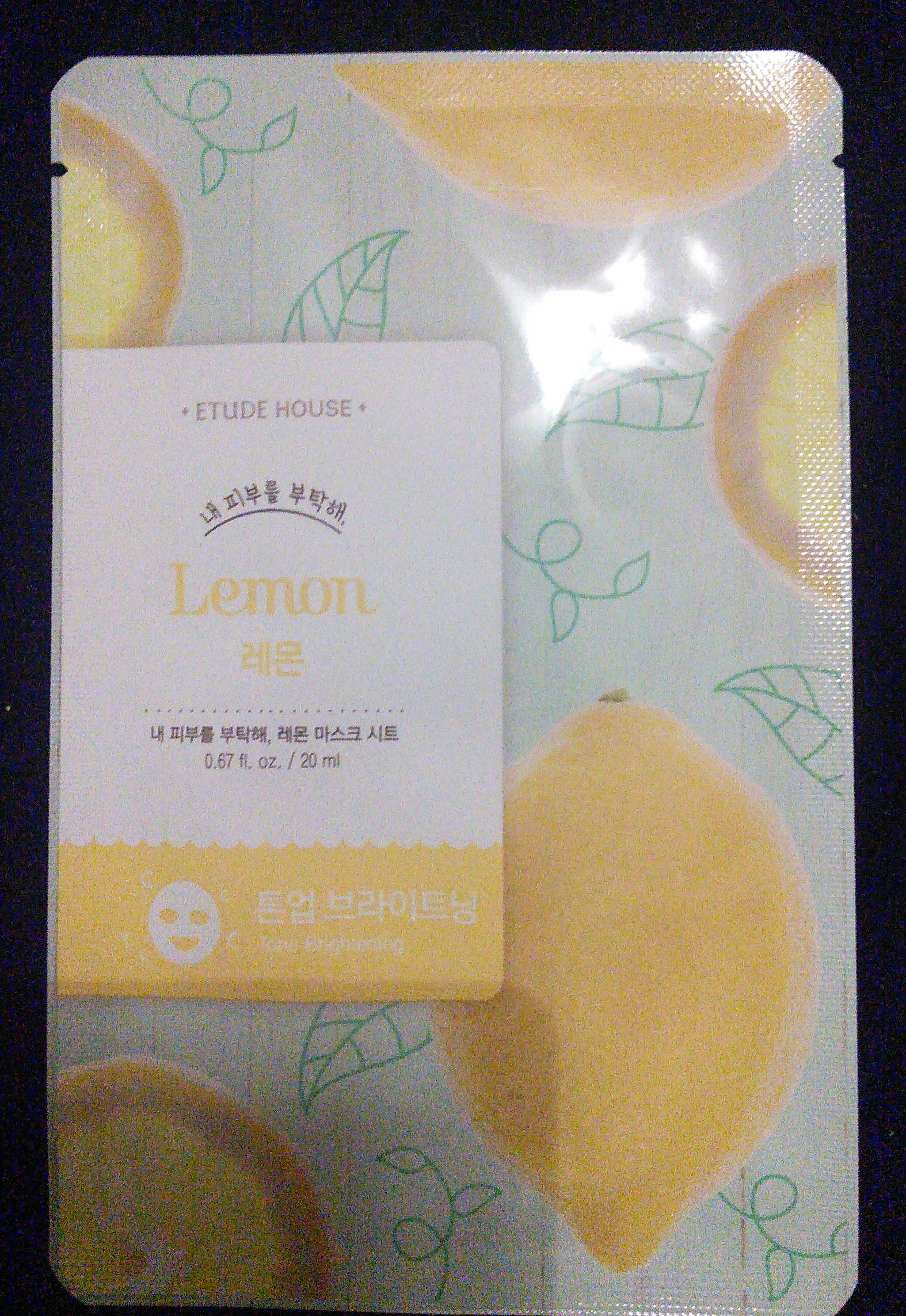
For this battle royale, I used sheet masks from The Face Shop, Innisfree, and Etude House. The Etude House and The Face Shop masks feature lemon, while Innisfree’s features lime.
The Face Shop Real Nature sheet mask, LemonInnisfree It’s Real Squeeze Mask, LimeEtude House I Need You! sheet mask in Lemon
Purpose: All three masks claim to brighten skin.
Do not use if: You are sensitive to alcohol, citrus extracts, fragrance, or anything else in the ingredients lists.
When and how to use: After cleansing and toning, in place of or in addition to your normal essence, serum, and ampoule steps, unfold mask and apply to face. Leave on as directed by packaging instructions or longer if desired. Remove mask, massage or pat in remaining essence, and lock in hydration with an occlusive moisturizing cream or sleeping mask.
CosDNA analysis: Butylene glycol and dimethicone score 1s as potential acne triggers, triethanolamine scores a 2 as a potential acne trigger, alcohol denat. scores a 5 as a potential irritant, and carbomer scores a 1 as a potential irritant.
This is an okay ingredients list for a road shop brand sheet mask. The featured ingredient, lemon fruit extract, is very high in the list, and a few anti-inflammatory and brightening plant extracts may help provide some extra oomph. Ingredients score: 3.5
The Face Shop’s Real Nature Mask in Lemon does okay in terms of ingredients.
CosDNA analysis: The only ingredient to trigger a warning is butylene glycol with a 1 as a potential acne trigger, but it should be noted that CosDNA doesn’t recognize alcohol, which should have a caution as an irritant.
Niacinamide! Nice. You guys know how I feel about the skin benefits of niacinamide. I actively seek it out in everything; there’s even a column in my sheet mask inventory spreadsheet to note whether a sheet mask contains the ingredient. This mask also contains several other brightening, moisturizing, anti-inflammatory, and antioxidant plant extracts. Ingredients score: 4
CosDNA analysis: Butylene glycol scores a 1 as a potential acne trigger and carbomer scores a 1 as a potential irritant. This mask also contains alcohol.
Disappointingly, the Etude House lemon sheet mask’s star ingredient is a bit low in the ingredients list, though Etude House makes up for it with the I Need You! line’s signature mix of skin-friendly plant extracts drawn from traditional Chinese medicine. Ingredients score: 4
Again with the fuzzy printing.
Performance
Thefirst thing I noticed about The Face Shop’s Real Nature sheet mask in Lemon was its size. The thing is freaking HUGE. We’re talking upwards of half an inch of material flapping loose in front of each ear. The size of the mask made it challenging to adhere properly to my face, since it kept bunching up and sliding around. The smell is fresh and lemony, not too strong, though strong enough to make me crave lemon candy. I was able to wear this mask for 45 minutes before it felt dry. The leftover essence felt a little bit oily and sticky, though not too bad, and my skin was slightly brighter. I noticed no lingering effects the next day, though. Performance score: 3
The Innisfree It’s Real Squeeze Mask in Lime also lasted for about 45 minutes before it got too dry to wear, and while the brightening effect wasn’t amazing, the mask left my skin tone looking noticeably more even and my skin texture more refined, with smaller pores overall. The hydrating and firming effect of this mask is excellent: it made my skin look and feel extremely smooth and juicy. It has a lovely lime fragrance, clean, fresh, and sweet, that was so pleasant I didn’t want it to fade. The leftover residue was quite heavy and sticky, however, and does not all massage in. The next day, my skin still looked tighter and firmer than usual, but the brightening effect had faded. Performance score: 3.5
I had high hopes for the Etude House I Need You! sheet mask in Lemon, since I had such a great experience with the Vita Complex mask. Like the other masks in this Battle Royale, this one smells great, like lemon candy. I’m a sucker for citrus fragrances, I guess. This mask dried out the fastest of the three at about 30 minutes and left just a little bit of essence, which absorbed quickly. The brightening effect is quite strong. I could tell by the contrast between the areas the mask had covered and the ones it hadn’t (my eye area and hairline). The next morning, my skin still felt smooth and hydrated and still looked a little brighter, though I’m sad to say that this mask didn’t give quite the same translucent effect as the Vita Complex. Performance score: 4
The final scores
The Face Shop Real Nature Mask, Lemon: Ingredients 3, performance 3, overall score: 3
Aww yiss. After weeks in transit and customs limbo, my little RoseRoseShop parcel has arrived, containing two of the most exciting Korean skin care products I’ve ever gotten my hands on. I’m so stoked to try out the CosRX Natural BHA Skin Returning A-Sol and the Missha Time Revolution Night Repair Science Activator Borabit Ampoule!
The long wait for my package was a blessing in disguise, since I’m fresh out of Missha ampoule as of this morning and won’t have to wait to start my new one. The gods are good.
CosRX Natural BHA Skin Returning A-Sol
A-Sol. Say it out loud, with a long “o.” Heh. What does it sound like? Heh heh.
(It’s even funnier when you remember that the A-Sol is made by the same brand that brought the world a product unapologetically named “Galactomyces 95 White Power Essence.”)
The rather unhelpfully named Natural BHA Skin Returning A-Sol is a pH-adjusting toner that promises to control oil, minimize the appearance of pores, balance skin, and treat breakouts; it can serve either as a spot treatment for “skin trouble” or as an allover preventative/maintenance step, which is how I plan to use it.
This A-Sol appeals to me for a couple of reasons. One, the CosRX AHA 7 Whitehead Power Liquid is working great for me, and success with one of a company’s products always makes me curious to try out its other offerings. And two, the Returning A-Sol (hehehe) uses propolis extract instead of water as its base.
Propolis is antibacterial, antifungal, antiviral, and anti-inflammatory. It’s also moisturizing, chock-full of antioxidants, and said to promote wound healing and cell renewal, giving it abundant potential as an anti-aging ingredient. This A-Sol is 60% propolis extract.
In addition to all that propolis, the Returning A-Sol also contains AHA and BHA ingredients. The A-Sol’s pH is 4.3, too high for it to act as a chemical exfoliator, but it will lower skin pH to better prepare it for acids after cleansing, while the AHAs deliver an extra boost of humectant moisture and the BHA soothes inflammation.
My primary expectations of this product are light hydration, redness reduction, and breakout prevention. The antioxidants are a nice plus.
I’ve already squirted a little bit out of my A-Sol to see the texture. My A-Sol is watery with a lot of slip, like the AHA 7 Liquid, but smells herby and medicinal (thank God), rather than acrid and pungently evil like the AHA 7. I’ll be applying it after the Missha First Treatment Essence step in my morning and immediately after cleansing in my evening skin care routines.
Missha Time Revolution Night Repair Science Activator Borabit Ampoule
As exciting as my A-Sol is, however, it can’t compare to my sturdy purple bottle of Missha Time Revolution Night Repair Science Activator Borabit Ampoule in terms of star power. A reformulation of the much-loved anti-aging Missha Time Revolution Night Repair Science Activator “Long Name” Ampoule–which Skin and Tonics favorably compared to Estee Lauder’s Advanced Night Repair Serum–the Missha Time Revolution Night Repair Science Activator Borabit “Longer Name” Ampoule boasts new enhancements that may make it an even more powerful weapon in the war against sagginess, wrinkles, and stubborn sun spots.
You can’t see most of the words in the name because Missha is absolutely terrible at designing readable packages. Seriously, I didn’t even bother taking pictures of the rest of the box, since the tiny tiny gray print is almost completely illegible even to my Lasik-enhanced 20/20 eyes and would come out even worse in a picture.
I’ve just finished a bottle of the original Long Name Ampoule, which I liked immensely. In fact, I would have posted a positive review of it by now, except that I’d heard the news about Missha reformulating the product, as they also recently did with the First Treatment Essence. There’s no point reviewing a product that’s about to be made obsolete and unavailable for purchase, right?
Unlike the FTE reformulation, however, the Longer Name Ampoule actually looks improved. Compared to the old Long Name Ampoule, the Longer Name Ampoule delivers significantly more retinol, a powerful wrinkle fighter, and adds several more antioxidant, anti-aging, and barrier-repairing actives, ferments, and extracts. All in all, the Missha Longer Name Ampoule looks to have some serious preventative and reparative potential for maturing skin types.
(Side note: Longer Name Ampoule’s ingredients list lives up to its long name. When I get around to reviewing it–most likely in about a month or so–the ingredients analysis is going to be one hell of a dissertation. I’ve already started researching ingredients, since there are about a thousand of them to look up.)
I’ve got a great feeling about Missha’s Longer Name Ampoule. I’ll be applying it after my Benton Snail Bee High Content Essence in my morning and evening skin care routines.
Now if you’ll excuse me, I can’t wait to get that A-Sol on my face.
Have you tried either of these products yet? If so, what did you think?
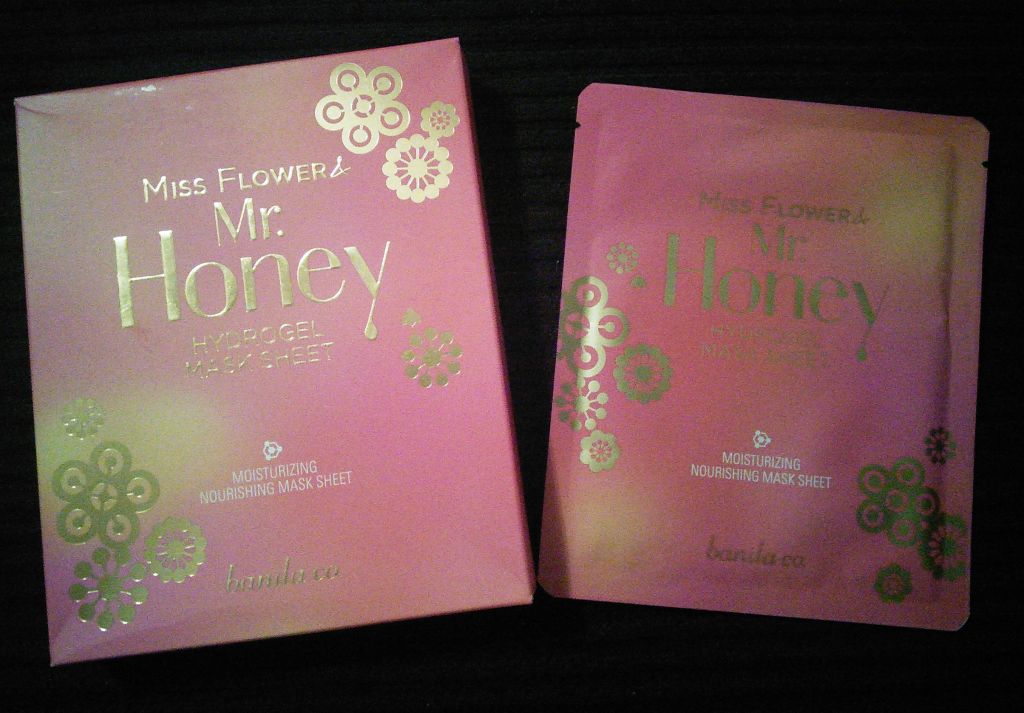
Let me just say up front that I love these masks so much they make me want to pollinate something. If you know what I mean.
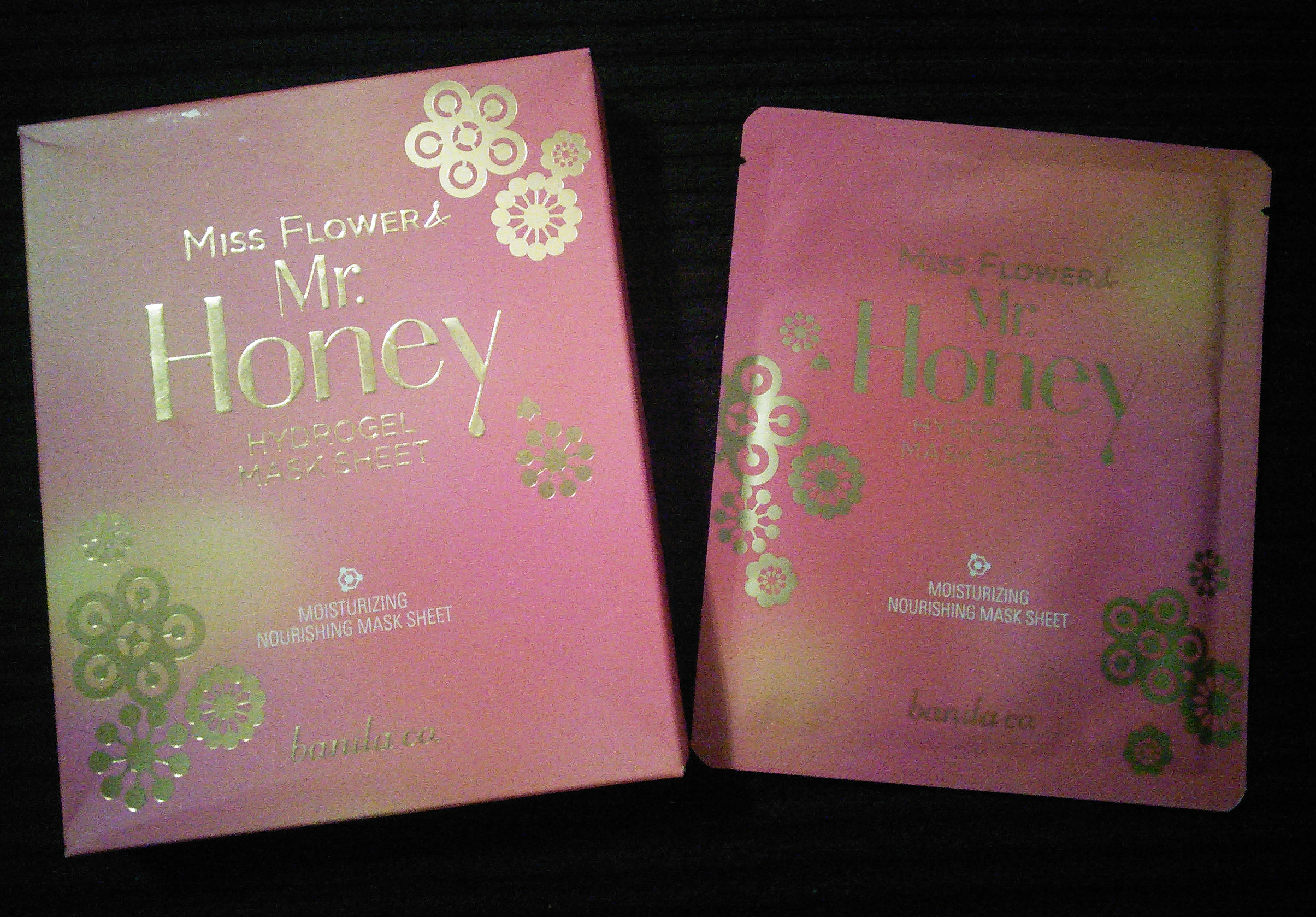
I normally don’t go for ultra-feminine packaging, but this just makes me want to lounge around in a feather boa on a four-poster canopy bed draped in pink silk curtains. The bed draped in pink silk curtains, I mean. Not me. Because I’ll have the feather boa.
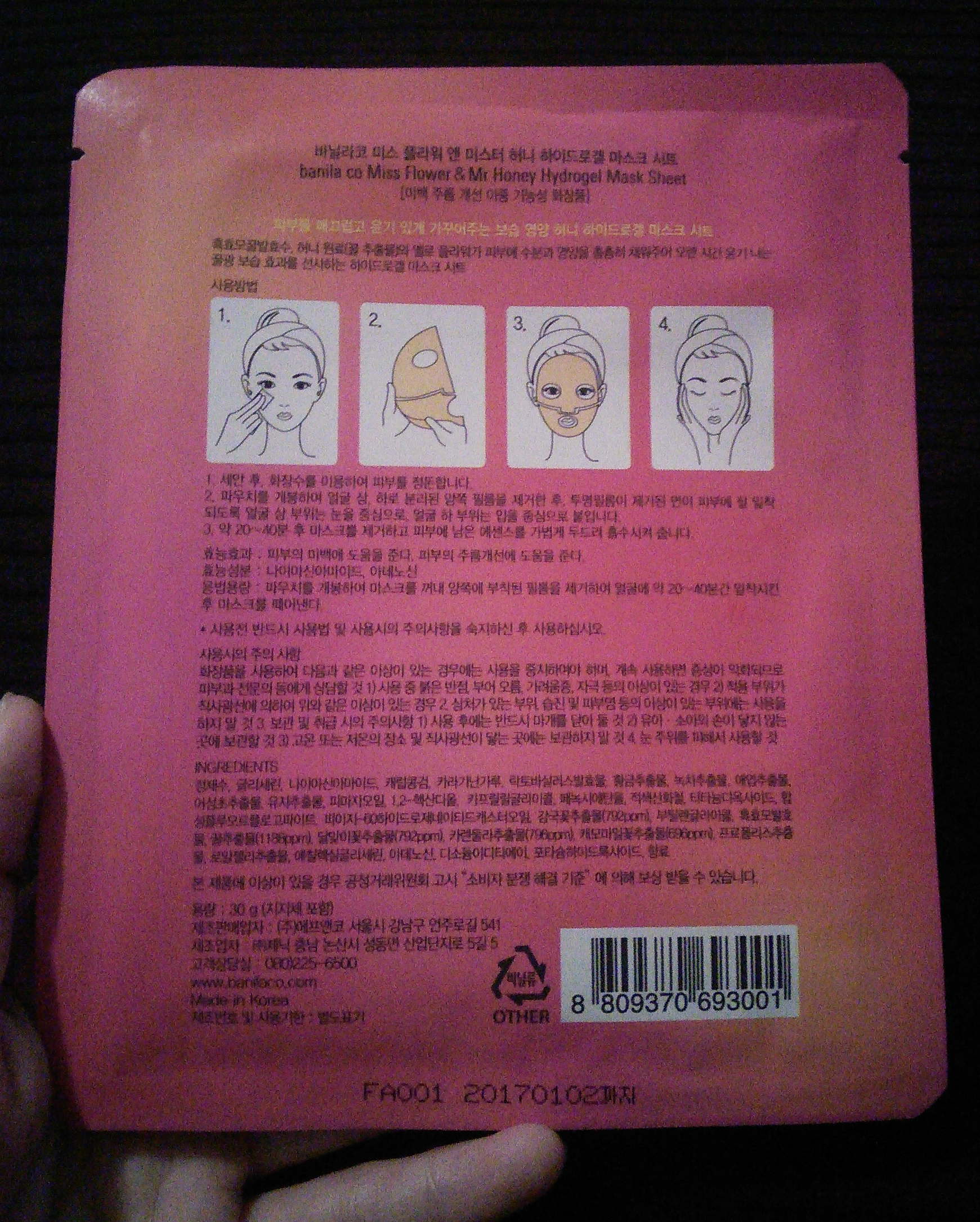
My first five-pack of Banila Co Miss Flower & Mr Honey hydrogel masks was the result of a small impulse haul from the Memebox site–the same haul that got me the awesome Freeset Donkey Milk Aqua hydrogel masks. I actually wanted to review these before the donkey milk thing, but I couldn’t find an English ingredients list and wasn’t willing to review or recommend anything without that. You guys have Redditor /u/lostinpretty to thank for this review: she went above and beyond in tracking down the ingredients for me, translating them, and even checking her translation against a Korean skincare app’s database! If you go broke because of this mask, blame her, not me.
Purpose: The Banila Co Miss Flower & Mr Honey hydrogel masks claim to moisturize and nourish skin.
Do not use if: You are sensitive to carrageenan, botanical extracts, fragrance, or anything else in the ingredients list. Tread carefully and patch test first if you have any bee allergies, as this product contains multiple bee-produced ingredients.
When and how to use: After cleansing and either after or in place of your pre-cream skin care steps, remove mask from package and protective plastic backing and apply to face, bottom half first. Wear for 20-40 minutes as directed on mask packaging, or longer if you want (and you will). After removing mask, pat in any remaining essence and seal with your usual moisturizing cream or sleeping pack. Go to sleep and dream of flowers and fat, happy bumblebees and other happy, happy things.
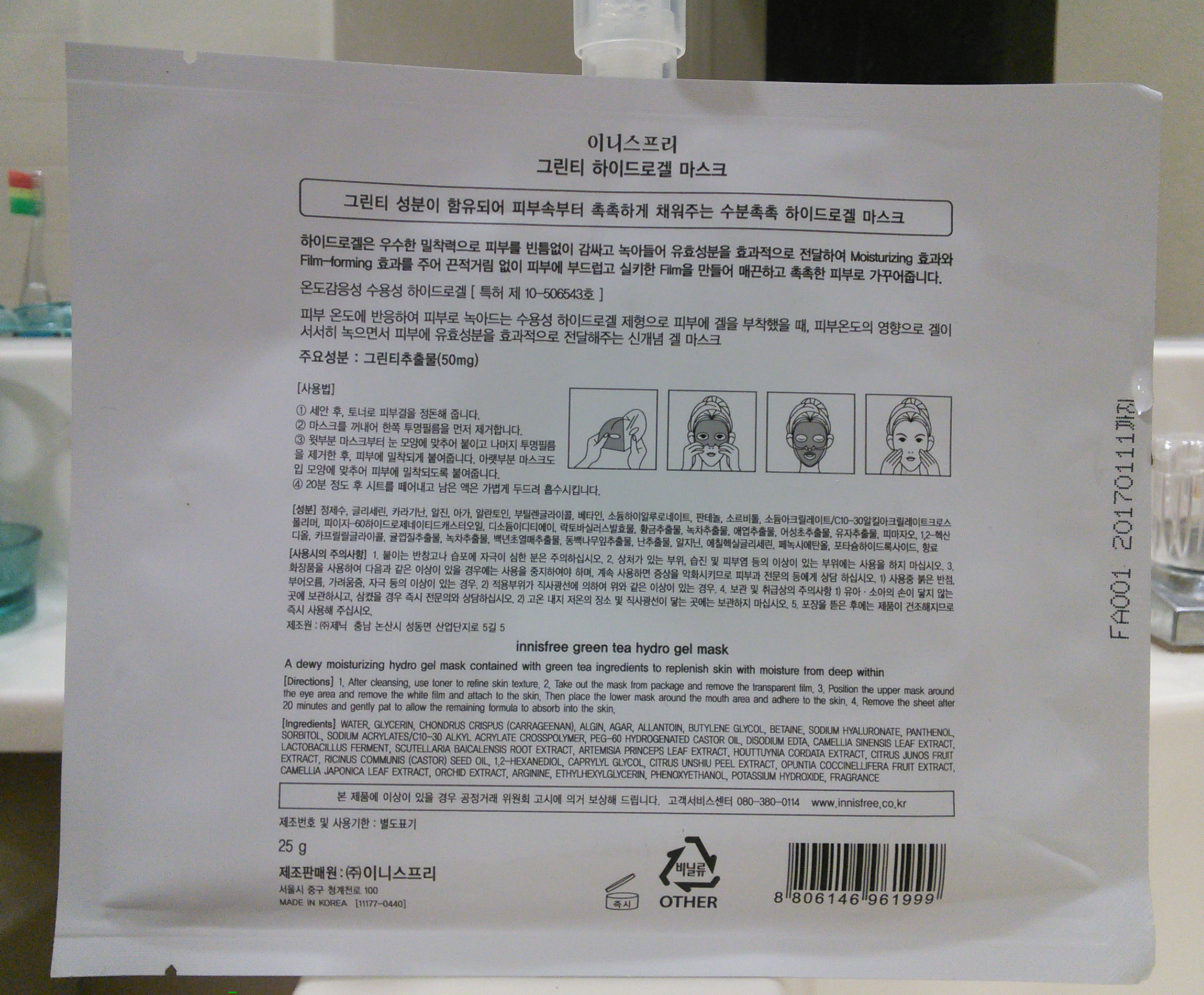
See my challenge in figuring out what the ingredients are?
Notable ingredients: One of the more notable aspects of this mask is the fact that its essence is apparently made using a one-month fermentation or “ripening” process. As I discussed in my review of DD’ell Extra Vitalizing Serum, fermentation may make skin care products more effective by breaking ingredients down into smaller and more bioavailable components in much the same way the process does for food.
Miss Flower dominates in the ingredients list, where you’ll find many moisturizing, brightening, calming, and antioxidant botanical extracts, but Mr Honey has his say as well, with the addition not only of honey, which moisturizes and can help calm acne, but also of royal jelly extract and propolis extract. Royal jelly is secreted by honeybees to feed queen bees and queen-bees-in-training (larvae, in other words) and may be nutritious and beneficial to skin, while propolis, which bees produce to line their hives, is antioxidant, antibacterial, and has wound healing properties. This mask also contains plenty of niacinamide, one of my all-time favorite proven brightening, oil-controlling, barrier-repairing, and anti-aging ingredients. Yay.
My CosDNA analysis of this mask’s ingredients flags carrageenan, an algae extract used as a thickener, with a 5 as a potential acne trigger and a 2 as a potential irritant. Chamomile gets a 2 as a potential acne trigger, and calendula, butylene glycol, and castor oil all get 1s for acne as well. If your skin breaks out easily or is sensitive to any of these ingredients, patch test before trying out this mask.
Performance
Like most other hydrogel masks, the Banila Co Miss Honey & Mr Flower hydrogel masks come in two parts, one for the upper half of the face and one for the lower, and it’s better to apply the lower half first, as overlapping the upper half on top of it will help keep it from sliding down off your chin. The mask sheets are, like most hydrogels, a bit slippery and hard to unfold and put on, because they’ll slime and flop all over your hands as you struggle with them. Once I have mine on, though, they mold perfectly to my features and stay on well.
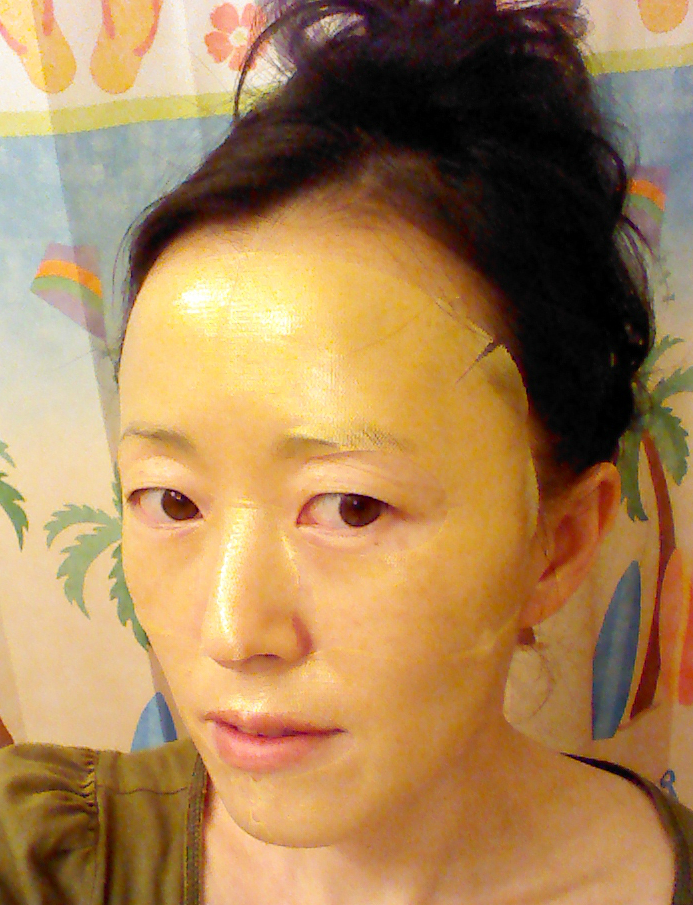
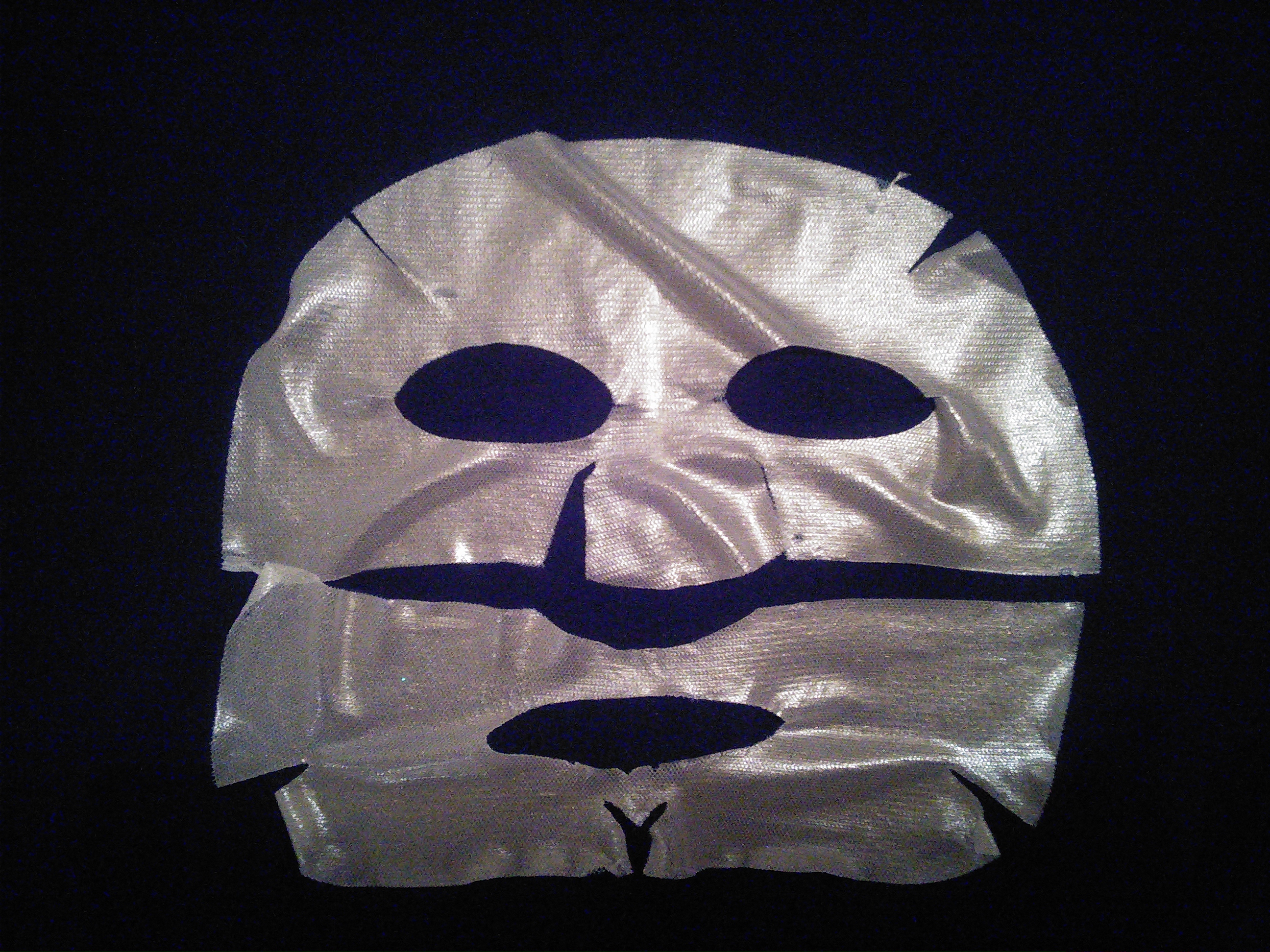
Oh. And did I mention that the mask sheets are gold? Gold!
Not solid gold, as this picture suggests. The inner weave of the masks has a fine honeycomb pattern and a bright, iridescent, dense gold shimmer. So beautiful in person, so hard to photograph accurately.
These masks smell beautiful. The fragrance is floral and incredibly feminine, but not overwhelming or perfumey. They smell more like real flowers than like flower fragrance, if that makes sense.
I use these masks for a full hour apiece, partly because they feel so wonderful on and partly because at the price of these, I want to get my full money’s worth out of them. By the time I take them off, the sheets are significantly thinner, indicating that most of the essence has melted into my skin. When I remove the masks, the surface of my skin is hardly damp at all, no massaging or patting necessary, and what’s left of the sheets is dry, with most of the inner weave exposed.
But still sparkly.
After wearing these masks, my skin always feels very, very, very nourished from within and always looks incredibly bright, even, and hydrated, but not greasy at all. My face sometimes feels a little warm, but not in a bad way, as if irritated; rather, it’s as if my circulation has been stimulated (or as if I’m OD’ing on niacinamide, but whatever). And my face consistently looks a little rounder and softer from the hydrating powers of this mask!
Those results always last well into the next day. My skin remains super plump and firm and feels velvety soft; skin texture looks more refined, and overall, I just get an incredible glow. I’m hooked.
This is my face the day after a session with this mask.
Conclusion: Did I say I’m hooked? Because I’m totally hooked. These masks may be the best masks I’ve ever tried; they’re so, so good that it’s difficult to stop myself from using them all the time. In fact, apart from the price, I don’t have a single substantive complaint to make about this product. The price makes these more of a “special occasion” indulgence (har, har, says the woman with only one left out of a pack of five), but everyone has special occasions sometimes, so I definitely recommend having a few of these on hand.
Rating: 5/5, Holy Grail status
Rating scale:
1 – This should be taken off the market.
2 – Caused me some problems; would not buy again.
3 – Meh. Neither great nor bad.
4 – Pretty good. Would buy again unless I find something better.
5 – I’ll never be in the market for a replacement unless this one is discontinued.
Where can I buy Banila Co Miss Flower & Mr Honey Hydrogel Masks?
I checked Amazon and my usual webshops and came up with two places where you can buy these masks.
Currently on sale for 5,250 won (about $4.80USD) apiece at TesterKorea
Pack of 5 for $21USD (making them $4.20USD apiece) at Memebox (affiliate link)
If you’re located in the US, I’d definitely recommend purchasing these from Memebox, since shipping will be far faster and cheaper (or free if your total purchase is over $30).
Hydrogel masks! They’re a little on the pricey side, so when I see them on sale, I jump all over them. That’s how I ended up with my Innisfree hydrogel mask haul, which introduced me to this, the first hydrogel mask that I haven’t loved.
Sigh.
At least the packaging is pretty?
Purpose: The Innisfree Green Tea Hydro Gel Mask claims to moisturize and deeply hydrate skin.
Do not use if: You are sensitive to the seaweed extract carrageenan, fragrance, or anything else in the ingredients list.
When and how to use: After cleansing and after or in place of any toner, essence, or serum steps in your routine, remove mask from package, peel off the protective plastic layers, and apply to face, putting the lower half on first. Wear for 20 minutes as directed on the package or longer if desired. Remove, pat in any remaining moisture, and seal with your usual moisturizing cream or sleeping pack.
Seriously, ignore the instructions to put the top half on first. Putting the bottom half on before the top will keep the bottom part from sliding down.
Notable ingredients: The star ingredient of this mask is camellia sinensis (green tea) leaf extract. When ingested, green tea is known for its antioxidant and anti-carcinogenic properties. Applied as a topical treatment, green tea extract has been shown to be anti-inflammatory and antioxidant as well, helping to prevent UV-induced oxidative stress and damage to skin and therefore serving as a preventative measure against photoaging. It’s a little disappointing to see the ingredient so far down in the ingredients list here, but this mask does also contain a nice mix of other antioxidant, brightening, moisturizing, and calming plant extracts, so I’m willing to give it a shot to reap the results of the whole package. The mask also contains lactobacillus ferment, which I like seeing in skin care products’ ingredients lists (my DD’ell Extra Vitalizing Serum review contains more information about the skin care benefits of fermentation).
A CosDNA analysis of the Innisfree Green Tea Hydro Gel Mask did turn up a couple of cautions. The two biggest flags involve the algae extracts used to thicken the essence into a hydrogel format: chondrus crispus (carrageenan) got a full 5 as a potential acne trigger and a 2 as a potential irritant, and algin scored 4s for both acne and irritant status. Butylene glycol and castor seed oil received 1s in the acne column. If your skin is particularly reactive or you’ve had trouble with algae-based products before, you may want to steer clear or at least patch test before using.
Performance
I’ve gone through two of these so far, both times after having been outside a lot during the day–green tea is just the thing to soothe skin and mitigate any sun or pollution damage. I have to say, these masks are just weird.
The rest of the hydrogel masks I’ve used have been characterized by a relatively substantial thickness and a very pliable quality thanks to the thinness of the gauze mesh inner weave that holds the gel in shape. The Innisfree Green Tea Hydro Gel Mask does not feel like this at all. I was actually startled the first time I wrestled one out from its elaborate system of plastic backings. These masks are on the thin side for hydrogels and unusually stiff; I’m pretty sure the inner mesh in these is made of plastic instead of fabric for some weird reason. The mesh is thicker, more rigid, and definitely feels like plastic at the end of the masking session, when most of the gel has been absorbed and the mesh is exposed.
Thanks to that rigidity, the Innisfree Green Tea Hydro Gel masks don’t adhere to my face nearly as well as other hydrogels, especially around my jawline, where they need to stick to the underside of my jaw, and on the top of my nose, where I always have to fold back a little of the material so that it isn’t flapping back and forth annoyingly with my every breath. These little details make these masks feel lower quality than any of the others I’ve tried, including my beloved and now discontinued Innisfree Eco Science Hydro Gel Masks (which now live on only in memory and in this screencap of my thoughts the first time I used one).
The Innisfree Green Tea Hydro Gel masks make my skin feel mildly tingly and warm, even though I always get them straight out of the fridge. The tingling sensation reminds me of Mr. Crazy Snail Lady’s issues with the Innisfree It’s Real Squeeze Mask in Green Tea. He and I have very different skin types, and mine is much hardier than his thanks to the attention I pay to my moisture barrier, but now we’ve both had a warm-and-tingly-not-in-the-good-way experience from an Innisfree green tea mask. Pattern? Maybe.
Most of the gel essence from these masks absorbs into my skin by about the 45 minute mark, and it really does sink into my skin, leaving very little moisture on the surface. Disappointingly, however, these masks don’t make my skin feel particularly hydrated or plumped, either immediately after removal or the morning after. On the plus side, however, they do reduce my normal areas of redness (right around the nostrils, between the eyebrows, and around my mouth), and they have a strong purifying effect that leaves the pores on my nose looking much smaller and cleaner than usual.
Conclusion: Eh. For redness and general skin clarity, the Innisfree Green Tea Hydro Gel Mask is effective, but for hydration and plumping, I’ve had better. In fact, even a regular cheapie sheet mask usually hydrates my skin better than this one did, and since redness and pores aren’t really major issues for me, I think I’ll pass on purchasing again. I’m also unnerved by the fact that this one made my skin tingle a little.
Rating: 3/5
Rating scale:
1 – This should be taken off the market.
2 – Caused me some problems; would not buy again.
3 – Meh. Neither great nor bad.
4 – Pretty good. Would buy again unless I find something better.
5 – I’ll never be in the market for a replacement unless this one is discontinued.
Where can I buy Innisfree Green Tea Hydro Gel Masks?
If you want to try these masks, I found them for 2,000 won ($1.83USD at the time of this review) on TesterKorea and for $3USD on the official Innisfree website. While TK’s price is significantly cheaper than Innisfreeworld’s, remember that Innisfreeworld often offers coupons and discounts–including shipping discounts–and tends to ship faster than TesterKorea, which has had an unfortunate recent habit of processing orders for weeks before sending them out.
The thing about skin care is that once you’ve got a good routine in place, it’s difficult to justify experimentation and variety for variety’s sake (apart from masks, of course). Why should I seek out something new if I don’t feel the need for it in my routine? That’s why I’m always grateful when something new falls into my lap. I came across the DD’ell Extra Vitalizing Serum this way. A friend of mine gifted it to me out of her Little Mermaid Memebox, and based on some preliminary Googling, I decided that the star ingredients justified an extended trial.
(I love having swap buddies. You never know what cool stuff you’ll end up with, and it’s fun to send them things, too! Plus, it keeps the stash from getting out of hand.)
On to the review!
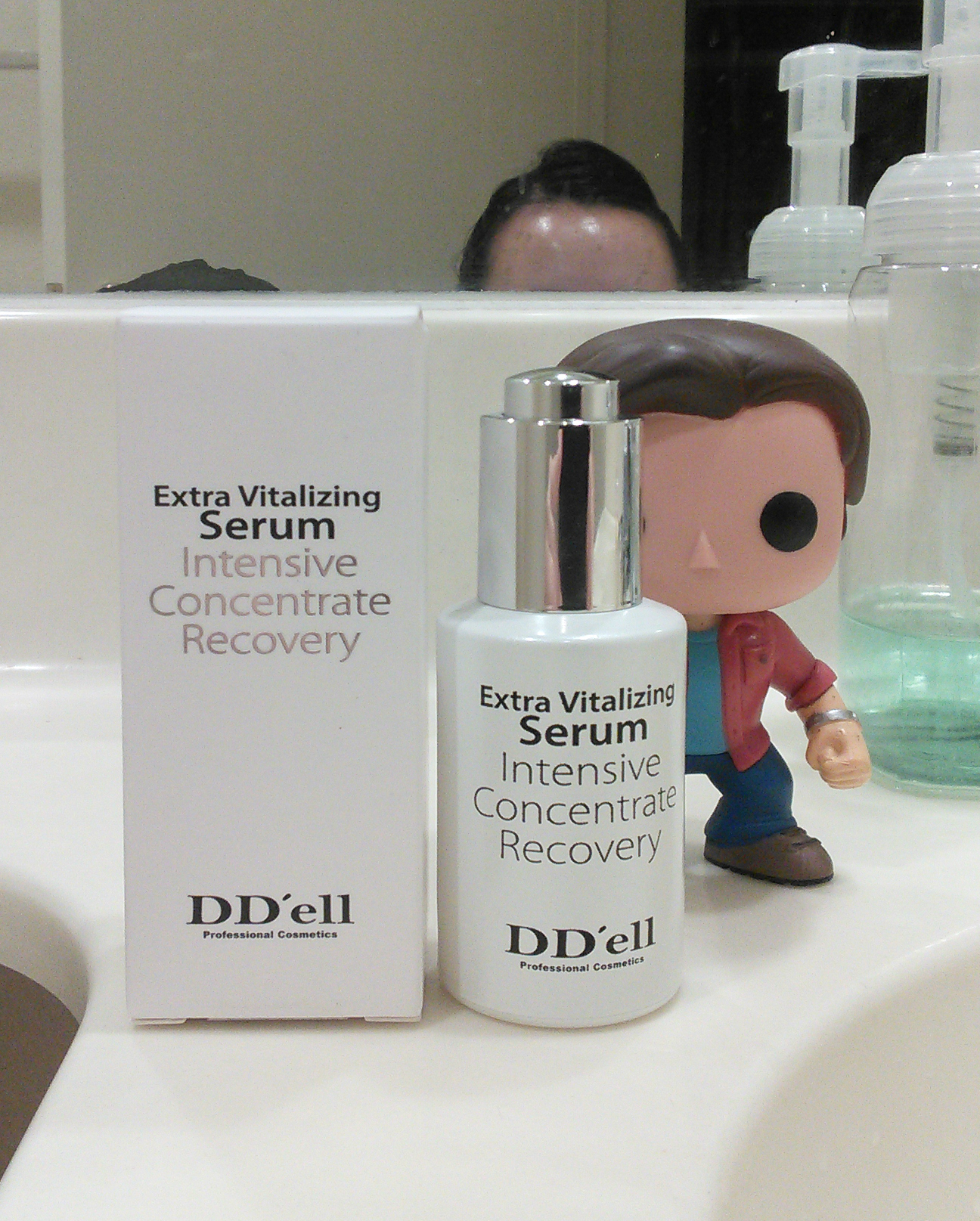
Sam Winchester and I both approve of the serious, clinical packaging aesthetic. Don’t mind the glare off my giant forehead in the mirror there.
Purpose: DD’ell Extra Vitalizing Serum is marketed as an intensive brightening and anti-aging product for all ages and skin types.
Do not use if: You are sensitive to alcohol, silicones, sulfates, fragrance, or anything else in the ingredients list.
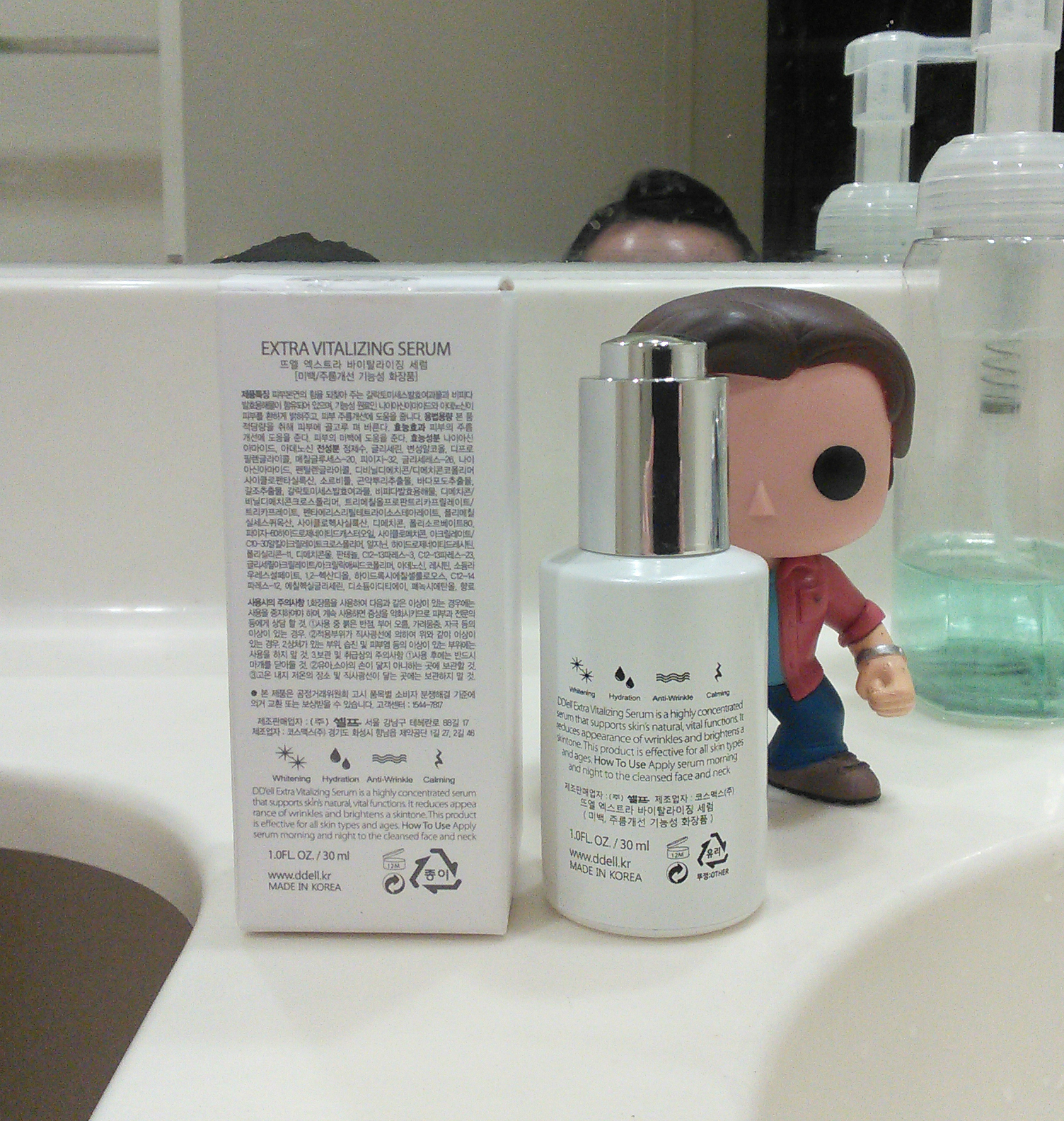
Less forehead glare, more packaging this time. You can thank me in the comments.
When and how to use: After cleansing, toning, and any acids or light essences in your routine, apply to face and neck. Follow up with your usual moisturizer.
Notable ingredients: As I mentioned in my first impression of the DD’ell Extra Vitalizing Serum, the star ingredients of this product are yeast ferment filtrates, algae extracts, and niacinamide. We already know I love niacinamide for its proven brightening, anti-aging, oil-controlling, and barrier-strengthening properties. Algae extracts are effective against melanin synthesis, photoaging, and inflammation. And ferment ingredients are quite popular in Asian skin care and said to have a host of skin benefits, depending on the exact ferment filtrate used. In fact, I think it’s worth it to take a little tangent down the ferment path.
When applied to food, the fermentation process not only preserves it–as is the case with kimchi, or with the pickled vegetables of my people (Chinese and Taiwanese)–but can also increase its nutritional value by breaking down the components of food into smaller and more bioavailable units. The belief is that the same holds true for the yeast ferments used in skin care products like the famous Shiseido SK-II Facial Treatment Essence and the Missha Time Revolution First Treatment Essence (although that story about the ferment ingredient being discovered when someone noticed the freakishly youthful hands of the sake brewers is most likely total bullpoopoo). Yeast ferment extracts are said to have hydrating, calming, and anti-aging benefits for skin.
The rest of the ingredients list is a cocktail of moisturizing, emollient, and penetration-enhancing ingredients. My CosDNA analysis turned up a couple of flags: Denatured alcohol scores a 5 as a potential irritant, dimethicone scores a 1 as a potential acne trigger, and sodium laureth sulfate scores a 3 as an acne trigger and a 2 as an irritant. As always, patch test and take your time introducing this product.
Performance
I’ve been using DD’ell Extra Vitalizing Serum morning and night for about three weeks now, long enough for me to feel comfortable giving a review.
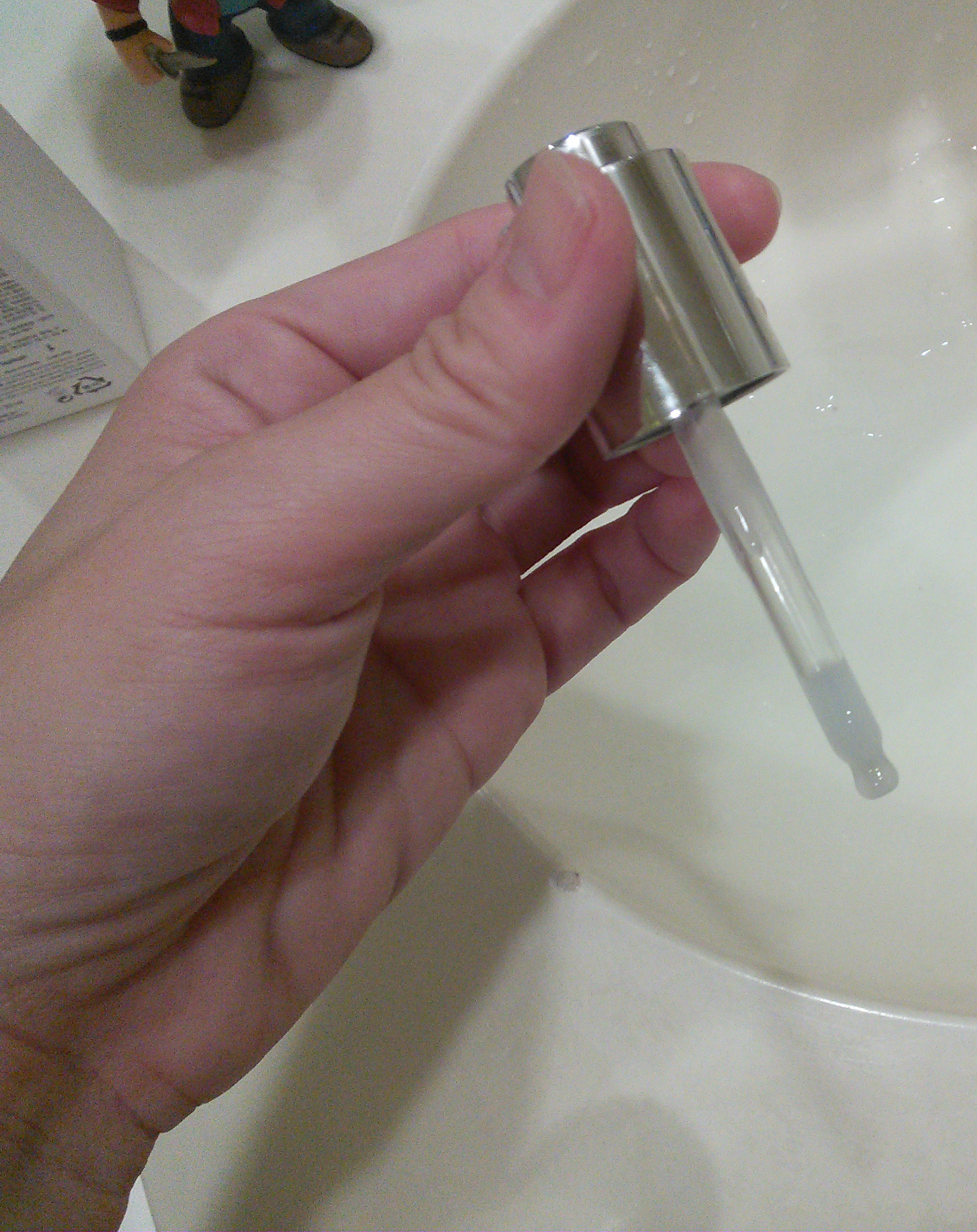
The serum is a milky, slippy liquid with a clean, pleasant, and fairly neutral soap-and-flowers fragrance. It spreads easily over skin and absorbs relatively quickly, even with a bunch of products already layered on underneath; I experienced no irritation or breakouts from it, though YMMV. Unfortunately, getting it out of the bottle and onto your face may prove irritating in itself, thanks to the dropper design. Unlike most other dropper-style serum dispensers, which have a squeezie thing at the top of the dropper that you squeeze and release to suck serum into the pipette, DD’ell Extra Vitalizing Serum uses a push button dropper. You press the little silver button on top of the cap to suck serum into the pipette. Maybe I got a dud bottle, but I have to say: the button thing does not work very well.
This is typically how much serum gets sucked into the pipette each time. I do occasionally get lucky and end up with a third or a half of the pipette, but not that often.
See the picture above? That’s not enough serum for my face. I don’t have a tiny little pixie face. It might be enough for my Sam Winchester pop, but toys don’t need skin care products. Sammy’s face is fine just the way it is. I’m the one who’s using the serum, and I need way more than that at each use. So what happens is that I have to suck out a bit of product, dispense it into my palm, then juggle bottle and dropper with one hand in order to suck up and dispense one or two more squirts without accidentally losing whatever I’ve already squeezed out onto my other palm. Or tip the entire bottle over to pour it into my hand, which takes way too long and usually ends up giving me too much product and therefore being wasteful.
It’s annoying. I don’t like that.
As far as results go, I haven’t seen any notable changes in my skin since I began using the DD’ell Extra Vitalizing Serum, except for a nice increase in hydration. Yeast ferments and algae extracts are interesting ingredients, but as far as anti-aging goes, I believe you can only expect a visible reduction in fine lines and wrinkles from the proven heavy hitters: vitamin C, AHAs, and retinoids. I’d class a product like this as preventative rather than reparative.
Conclusion: I don’t have any problems with the DD’ell Extra Vitalizing Serum besides the raging hatred I feel for the dropper, but I’m not overly impressed with it, either. The one benefit I got from it, hydration, is not one that you have to look very far or very long to find–hydration is pretty much a key requirement of most Korean skin care products. There are other products in the market with equivalent or better ingredients lists. I’ll keep using this bottle until it runs out, and maybe after that happens, I’ll find myself missing it more than I expect, but I don’t plan to repurchase this.
Rating: 3.5/5
Rating scale:
1 – This should be taken off the market.
2 – Caused me some problems; would not buy again.
3 – Meh. Neither great nor bad.
4 – Pretty good. Would buy again unless I find something better.
5 – I’ll never be in the market for a replacement unless this one is discontinued.
Where can I buy DD’ell Extra Vitalizing Serum?
If after all that, you still want to try this product out for yourself, well…good luck. I was unable to find it on TesterKorea, Wishtrend, RoseRoseShop, Memebox, or Amazon, and while it is available on eBay, I’m a little wary of buying skin care products from there. You could always use a Korean shopping service like Avecko to get it from Korea, but–eh, is it really worth it? A product like Missha’s Time Revolution Night Repair Science Activator Ampoule will get you fermenty goodness and the added anti-aging benefits of retinol without all that hassle, and Missha Long Name Ampoule is easy to find and frequently on sale on one webshop or another.
If you’re fairly new to the Asian cosmetics scene, a lengthy skin care routine like mine can seem overwhelming and totally impractical. 8 steps in the morning, 12 steps in the evening plus a sheet mask most nights–yes, it sounds like a lot, and I’m aware that I have at least a few readers who probably think I spend literally all my spare time standing in the bathroom smearing stuff on my face.
It’s not actually true! Yes, I refuse to give up my extensive skin care routine, both because it makes me feel more confident and because the ritualistic and sensory aspects of it help me maintain good mental health and keep depressive episodes at bay, but I also like (and need) to be doing other stuff with my time.
In fact, I don’t think my routine requires any more than a few extra minutes of bathroom time over what a standard Western cleanse-tone-moisturize regimen would take. Over the last few months, I’ve refined my skin care practices to minimize bathroom time and maximize multitasking opportunities. Here are some of the things I’ve learned. Try them out!
Give yourself easy access to your skin care products
I think that for most of us, it’s second nature to assume we’re going to store all our skin care products either in the bathroom or on the vanity if you have one of those. But is that really the best way to do it?
The answer depends on whether you actually want to do your entire skin care routine in the bathroom every day, twice a day. I don’t, especially since our master bathroom is in the far corner of the apartment, where I’d feel separated from the rest of the family and as if I were hiding out or something. That’s why I changed my approach and instead placed my skin care products as close as possible to the places where I actually plan to use them. Take a look!
Master bathroom
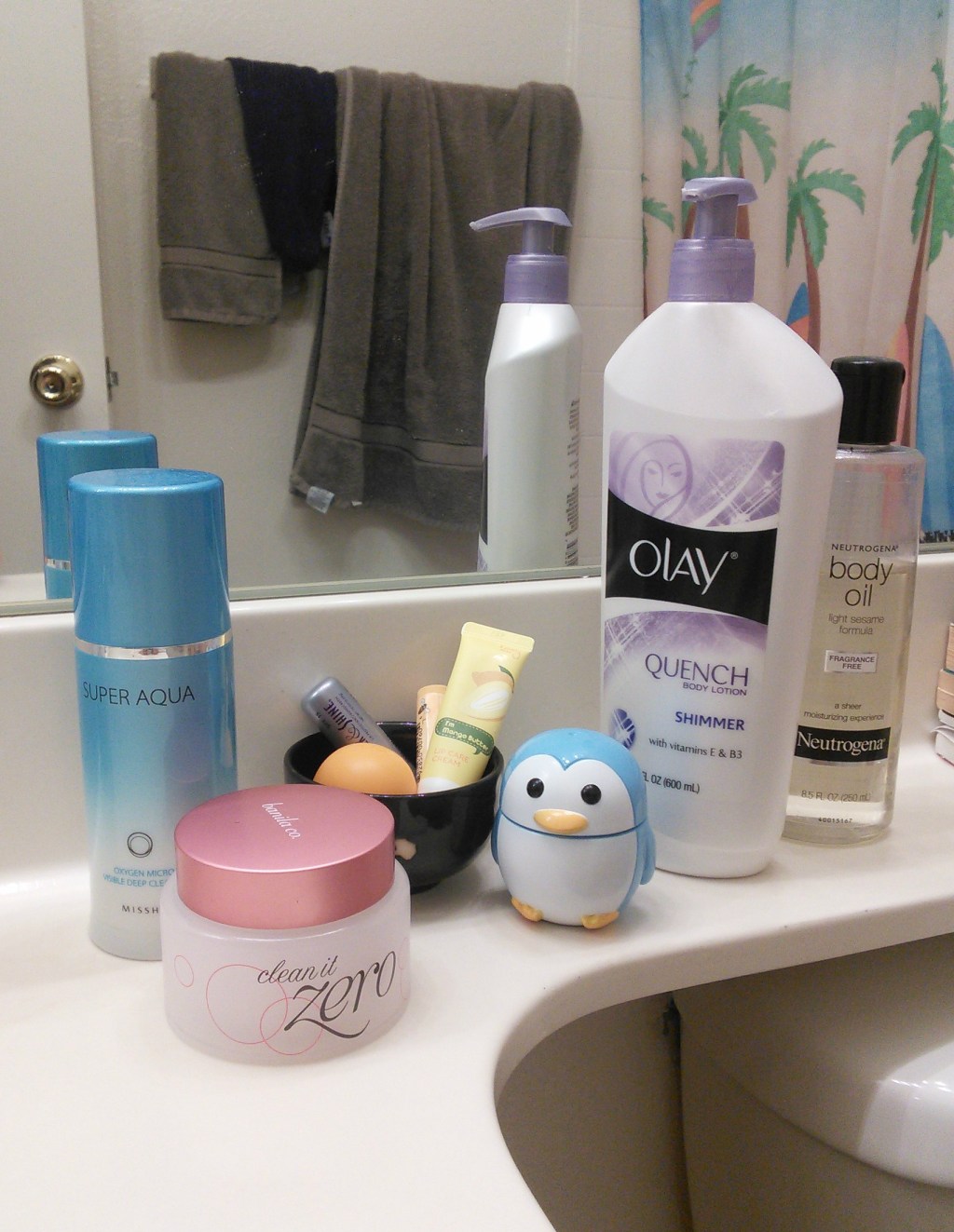
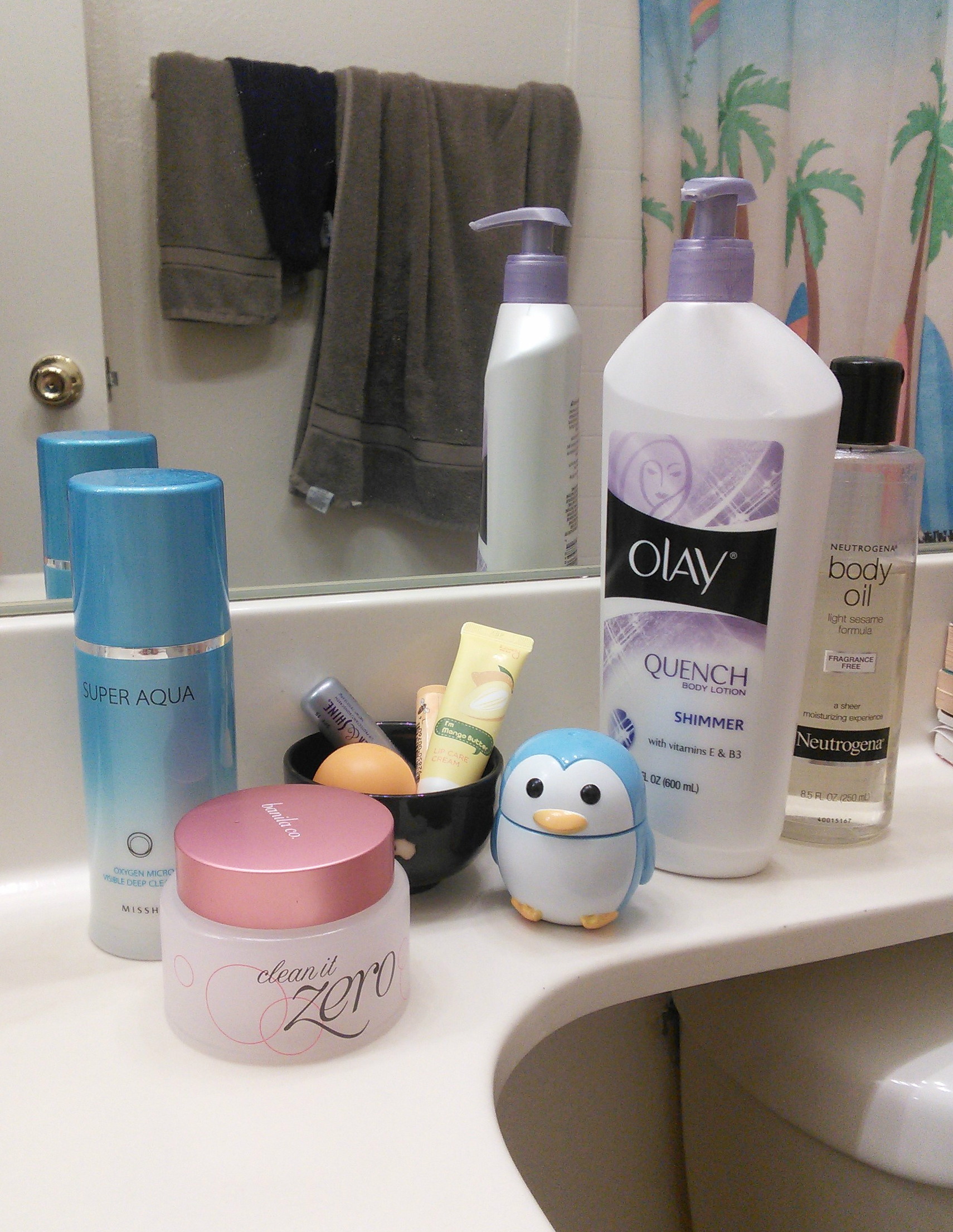
The only things I want to do in the master bathroom are brush my teeth and shower (evenings) or cleanse my face (mornings), so almost the only daily face care products I keep there are my cleansing products, some lip balms because one can never have enough lip balms and they should be distributed as widely as possible, and my Missha First Treatment Essence, which works best if applied immediately after cleansing to bare skin. This way, I significantly cut down the time I spend in there after I’m done washing.
The penguin holds hand cream. The teacup (Asian Mom Container Repurposing Disorder is rapidly increasing in severity) holds lip balms.This picture reminds me that I need to move the Stridex to the second bathroom. That jar of Mizon Returning Starfish is an empty; I keep my rings and some jewelry in it.
Second bathroom
Our second bathroom belongs primarily to our kid, but due to its close proximity to the living room, dining room, and my workstation, I’ve moved the rest of my skin care products there. I also put my makeup on in there. It’s okay. The kid doesn’t need much space for his stuff, and he doesn’t mind sharing his bathroom with me, especially since I’m the one who cleans it and feeds him. He knows better than to bite the hand that feeds him Cadbury mini chocolate eggs.
The most softly lit and romantic picture ever taken of makeup brushes, lipsticks, and a teacup full of hair ties and hair clips.See, almost all the rest of my routine is here. Not pictured: C21.5 vitamin C serum, Benton Snail Bee High Content Essence, and box of sheet masks and hydrogels in the fridge.
“But wait,” I can hear you protesting. “You haven’t really changed anything except that you’re putting your products on in a different bathroom! That’s not an improvement!”
No, it wouldn’t be–except that that’s not what I do! Now let’s move on to the second Korean skin care time-saver: multitasking!
Don’t chain yourself to the mirror
Despite the fact that I am so uncoordinated that I have not yet mastered the art of applying mascara without jabbing myself right in the eyeball, I’ve found it surprisingly easy to apply skin care products without looking in the mirror. Think about it. All you’re doing is pumping some product onto your palm, rubbing your hands together to spread the product around, swiping your palms over your face, and patting the product into your skin. You don’t actually need a mirror or Jean-Claude Van Damme blindfolded martial arts skills to do this. And that means that you can do your pat-pat-patting anywhere!
What I do is grab the products I need and put them next to me wherever I plan to be during my skin care time. In the morning, that usually means at my laptop, going through emails and getting my workday started; in the evening, that usually means by the couch as I Reddit on my tablet, hang out with Mr. Crazy Snail Lady, and maybe watch TV or a movie or whatever game he’s currently playing on the PS4. Pat pat pat one product in, go back to whatever I’m doing until it absorbs; pat pat pat the next layer, go back to my activity until it absorbs; and so on until it’s done.
You can work on your computer while applying your essences and serums and ampoules and emulsions and creams. You can watch TV or play on your mobile device; you can text or instant message or spend a few hours trying to decide on something to watch on Netflix. You can easily carry on conversations, eye contact and all, while fiddling with your face. Basically, there is absolutely no reason why you need to imprison yourself in the bathroom until your routine is done!
To recap, these are the only times I need to be in any bathroom during my skin care routine:
Showering in the evening or washing my face in the morning
Grabbing needed items out of the bathroom to take to my workstation or lounging spot, or putting them back afterwards (and I’m considering getting a little basket to hold my products so that I can shave a few seconds off of that, too)
Putting on makeup (under 10 minutes for me on a normal day)
See? Even the longest skin care routine doesn’t demand hours out of your day. With a little creative rearranging and multitasking, you can continue to do all the things you need to do, only with vastly better skin–and, if your personality is anything like mine, a vastly improved mood and outlook.
How do you save time when you’re doing your beauty rituals? Tell me your tricks in the comments!
I never bothered to develop any record-keeping or organizational skills beyond what I needed to succeed in school and at work–that is, not until I caught the skin care blogging bug. It’s too bad, because I could have made much better progress at understanding what works for me and what doesn’t if I had started sooner. In fact, I believe that keeping a skin care notebook is essential to figuring out your optimal skin care routine. And it’s both easy and (if you’re like me) fun!
Perfect your skin care routine with product notes and progress pics
In my post about why Asian skin care works, I discussed the fact that skin care is not one-size-fits-all. Now I want to talk about the fact that skin care is not objective.
When I say that skin care is not objective, what I mean is that just because a particular ingredient has been proven in clinical testing to have an effect on skin function or health, that doesn’t always mean that that ingredient will work for you, or in the specific formulation you’re trying. Other ingredients can interfere with the effectiveness of the ingredient. So can factors like concentration and pH. And all skin care is very YMMV thanks to the highly individual nature of people’s skin. Not every proven ingredient will work for every person, and something that works well for others may not do a thing for you, or may give you breakouts or other adverse effects.
What all this means is that if you’re testing out new products and trying to develop the most effective skin care routine for yourself, you’ll need a way to keep track of your progress (or lack thereof). This way, you can see at a glance what’s been working for you and what hasn’t. If you’re diligent about making note of ingredients, you’ll also develop better ingredient awareness. Ultimately, this will save you both time and money by enabling you to pick the products with the best chances of working out and to avoid the products that will cause you problems or won’t produce real effects.
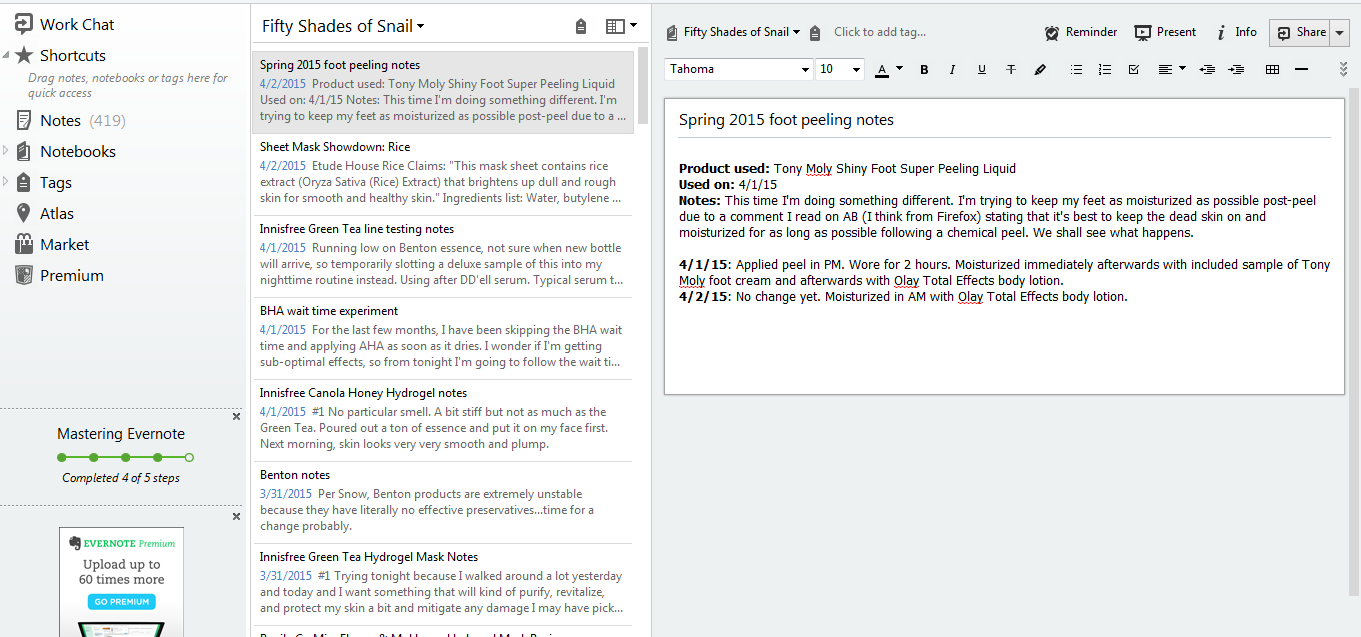
The way you keep your skin care records is entirely up to you. I use Evernote for just about everything–I have notebooks in Evernote for recipes, productivity tips, my professional journal, and career advancement articles, among other topics–and find it fantastic for my testing notes.
This is what my Evernote skin care notebook looks like.
You can also use a regular old text file or Word doc if you like, though I prefer Evernote because it allows me to easily organize and search my notes. Spreadsheets are another great way to keep track of your skin care experiments. More on that below.
You can also keep notes that are as detailed or as general as you’d like. In my opinion, the bare minimum should be:
Full ingredient lists, in case you want to find common ingredients among several different products
Notes on what a product’s active or featured ingredients are supposed to do
The date you started the product (by the way, this is as good a time as any to suggest that you only try one new product at a time, and give it at least a month before starting any others, with the exception of sheet masks)
Any changes you notice in your skin after starting the product
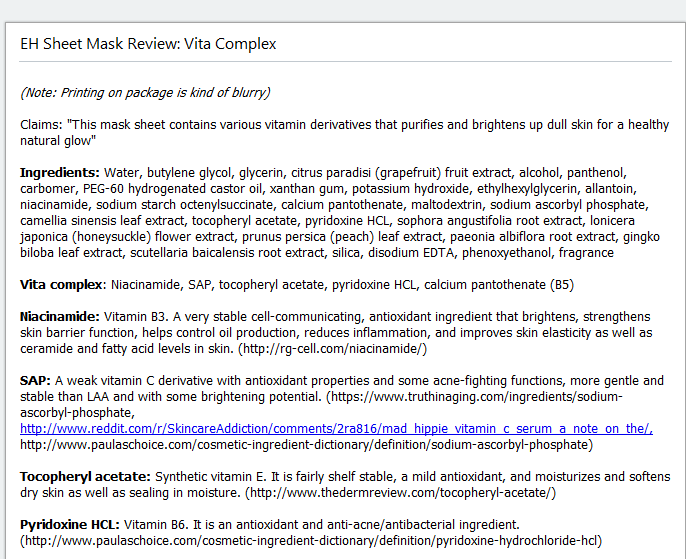
These are the testing notes for the Etude House I Need You! sheet mask in Vita Complex. I go on to describe how it smelled and felt on my face, how long I wore it, the effects I noticed immediately afterward and the effects I noticed the next day.
Progress pics are extremely useful for giving you an objective indication of the visible effects of the products you’re trying, too.
The next time you start a new product, keep a record of it. I think you’ll find it useful as you work towards your ideal skin care routine.
Keep track of a large product collection with spreadsheets
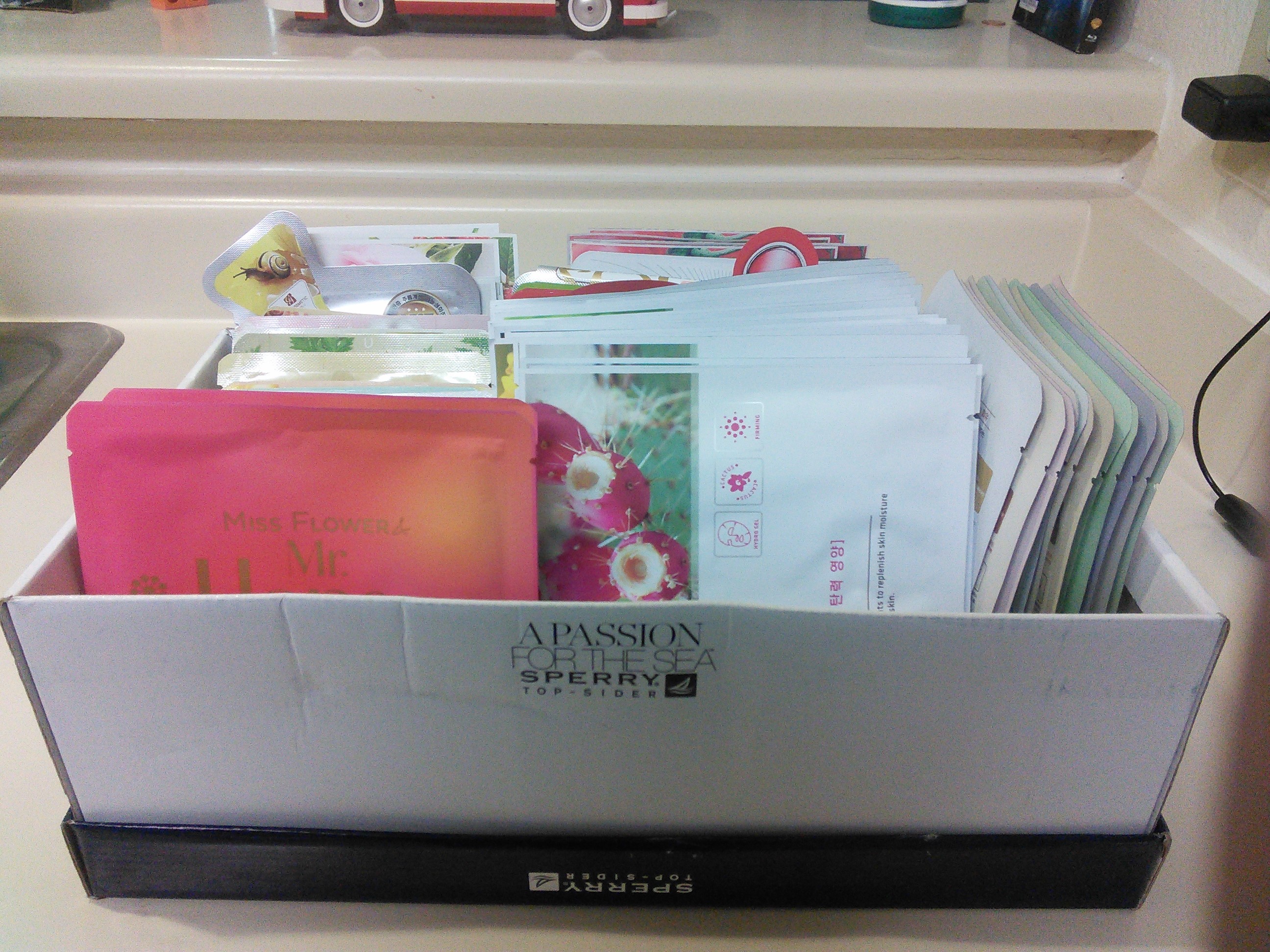
My skin care Evernote notebook is one of my favorite tools, but one thing it doesn’t do as well as I would like is give me an easy way of keeping track of my exploding sheet mask collection.
This is what I have right now. A few more are on their way to me.
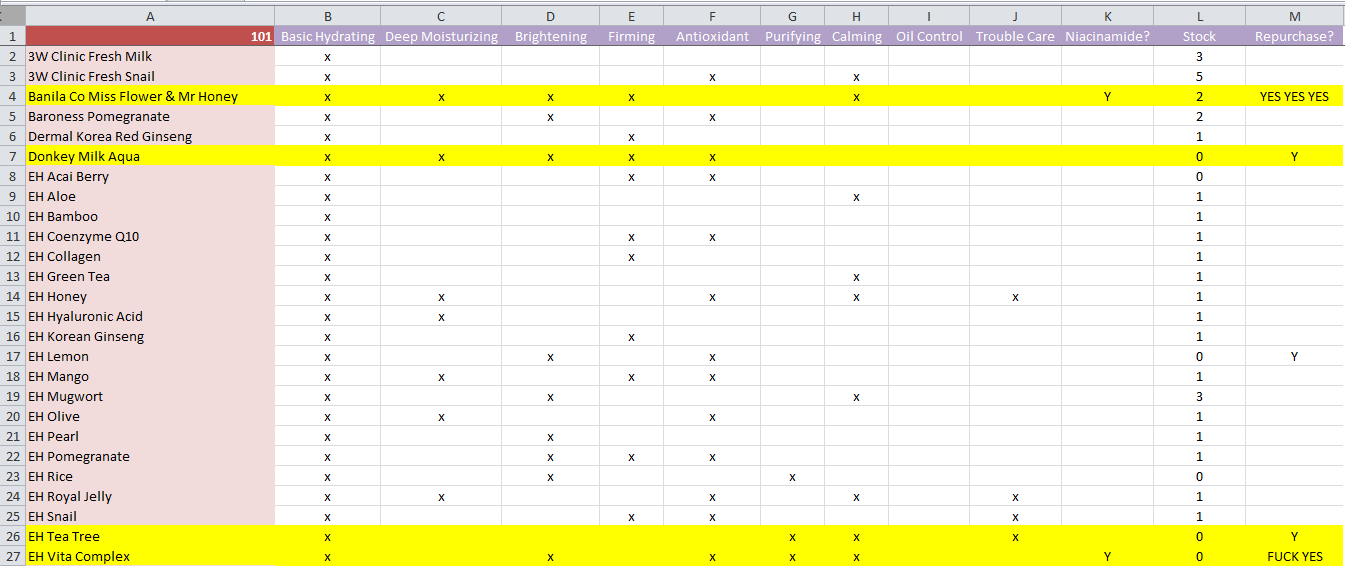
I currently have 101 sheet masks in my collection. How do I know that? Because I made a spreadsheet to keep track of them.
Excel: Best software ever?
I made the spreadsheet so that I’d have an easy, at-a-glance view of what sheet masks I have and how many, what each one claims to do, and whether or not I’d repurchase them. I have too many sheet masks, and try out too many varieties, to be able to easily remember which ones I liked when it’s time to repurchase–or even to remember when it’s time to repurchase. My Excel sheet helps immensely. If you’re accumulating a big variety of sheet masks or any other skin care product, you might find Excel helpful as well. And if you’re not a big fan of narrative-style note taking, spreadsheets with a binary system of product evaluation (does it do X? Y or N) may be easier to maintain.
How my organizational mania will help you
There’s another benefit to my sheet mask spreadsheet. As you can see, I’ve got a metric buttload of different sheet masks I’ve yet to try, and I fully intend to post reviews for every one of them. Like the awesome Snow White over at Snow White and the Asian Pear, however, I don’t want to flood the blog with a million and one random sheet masks reviews.
Moving forward, I’ve got two projects in the works to prevent that from happening. The first is sheet mask showdowns. These will be compare-and-contrast sheet mask reviews focused on a single star ingredient. For example, I’m working on a Rice Showdown that will discuss the relative benefits and shortcomings of the Etude House, The Face Shop, and Innisfree rice sheet masks.
And the second, which is still very early stages but which I’m very excited about, is a searchable, sortable database of sheet masks, which I’ll be building off of my Excel sheet! Once it’s live, instead of going through a dozen full reviews to find the one sheet mask you want to try, you’ll be able to search using criteria like “brightening” or “firming,” then look through a list of sheet masks that fit that criteria, with links to their reviews. I hope you’ll find it a good resource for your sheet mask purchases.







 or about $1.08 USD apiece (Amazon Prime and ships from US)








 Fifty Shades of Snail