Finding the best skin care products since 2014. Started with a focus on Korean skincare and grew from there. Skincare tips and beauty tips that work, maybe some hamster butts too
At least, I hope it’s a good morning for you. But if it isnt, if you haven’t gotten enough sleep or you just aren’t feeling your best, why not try to make time in your regular skin care ritual for an eye mask?
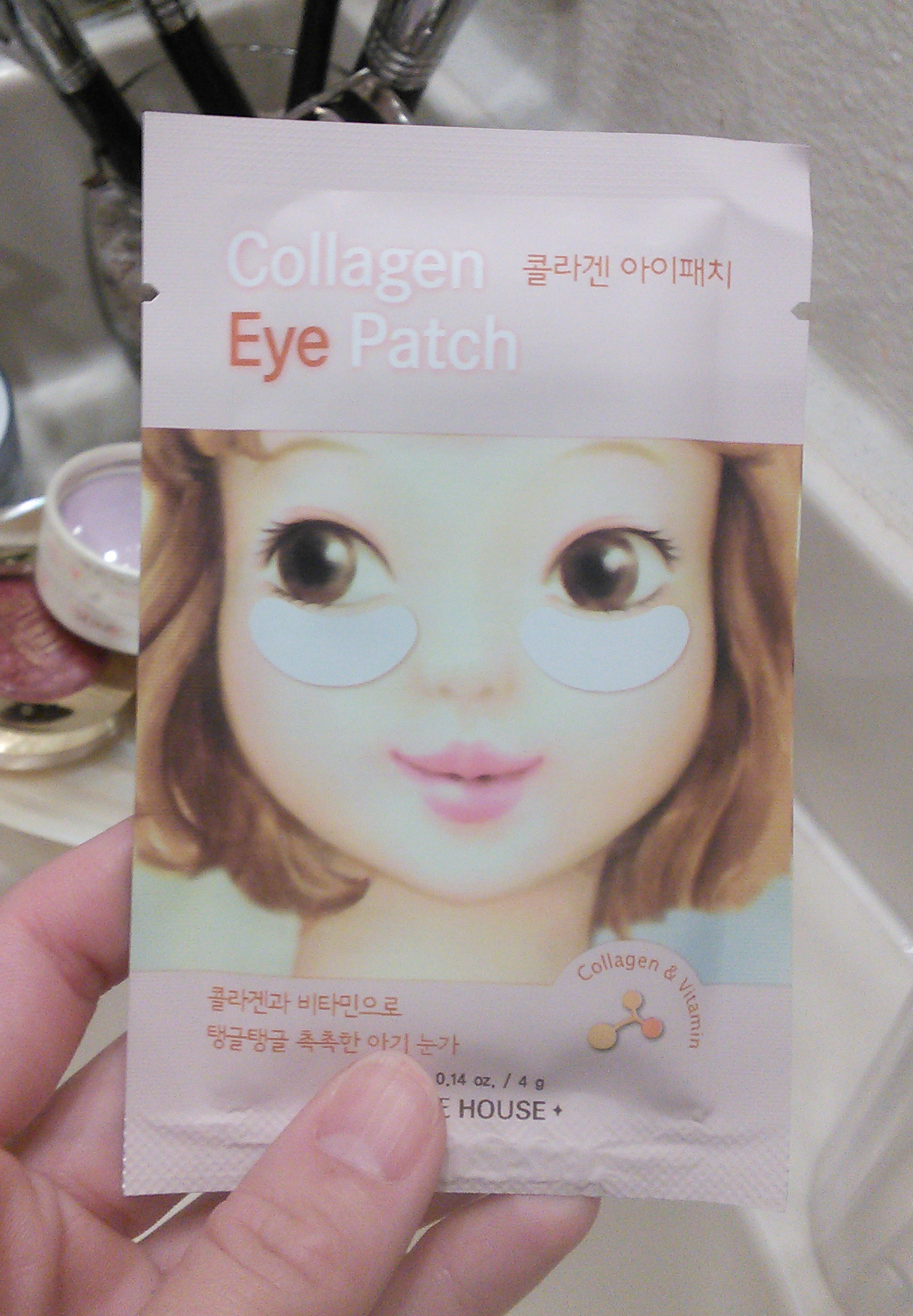
Typically made out of either the same thin pulp or cotton sheets as regular sheet masks, or out of thickened essence gel like hydrogel masks, eye masks are a fantastic way to temporarily plump up, smooth out, and sometimes brighten the skin around your eyes. While their effect will only last a day or so, they can be just what your eye area needs to look refreshed. Lately, I’ve been making some time in my AM routine for these. I love how a well hydrated eye area can instantly boost my whole face. I’ve mostly been using these Etude House Collagen Eye Patch eye masks.
Disappointingly, they look nothing like pirates’ eye patches.
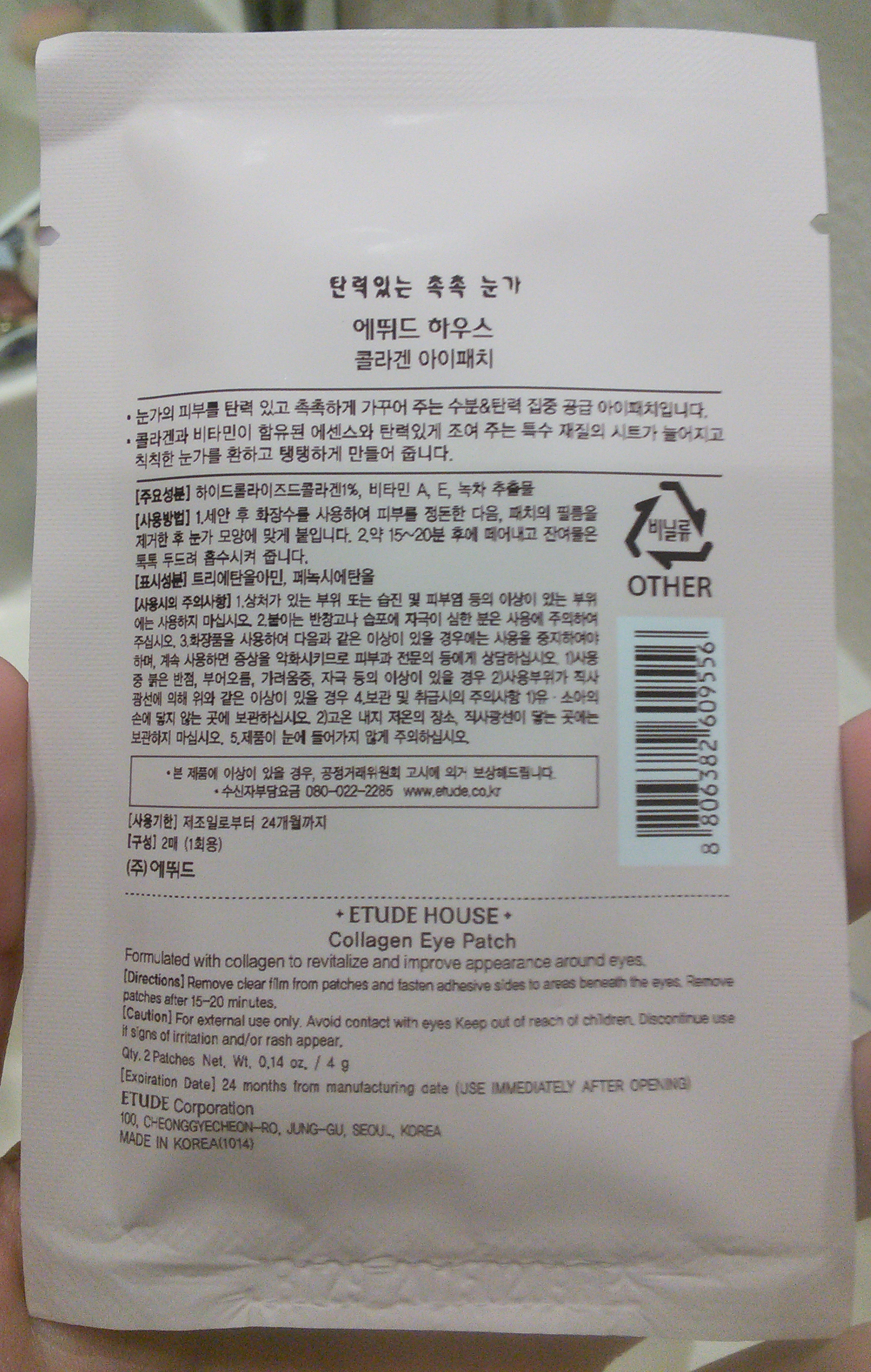
Purpose: Etude House claims that their Collagen Eye Patch will hydrate and tighten the skin under eyes, improve its elasticity, and brighten dark circles.
Do not use if: You are sensitive to alcohol, castor oil, retinol, fragrance, or anything else in the ingredients list.
When and how to use: After cleansing in the morning but before applying eye cream or moisturizer around your eyes, tear open package and remove the plastic tray that holds the patches.
The tray makes getting the masks out of the package easier.
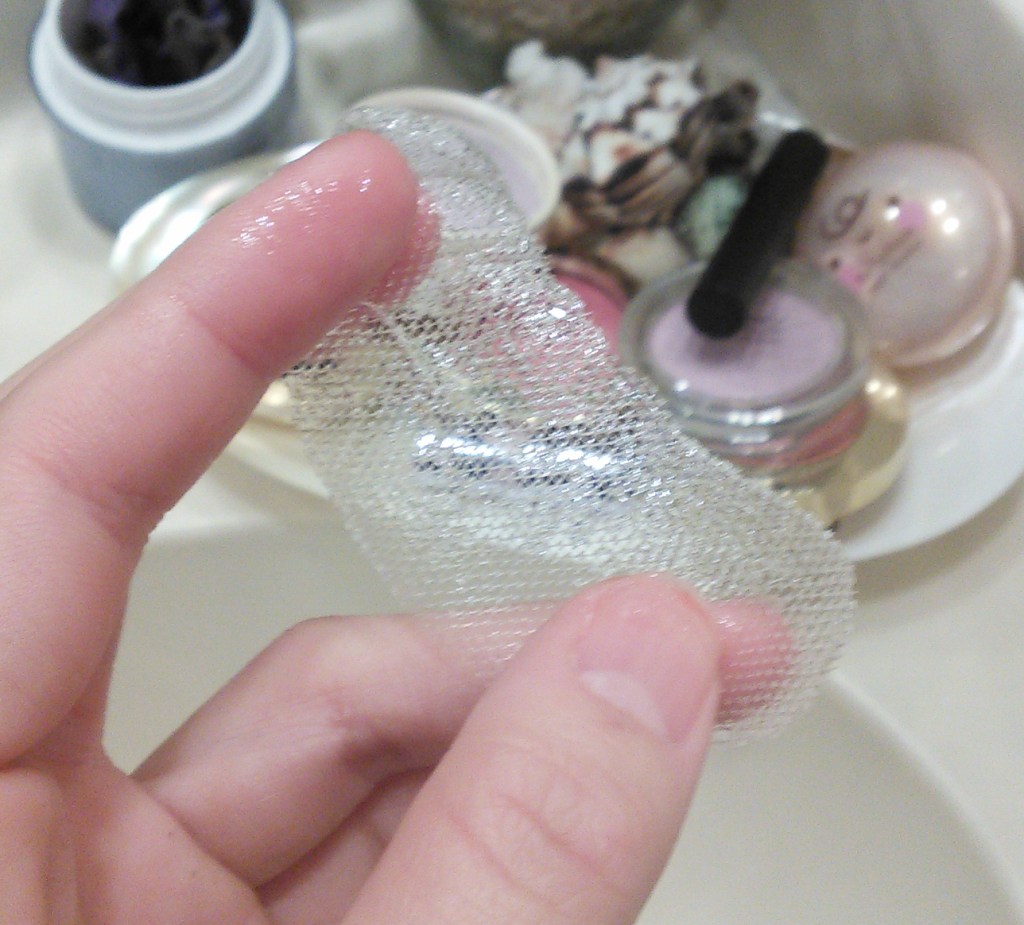
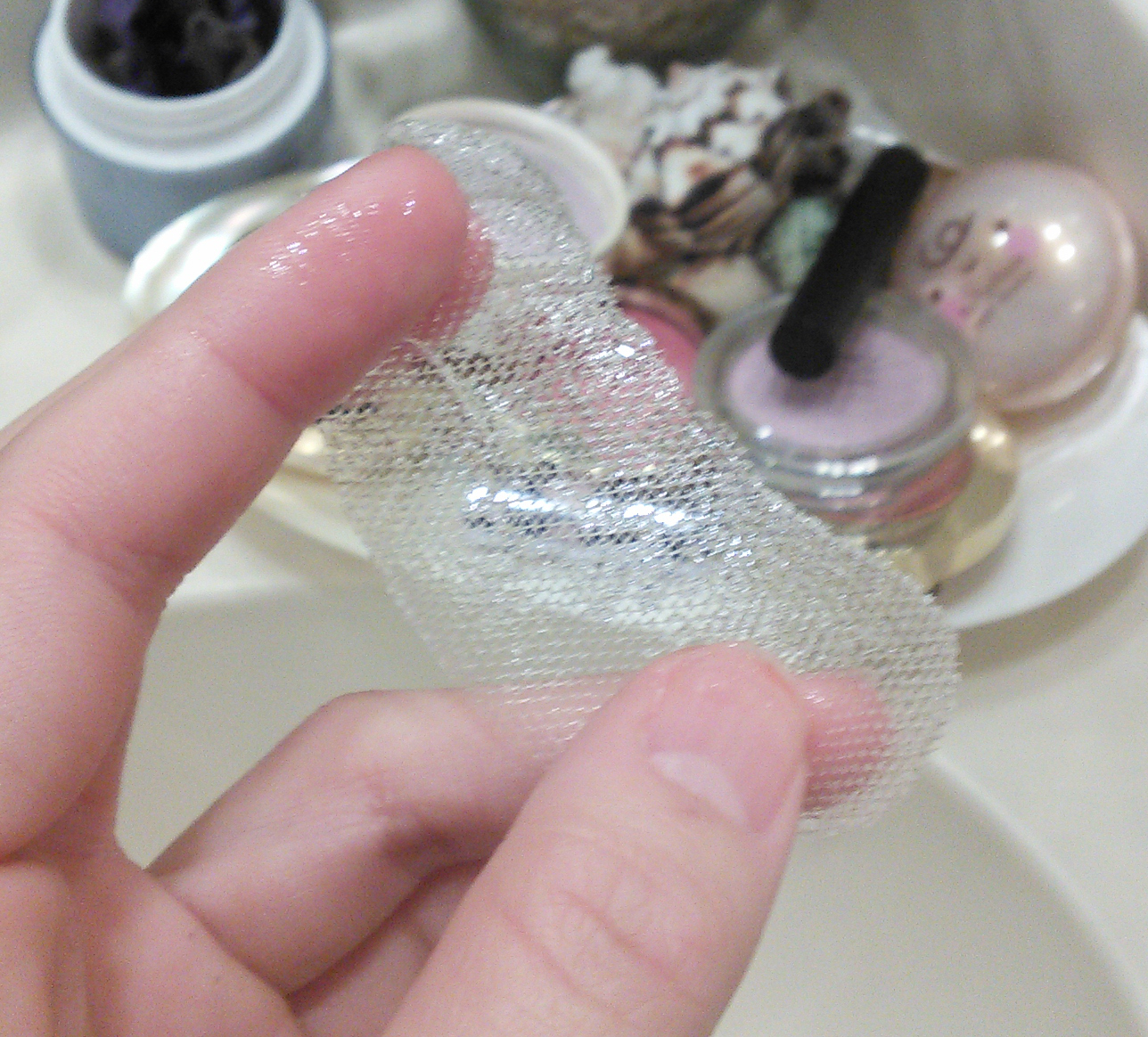
Open tray and pull out patches. Separate them from the thin, perforated clear plastic backings.
The plastic backing.
Each package contains two eye patches. Apply them to your undereye area, smoothing them down onto skin. Wear for 10-20 minutes. Remove, tap in remaining essence with a fingertip, and finish with eye cream or your regular moisturizer.
Notable ingredients: Since collagen is the star ingredient of this mask, let’s talk about that first. As we know, collagen is not an anti-aging active. Applying collagen to your face will not increase collagen levels within your skin, and it will not stimulate your skin to naturally produce more collagen. What it will do, however, is temporarily moisturize, smooth, and tighten the skin it’s applied to, and in a product like this, that’s good enough.
Collagen is not an anti-aging active, but retinol is, and to my surprise, the Etude House Collagen Eye Patch contains a bit of it. Its placement in the ingredients list means that there isn’t much, and you won’t see clinical-grade improvements with this product. Regular use of these eye masks may provide a small amount of long-term improvement to fine lines and wrinkles in the eye area, however.
The Etude House Collagen Eye Patch essence also contains sodium hyaluronate and glycerin for skin-plumping hydration and camellia sinensis leaf extract and tocopherol (vitamin E) to give your skin an antioxidant boost.
As far as the dark circle brightening claims, however, I’m not seeing much in this ingredients list that would help. In any case, most dark circles are genetic and relate to factors such as the anatomy of your eye area, the thinness of the skin, and the pigmentation under your eyes. A topical treatment won’t change any of those things.
My CosDNA analysis of the ingredients list showed a couple of warnings. The moisturizing penetration enhancer butylene glycol–present in almost every sheet mask I’ve ever seen–scores a 1 in the acne column, while tocopherol and the pH adjuster triethanolamine score 2s. Like butylene glycol, triethanolamine is in a ton of products, including sheet masks, so if your skin typically doesn’t respond poorly to sheet masks, I wouldn’t worry about the presence of these ingredients here. Tocopherol also scores a 2 as a potential acne trigger. There isn’t very much of it in this mask, but if you’ve broken out from vitamin E before, patch test first. The emulsifier carbomer (another ingredient that’s found in just about all standard sheet masks) gets a 1 for acne. It should also be noted that CosDNA doesn’t recognize plain alcohol, which is commonly used in products like this as a penetration enhancer but can be drying or irritating for some.
Performance
Since I only wear this mask for about 10-20 minutes at a time, there isn’t much to say about the way it feels while it’s on. It adheres nicely to the skin under my eyes and is big enough to cover my crow’s feet area as well; I can’t smell the fragrance at all, and the essence doesn’t irritate my undereye area or my eyes themselves.
The plumping and smoothing effect these masks have on my undereyes is impressive. If I’m a little dehydrated because it’s morning and I haven’t had a lot of water to drink yet, these masks will fill the skin out and make me look extra hydrated, and when I’m a bit puffy from eating too much salty food or not sleeping enough the night before, using these masks straight out of the refrigerator helps to take the swelling down significantly. The remaining essence pats in quickly and doesn’t interfere with either eye cream or makeup.
Conclusion: As an occasional addition to my morning skincare ritual, I really like these eye masks. They’re comfortable, easy to use, quick and relatively inexpensive–a good thing to have in the stash in case of eyemergency. If you’re looking for something to magically fade away undereye circles, however, you’re probably out of luck.
Rating: 4/5
Rating scale:
1 – This should be taken off the market.
2 – Caused me some problems; would not buy again.
3 – Meh. Neither great nor bad.
4 – Pretty good. Would buy again unless I find something better.
5 – I’ll never be in the market for a replacement unless this one is discontinued.
Where can I buy the Etude House Collagen Eye Patch?
This product is pretty commonly available. Two trustworthy places to buy the masks are:
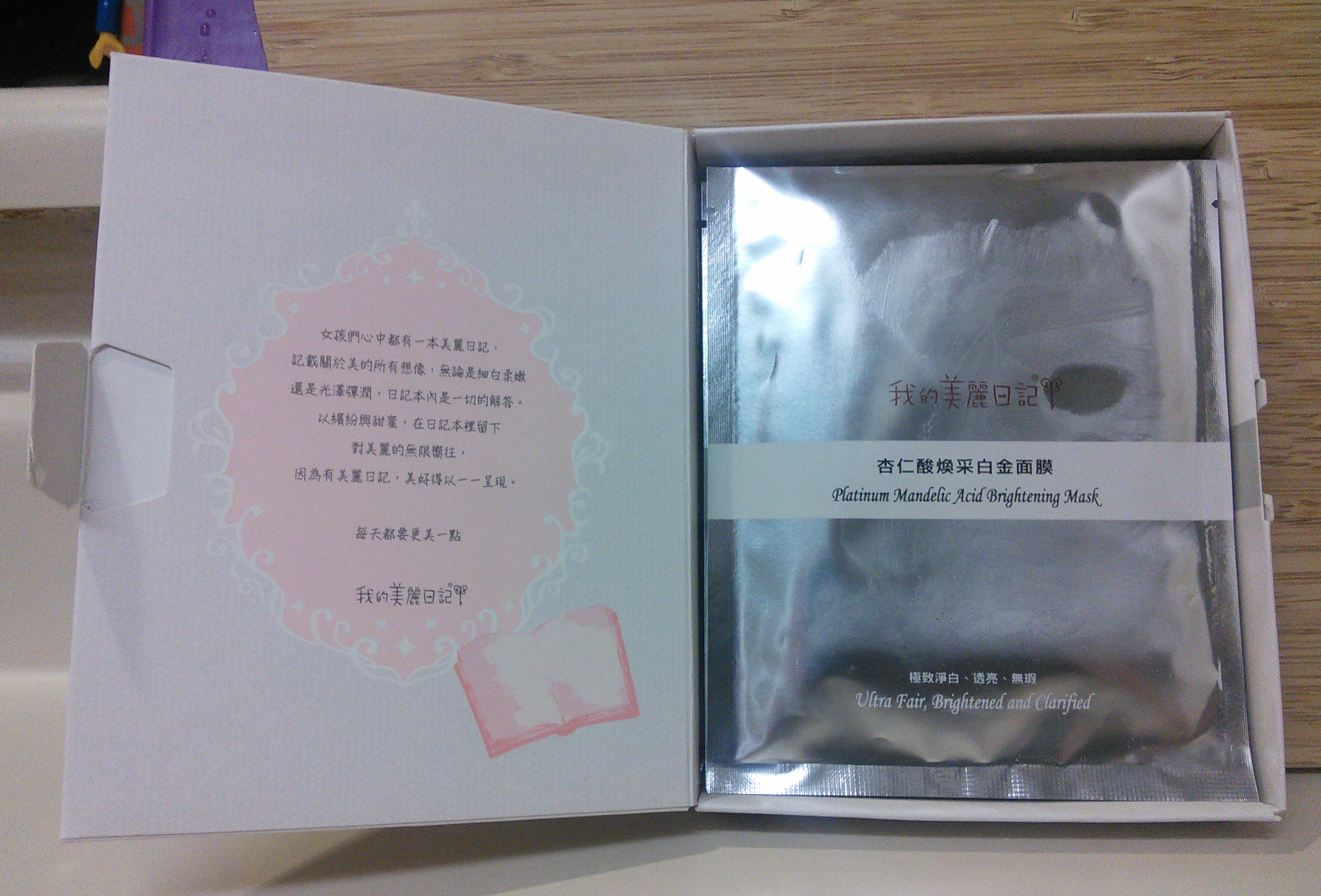
After many trials and tribulations, I’m finally ready to review the My Beauty Diary Mandelic Acid Brightening Mask! But before we get into it, let’s talk about this mask’s learning curve. Because I’ve never before encountered a mask that had a learning curve.
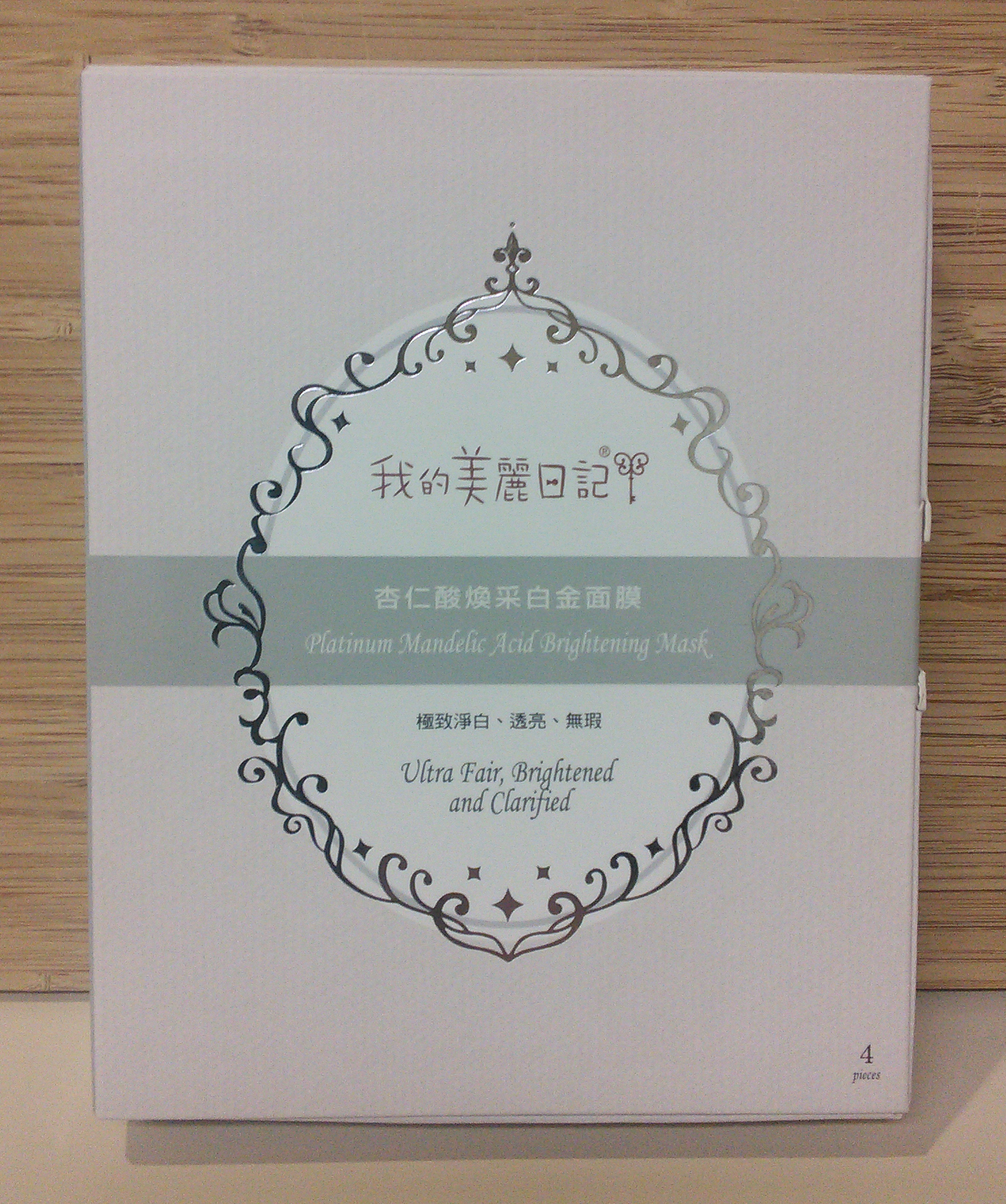
The higher cost per mask, the fancier package design, and the superior ingredients list make these one of MBD’s more premium masks.
They wouldn’t have had a learning curve if I’d bothered to read the instructions ever, but I’m so accustomed to sheet masks by now that I figured the process would be the same for these as it is for every other mask I’ve used.
You may already know about my first Platinum Mandelic Acid mask mishap. What you don’t know is that even after that blunder, I didn’t bother to look at the instructions, so the second time I used this mask, I screwed it up in a different way. The mask sheet itself is so thin, so soft, and so soaked in essence that if you allow it to fold in on itself or get bunched up, it will be impossible to straighten back out. Just so you know.
I did it right the third time. That means that now I only have one left. Does that make me sad? Read on to find out.
Actually, the box packaging reminds me strongly of Etude House. Anyone else see it?
Purpose: The My Beauty Diary Platinum Mandelic Acid Brightening Mask is touted as an intensive whitening, brightening, and clarifying mask. The inclusion of mandelic acid in both the ingredients and the product name implies that the mask will accomplish this through chemical exfoliation.
Do not use if: You are sensitive to AHAs; citrus, seaweed, or other botanical extracts; or anything else in the ingredients list.
When and how to use: Because this mask theoretically has some potential chemical exfoliant functions, I put this at a different stage of my routine than normal. Instead of applying the mask as the last stage of my routine before creams, I applied it following my standard 30-minute wait time after AHA, then applied essence, serum, ampoule, and cream afterwards.
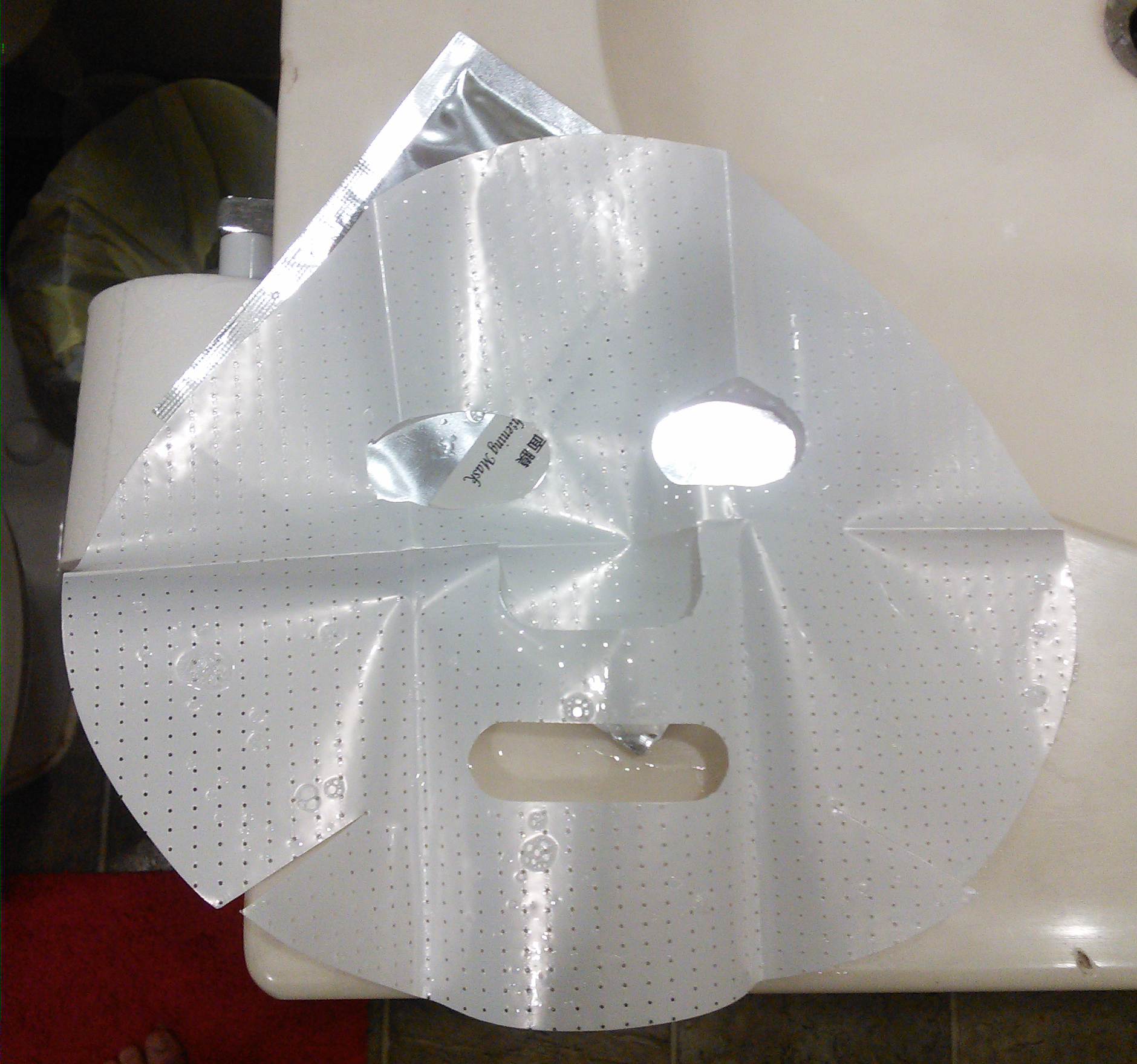
It is very important that you apply this mask correctly. When you take it out of the packet, the actual mask itself will be sandwiched between two backings: a stiff blue paper backing strongly reminiscent of the material used to make those disposable paper gowns they make you wear at the doctor’s when you’re about to have a needle jammed into the fleshy part next to your A-Sol, and, on the other side, a perforated plastic backing.
The plastic bit. This is the easiest part to recognize as a backing.
Remove the plastic backing but not the blue paper one. This is very important. DO NOT REMOVE THE BLUE PAPER BACKING.
Now look very closely at the blue backing in order to make sure you know which side the actual mask is on. It will have been on the side from which you peeled off the plastic, but just make sure, because the mask sheet is quite thin and translucent, and I don’t want you to make the same kinds of mistakes that I made. I’m helpful like that.
After you’ve identified which side of the blue sheet the actual sheet mask is on, apply both sheets with the mask side on your face. The blue backing will make it easier for you to get the mask sheet onto your face without having to fiddle with the sheet itself, because as I said above, if it bunches up or folds in on itself, it is so thin and sticky to itself that it will be pretty much impossible to straighten out.
Got both sheets on? Great. Now carefully peel off the blue backing without taking the mask sheet with it and adjust the mask sheet on your face as needed. Yay! You have successfully applied your My Beauty Diary Platinum Mandelic Acid Brightening Mask!
Wear for 20-30 minutes as directed by the instructions, then remove and pat in remaining essence. Continue with the rest of the steps of your nighttime skin care routine.
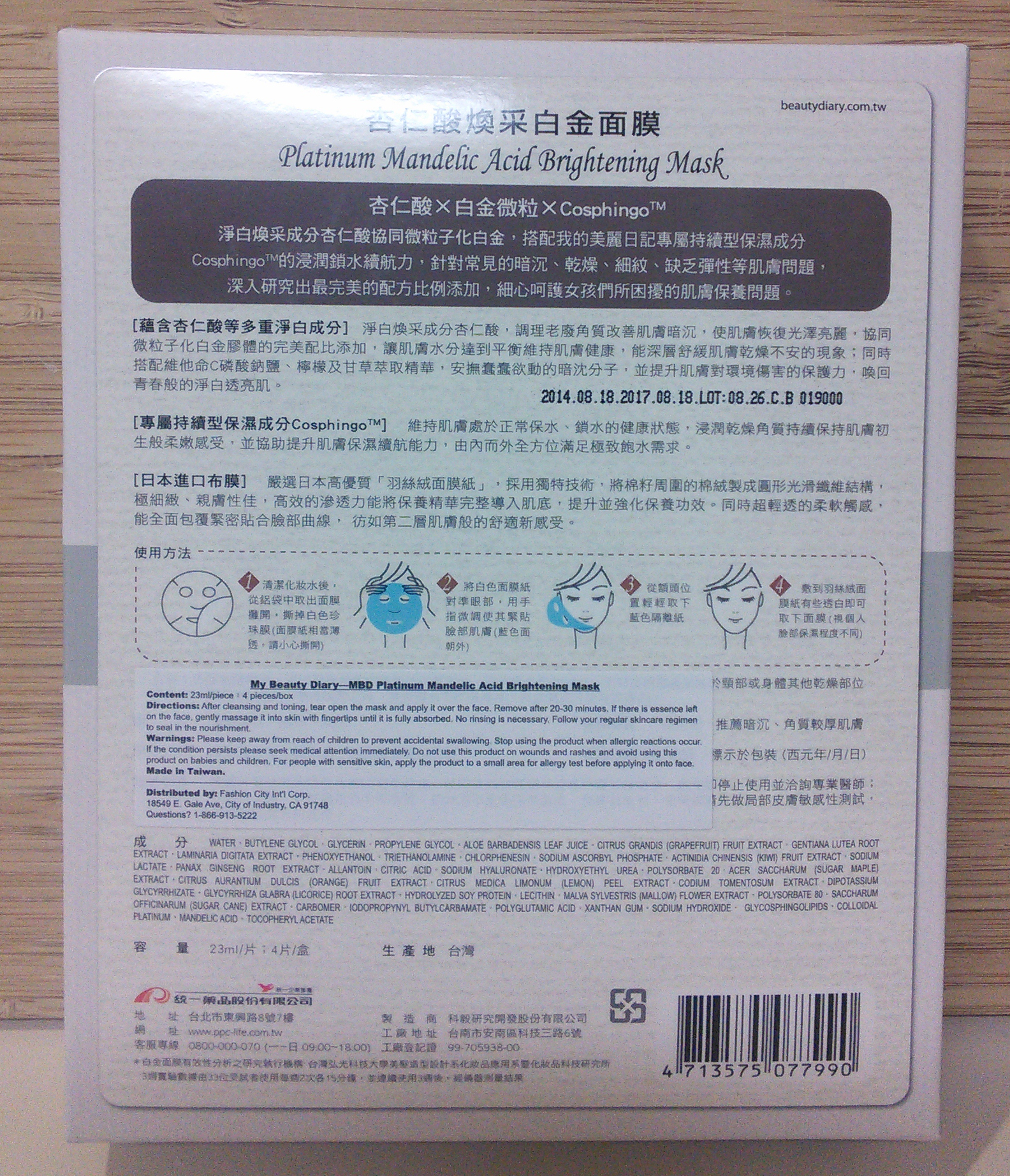
There’s less glare on the box photo than there was on the foil mask packet, so here’s the back of the box.
Notable ingredients: Whoa, baby! Take a look at all the extracts in that ingredients list. There are antioxidant-rich extracts, including laminaria digitata (kelp) extract and panax ginseng root extract. Kiwi and orange fruit extracts, among others, provide a boost of brightening moisture. This mask contains licorice root extract, one of the most potent and proven botanically derived brightening agents–a promising start. And, much like the wonderful Etude House I Need You! sheet mask in Vita Complex, the My Beauty Diary Platinum Mandelic Acid Brightening mask contains SAP, a stable form of vitamin C that has both antioxidant and brightening functions. And colloidal platinum is said to have antioxidant and possible anti-aging potential, though to be honest, I don’t buy that. Either way, it’s very very low in the ingredients list.
My CosDNA analysis of the mask is decent. Only a few ingredients out of that long list triggered warnings: carbomer gets a 1 as a potential acne trigger, butylene glycol gets a 1 as a potential irritant, and the common pH adjuster triethanolamine gets a 2 in the irritant column. Remember, however, that CosDNA is not the ultimate authority, since its database doesn’t contain every ingredient ever and skin care is YMMV anyway. If you’ve experienced reactions to any ingredients in the ingredients list or ingredients like them before, patch test first!
Of course, this mask also boasts the AHA ingredient mandelic acid. Let’s take a closer look at that.
The “mandelic acid” part of the My Beauty Diary Platinum Mandelic Acid Brightening Mask
So. This mask has “mandelic acid” in the name and is a brightening mask. You’d think it might have some serious exfoliating potential, right?
Nahhhhh.
Mandelic acid is the second-to-last ingredient in the list, right below colloidal platinum. (Which, incidentally–isn’t it funny that the two star ingredients from which the mask gets its name are among the two ingredients the mask contains the least of? Yay marketing.) As we know, AHAs need to be at a concentration of between 5 and 8% in order to effectively exfoliate. While MBD doesn’t give the exact percentage of mandelic acid this mask contains, its position in the ingredients list is a pretty sure indication that there isn’t enough in here for that purpose.
Another prerequisite of AHA chemical exfoliation is a pH of between 3 and 4. Lower than 3, and you run the risk of chemical burns; higher than 4, and it won’t exfoliate much, if at all.
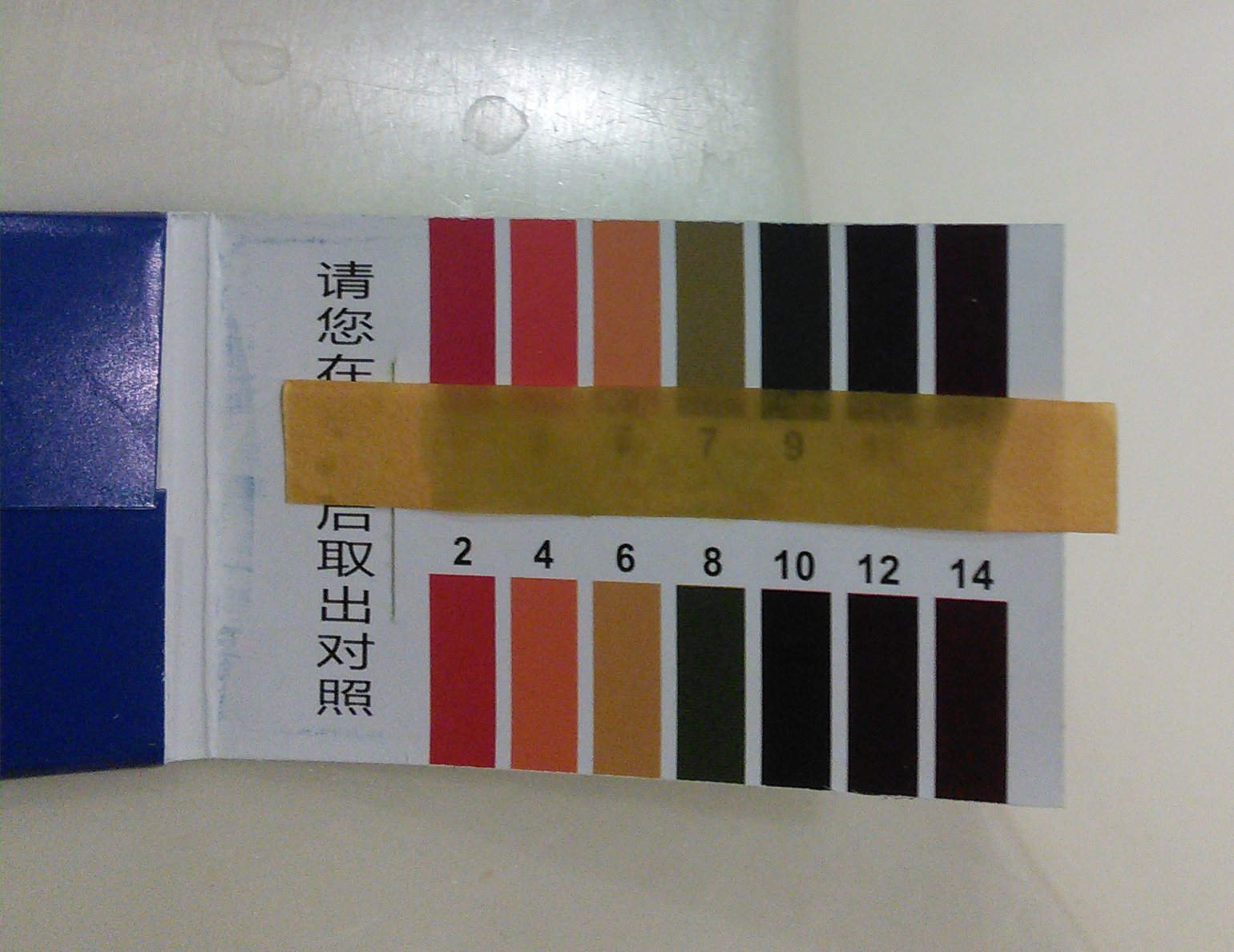
Guess what the pH of the My Beauty Diary Platinum Mandelic Acid Brightening Mask is?
pH test of My Beauty Diary Platinum Mandelic Acid Brightening Mask.
I tested two different masks out of this box and used at least two pH strips on each mask in order to make sure of my results. pH strips like the cheapo ones I’m using aren’t the world’s most accurate, but they are useful for giving a general range, and based on my squinting assessment of the strips I tested these masks with, the pH of the essence works out to somewhere between 6 and 7. pH is a logarithmic scale, so that is orders and orders of magnitude higher than what’s required for effective chemical exfoliation, even if the concentration were high enough, which I’m confident it isn’t.
So. We can conclude from this that the MBD Platinum Mandelic Acid Brightening Mask does not brighten through any kind of intensive AHA exfoliation. Still, I’ve used plenty of sheet masks that don’t rely on chemical exfoliation to brighten, and that do brighten effectively, so this is no reason to write the mask off. Marketing BS is annoying, but sometimes great products really do hide behind marketing BS.
Performance
I’ve already talked about the complicated application process and the extreme thinness of the mask sheet, so we’ll skip those parts and head straight to how things go once the mask is on.
I’m not sure if this is a “come hither” look, a simple vacant stare, or an “I’m going to murder you and replace the peeled-off murder skin I’m wearing on my face with yours.” You decide.
The major advantage of the onion-skin-thin mask sheet is that it adheres very closely and tightly to the facial contours–it’s the most “second skin”-like mask sheet I’ve ever worn. I was able to talk, smile, and laugh comfortably without dislodging the material at all. Usually my masked face is as stiff and expressionless as that of a Botox junkie with fresh lip injections, so this was a pleasant change. While wearing the mask, I noticed a very subtle tingling, itching sensation, not enough to be unpleasant but not enough to fully ignore. It’s my understanding from reading people’s experiences with mandelic acid that this is pretty common, so I wasn’t too concerned.
The mask sheet was dry enough to remove after about 30 minutes, which was as long as I’d planned to wear it anyway, not wanting to risk irritation or overexfoliation in case I’m wrong about its lack of exfoliating effectiveness.
At first I was a little disappointed with the results. My skin was noticeably brighter and more even than it had been before I put it on, but not any more so than what I might get from other sheet masks I’ve tried, including many made by My Beauty Diary. I did have to pull back and check my expectations, however. The “premium” price and packaging of these masks had made me expect some kind of miracle, but in fact normal sheet masks already give me good brightening results, and so did this mask. If this mask had ended up brightening my face much more than a typical mask already does, I’d end up looking like some bizarre modern geisha with a face five shades lighter than my chest.
I was more impressed with what I saw the next morning, after I cleansed my face. The brightening was still in effect, skintone remained very even, my skin overall was juicy plump, as it almost always is after an MBD session, and my skin just felt super duper soft.
Conclusion: The My Beauty Diary Platinum Mandelic Acid Brightening Mask was a really weird, roller-coaster experience for me. First all my challenges with applying the mask properly, and then my initial disappointment followed by my realization that my expectations had been unrealistically high–I don’t think any sheet mask has ever made me feel so much before.
While the actual results of this mask aren’t out of this world, I do have an idea for the most effective use of a box of these: nightly use over the course of four consecutive nights in preparation for a special event. The nightly dose of the brightening extracts will produce a more dramatic end result, better justifying the cost than occasional use would, and your skin really will be incredibly soft, silky, hydrated, and radiant when it’s time to show your face at the event. With that recommendation in mind, I can say that I do like this mask after all. And to answer the question I posed at the beginning of this review, yes, I am kind of sad that I wasted one of the masks, sort-of wasted another, and now only have one left. I’m going to repurchase these at some point to have them handy for exactly the scenario I just described: intensive prep for a special event.
Rating: 4/5
Rating scale:
1 – This should be taken off the market.
2 – Caused me some problems; would not buy again.
3 – Meh. Neither great nor bad.
4 – Pretty good. Would buy again unless I find something better.
5 – I’ll never be in the market for a replacement unless this one is discontinued.
Where can I buy the My Beauty Diary Platinum Mandelic Acid Brightening Mask?
I don’t think this mask is as easy to find as the standard My Beauty Diary varieties. I’ve searched “My Beauty Diary” about a million times on Amazon and never saw this version until recently, when I got so excited that I snapped it up at once. If you want to try out a box of these, you can find them on Amazon at the following affiliate links:
For those who don’t share my passion, it must sound really weird to hear makeup called a hobby or an art. Over the last six months or so, however, those are exactly what the act of applying makeup has become for me.
Makeup as art
I can’t draw or paint or decorate a house to save my life. I never formally developed those skills when I was younger. I believe I could get better at any of those things if I really applied myself to studying and practicing the techniques, but at this point, what I can already produce just isn’t good enough–doesn’t show enough potential–to motivate me to get better at it.
The thing is, I need an outlet to create something that’s aesthetically pleasing and makes me happy both to see and to share.
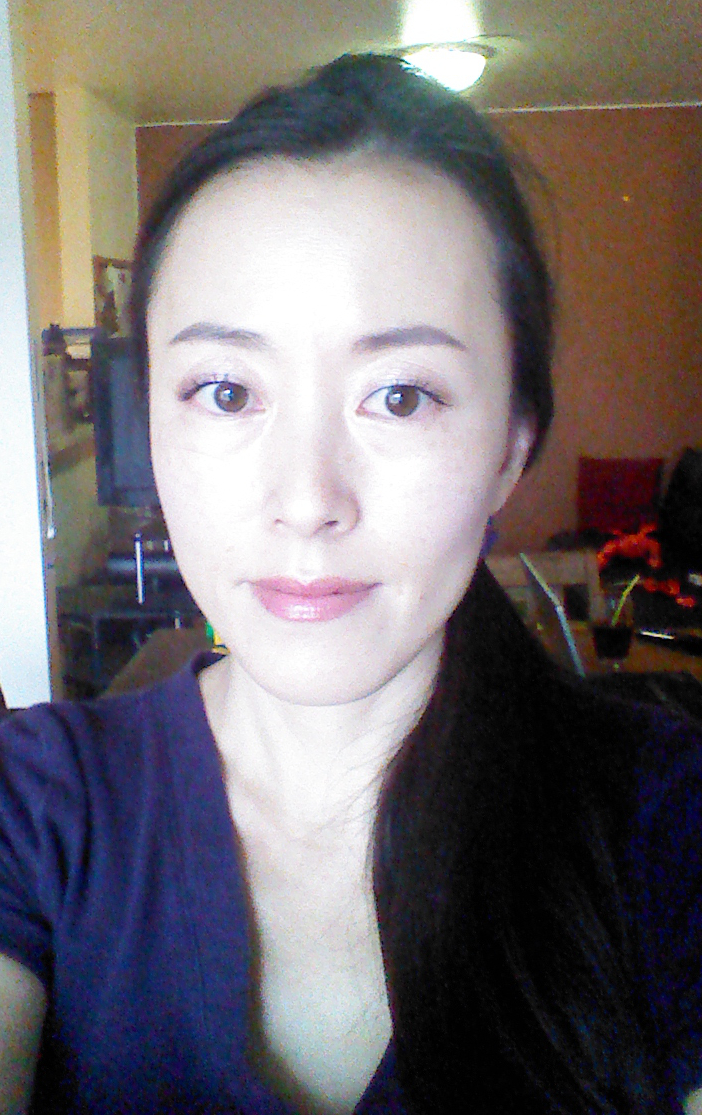
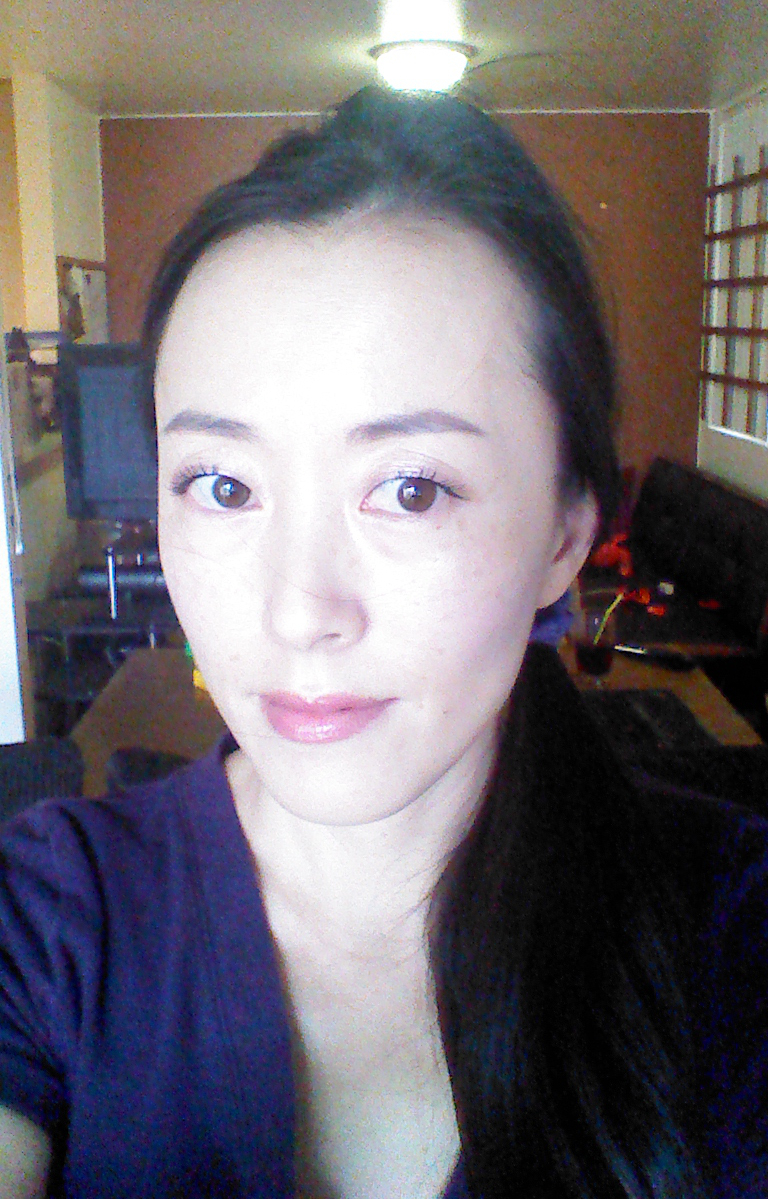
Turns out that learning how to decorate my face to suit my moods and tastes is the perfect outlet for me. I’m loving trying out new colors, textures, and shapes on my face. At the moment I’m practicing a soft but moody lavender look; I think I’m improving and am pretty happy with today’s attempt, though I still need to work on being braver with blush. (Though the Tony Moly Crystal Blusher I used is a wee bit chalky, so perhaps I couldn’t use a heavier hand with that product anyway.)
Front view; please excuse the dismembered Baymax in the background.
Purples, lavenders, and lilacs are some of my favorite colors, and I like clothes in those colors look on me, so it made sense to try them out on my face as well.
Brows: Maybelline Color Tattoo cream eyeshadow, Tough as Taupe
Lids: Too Cool for School (eye) Shadow on Flatiron, Lavender; Lioele Color Eye Shadow, shade 25 Brown Violet (watch out for the intense glitter fallout on this one)–in person, I like to call this combo Disco Ball Purple Eyes
Liner: Etude House Play 101 Pencil, shade 1 (creamy black)
Lashes: Heroine Make Volume & Curl, Jet Black; Heroine Make Long & Curl, Jet Black
Like any other art, I had to get comfortable with the basics and the “rules” before I was able to branch out and try something different or potentially “rule”-breaking. For years and years and years, I alternated between the super simple and natural No Makeup Makeup look and a very smoky black eye, because very smoky black eyeliner was the only way I knew of to do my eyes. But after a lot of study of the Makeup Addiction subreddit, I started using other colors, experimenting with trying more than one shadow color at a time on my eyes, moving beyond black liner, and blending. Blending. Blending is very important. And brushes. Brushes are key!
Skin care as hobby
If you’re already familiar with my elaborate morning and evening skin care rituals and my focus on ingredient-aware skin care, then you probably already have an idea of why I consider skin care a hobby. It’s about much more than just washing my face and putting on some moisturizer twice a day. For me, skin care is about evaluating my skin condition on a day-to-day basis and choosing which products I use based on that; researching ingredients, keeping up with the trends, the industry, and skin care science as a whole; and trying out promising products and keeping track of my inventory and results in a pretty organized and methodical way. I love learning about every aspect of it and feel like I learn something new every day, and the best thing about skin care is that I can then turn around and apply my new knowledge in a practical (and fun!) way.
Do you consider makeup and skin care hobbies? Or are they just things you have to do every day?
Tinfoil time! Innisfree either has psychics on staff or a deal with the NSA, because they always seem to have a great deal or promotion going just when I’m running out of my staples and looking for a change. Check out what I got and how my routine will be changing (spoiler: I’m replacing some higher-priced items with much more affordable options and don’t expect any loss of effectiveness) as we move into summer. Flexibility in your skin care routine is key to ensuring continual effectiveness and results. Also, it’s fun to have a reason to try out a new thing or five.
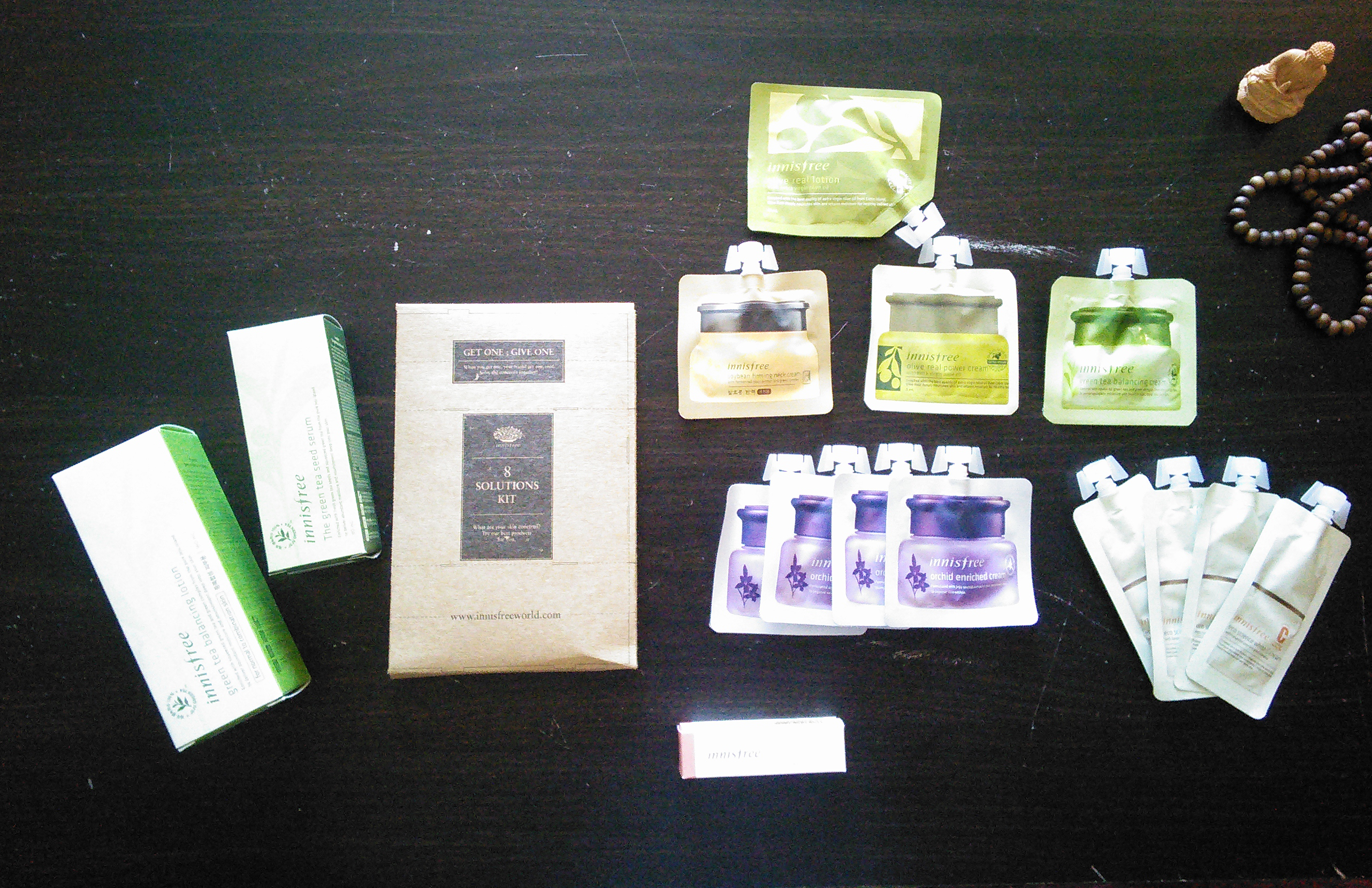
The full haul
Don’t mind my gnarly coffee table surface or the angelic glow making it difficult to see the product names. They’re glowing because they just got here from heaven.
The Green Tea Seed Serum
A light, hydrating serum with a base of antioxidant-rich green tea extracts to battle summertime sun exposure. I fell in love with this when I tried a sample out of the Innisfree 8 Solutions Kit. It will be replacing my DD’ell Extra Vitalizing Serum as a much more affordable and equally hydrating serum. The size is a bit more generous than most other serums I’ve used, so that’s a bonus, too.
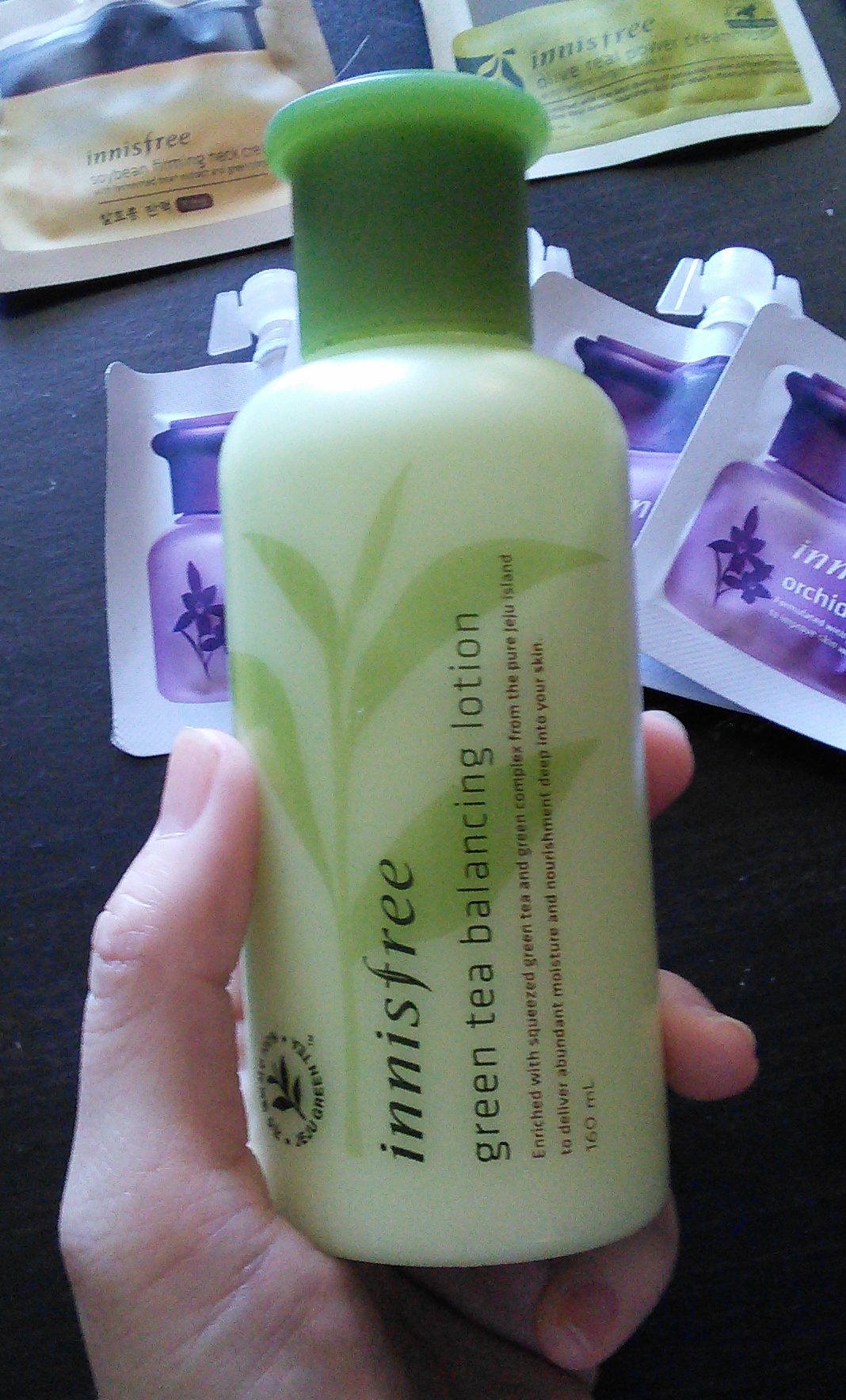
Green Tea Balancing Lotion
Another find from the 8 Solutions Kit. This is a very light, fast-absorbing emulsion in a green tea extract base, also packed full of antioxidants. This will be replacing my Mizon Snail Recovery Gel Cream as a light day moisturizer under sunscreen. Considering the fact that I made a sample of this last for two and a half weeks, I imagine this bottle will last months and months.
Creamy Tint Lipstick in No. 21, “Romantic Peach on Spring Day”
Lipstick! Ever since I realized that the colors of Asian color cosmetics tend to suit my Asian coloring better than Western products, I’ve been on a makeup bender. And I love the creamy, moisturizing feel of the Innisfree Creamy Tint Lipsticks. If only they made more colors.
Creamy Tint Lipstick in No. 21 lip swatch
It’s much less peach and much more pink on my lips than I expected, but I like the color, and the fact that it’s less matte and not as strong as my other Innisfree lipsticks makes it a bit more wearable for day-to-day.
Samples to try
I’m planning to replace my Benton High Content Steam Cream and Mizon Returning Starfish Cream, both out of boredom and because summer, for me, demands lighter creams. Mostly out of boredom. I’m excited about the I’m From Honey Cream I have coming to me, and I hope one of these Innisfree creams will pass the test as a nourishing but summerweight second option.
Samples of Eco Science White C Cream
I’ll be starting with a trial of the anti-aging Eco Science White C Cream, which Innisfree claims uses natural citrus extracts to brighten and repair skin.
Samples of Orchid Enriched Cream
If the Eco Science White C Cream doesn’t work out, I’ll move on to the Orchid Enriched Cream. Not going to lie, purples are my favorite colors and played a role in my selection of this cream. This is another antioxidant-packed anti-aging cream, and the ingredients list actually doesn’t look all that different from the Eco Science White C.
Random cream samples
If the Orchid Enriched Cream doesn’t work out, I’ll move on to the Olive Real Power Cream and Green Tea Balancing Cream. I doubt I’ll be testing the Soybean Firming Neck Cream, since I use my regular face routine on my neck already, and it seems to work just fine.
Sample storage
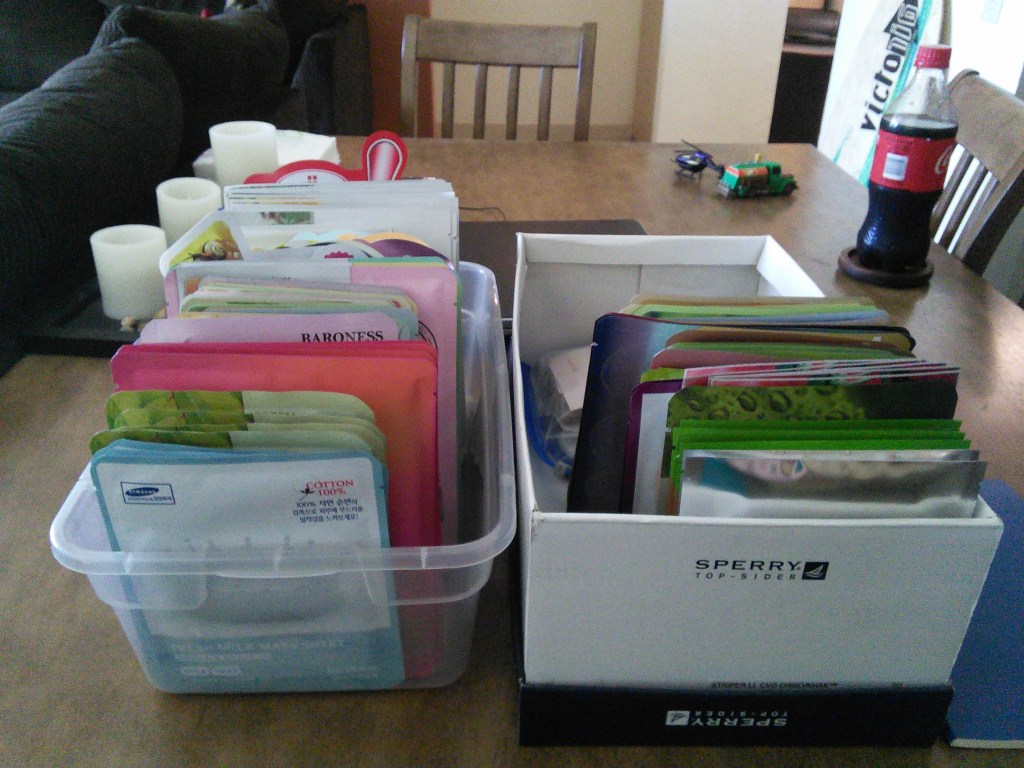
I packed my “creams to try” in an empty MBD box, except for the sample of White C that I’ll be starting tonight.
Samples that shall be passed on
I’m not terribly interested in the Green Tea Balancing Skin toner, the Olive Real Lotion, or the Soybean Firming Neck Cream, and since I already have a full size of the Green Tea Seed Serum, these samples will be gifted to people as the opportunity arises. I originally meant to store them in the stackable sliding drawer that can be made out of the 8 Solutions Kit package (hooray for upcycling and hooray for Innisfree’s eco-branding!), but after giving myself a sore neck and a bad mood cutting it out and putting it together, I discovered that it really is stupid small. I’m keeping the box for smaller samples, but these will go in a different MBD box.
My lineup as of today
As you can see, my daily routine is undergoing some significant changes. Missha FTE is on its way out now that my much cheaper and very nicely formulated CosRX Galactomyces 95 White Power (cringe) Essence is in the mail. I’m tired of my Benton steam cream and Mizon starfish and don’t need creams that heavy for summer. And the DD’ell was never something I planned to repurchase anyway. Not pictured: my C21.5 serum and my last bottle of Benton Snail Bee High Content Essence, which I plan to replace with Shara Shara’s Honey Bomb All In One Ampoule, a gel-texture product full of honey, propolis, and niacinamide. The Shara Shara is already on the way.
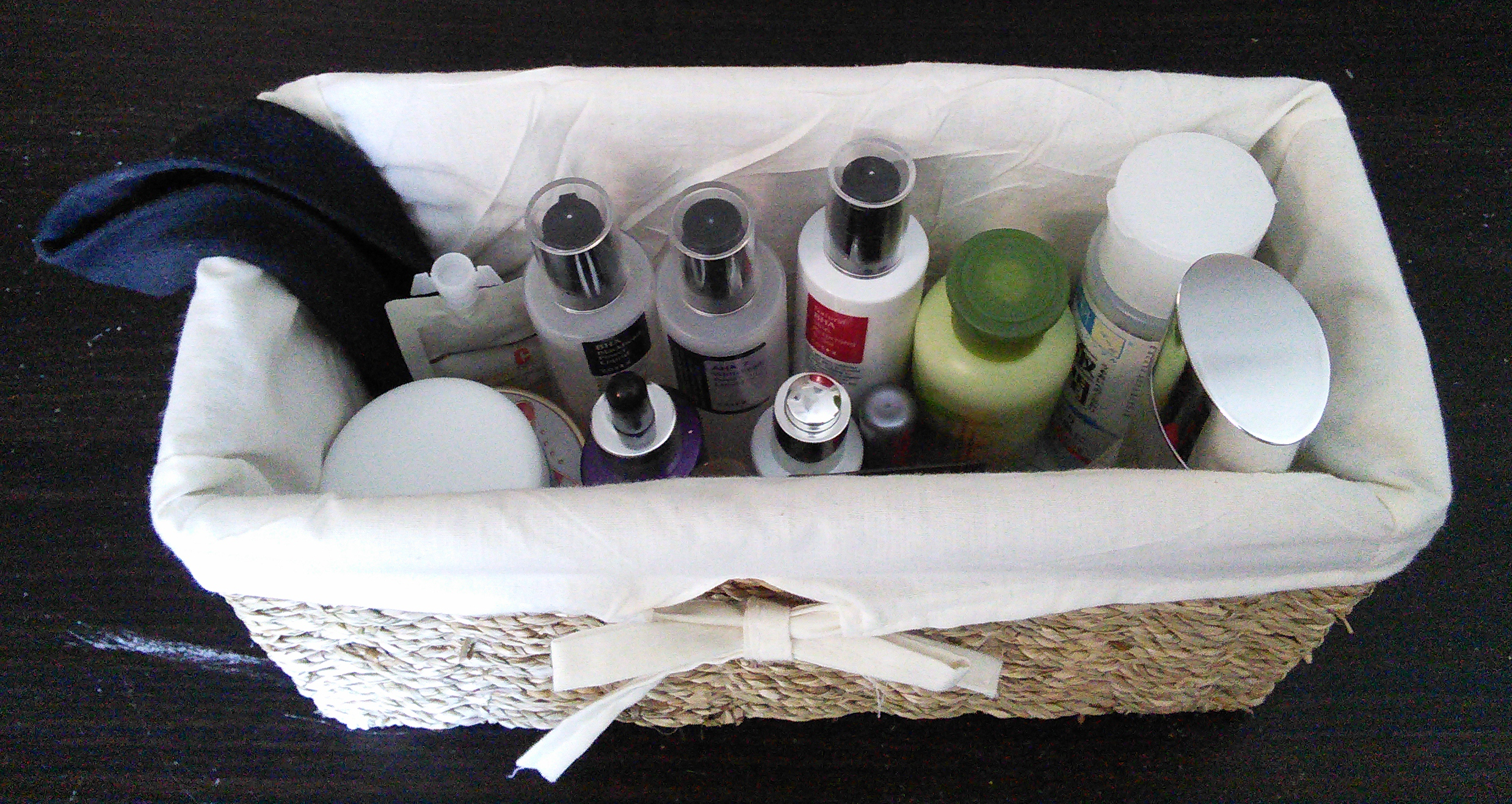
Skincare basket top view
This is how my little basket of happiness looks when everything’s inside. Not kidding, guys, I lug this thing around like a security blanket.
Oh! And of course I ended up with another Green Tea Solutions Kit.
Do you plan to change your routine at all for summer?
Over the weekend, Fifty Shades of Snail hit 40,000 pageviews. I only started this blog in February, so this feels huge for me, and I’d like to hand out some gifts as a way of thanking you all for being such a great and loyal audience!
That’s where this “My AB Story” contest comes in.
There will be two giveaway grand prize winners, one each in the categories “Asian Skincare User” and “Asian Skincare Curious.” Each grand prize winner will receive a set of 5 masks hand-picked from my favorites: 2 hydrogels and 3 sheet masks apiece! A runner-up in each category will receive 1 hydrogel and 1 sheet mask.
-If you are an Asian Skincare User: What you love the most about Asian skincare or what Asian skincare has done for you, which are your favorite Asian skincare products, and how long you’ve been using Asian skincare,
and
-If you are Asian Skincare Curious: What interests you the most about Asian skincare, what skin issues you hope to address, and what Asian products you’re most interested in trying.
The “My AB Story” contest is open to readers worldwide and will end on Friday, April 24. The entries in each category that make me laugh the loudest, cry the hardest, think the longest, or nod my head the most violently in agreement–basically, my favorite entries–will win. You can enter once for the main giveaways; rules for random drawings will be posted with the drawings. By the way, be on the lookout for random drawings popping up on Facebook during the week for the chance to win sheet masks!
The contest will run until midnight PST Friday, 4/24/15 and winners will be announced the following Monday.
Though these lace Hey! Pinkgo Girl (alternative name: Hey! Apple Girl) sheet masks have been around for a couple of years, with some positive reviews from bloggers I like despite ho-hum ingredients lists, I didn’t pick any up until recently. I was excited to try one. I really wish I could say I liked it.
The mask packet is bulkier because the lace mask is thicker than regular sheet masks.
Purpose: The Hey! Pinkgo Girl White Tea & Vitamin C lace sheet mask claims to brighten skin and diminish the signs of aging and fatigue.
Do not use if: You are sensitive to fragrance, citrus oils, or anything else in the ingredients list.
When and how to use: After cleansing and toning and either following or in place of your essence, serum, and ampoule steps, tear open packet, unfold mask, remove paper backing, and put on face. Loop the ear holes on either side of the mask over your ears, then pull the chin and neck section up under your jaw and fasten that section’s ear holes over your ears as well. Wear for 15-20 minutes as directed by mask instructions or longer if you like. After removing mask, pat in remaining essence and finish with an occlusive moisturizing cream.
The ingredients list says there’s DNA in this mask essence. DNA?! Whose DNA???
Notable ingredients: Despite the fact that this mask’s ingredients list is pretty mediocre overall as far as living up to its claims, I was very intrigued by the fact that the list doesn’t start with the standard “water, glycerin, butylene glycol” combo that heads up many a sheet mask essence formula. Instead, the second ingredient in the list (and therefore the second most abundant ingredient in the essence) is tremella fuciformis extract. This is the extract of the snow fungus mushroom, sometimes found in delicious Chinese cooking; as a topical skin care ingredient, it is claimed to have humectant properties comparable to hyaluronic acid, as well as antioxidant capabilities. I usually choose masks with antioxidant ingredients after I’ve spent a lot of time in the sun, as I did yesterday, since I think it best to mitigate any oxidative stress caused by UV exposure or chemical sunscreen use (a very small and, as far as I know, unproven risk, but something I do think about) as soon as possible. The algin, lemon fruit oil, and ascorbyl glucoside in the essence add some more free radical-scavenging antioxidant oomph.
Unfortunately, the use of ascorbyl glucoside in the Hey! Pinkgo Girl White Tea & Vitamin C mask is a little disappointing. Ascorbyl glucoside is a relatively new compound formed by combining vitamin C with glucose. The ascorbyl glucoside breaks down into glucose and vitamin C in the skin. Ascorbyl glucoside is said to be more heat- and light-tolerant, slower to oxidize, and effective at higher pH values than L-ascorbic acid, and once broken down in the skin, the vitamin C should deliver the same antioxidant, skin brightening, and collagen synthesizing (over long term use) effects expected of LAA. But not much credible research has been done on ascorbyl glucoside yet, and it’s questionable how much vitamin C actually ends up delivered to the skin, with one side claiming a high concentration and the other side a low one. As we know from my skin care ingredients primer, concentration matters a great deal when it comes to vitamin C. The fact that ascorbyl glucoside is one of the last ingredients in the list is not promising.
My CosDNA analysis turns up a couple of serious cautions. Algin, which is derived from brown algae, scores a 4 as a potential acne trigger and also a 4 as a potential irritant. The common pH adjuster triethanolamine gets a 2 in the acne column, and the common emulsifier carbomer gets a 1 as an potential irritant. Play it safe and patch test a bit of the essence from this mask (cut a small opening in the corner of the packet to squeeze out some essence, then close it with a binder clip) if you’ve never used products containing these ingredients before.
Performance
Much like My Beauty Diary masks, which also come from Taiwan, this mask is incredibly drippy. There’s a ton of extra essence in both the mask packet and soaked throughout the paper backing that makes it easier to unfold the lace. Lately I’ve taken to pre-treating my face with any extra mask essence, and I had plenty to work with here. I spread the drips from the mask packet over my skin, then gently swiped the backing over it as well before discarding it. The essence smells delicious, exactly like citrusy tea, and the fragrance isn’t strong, but it does linger.
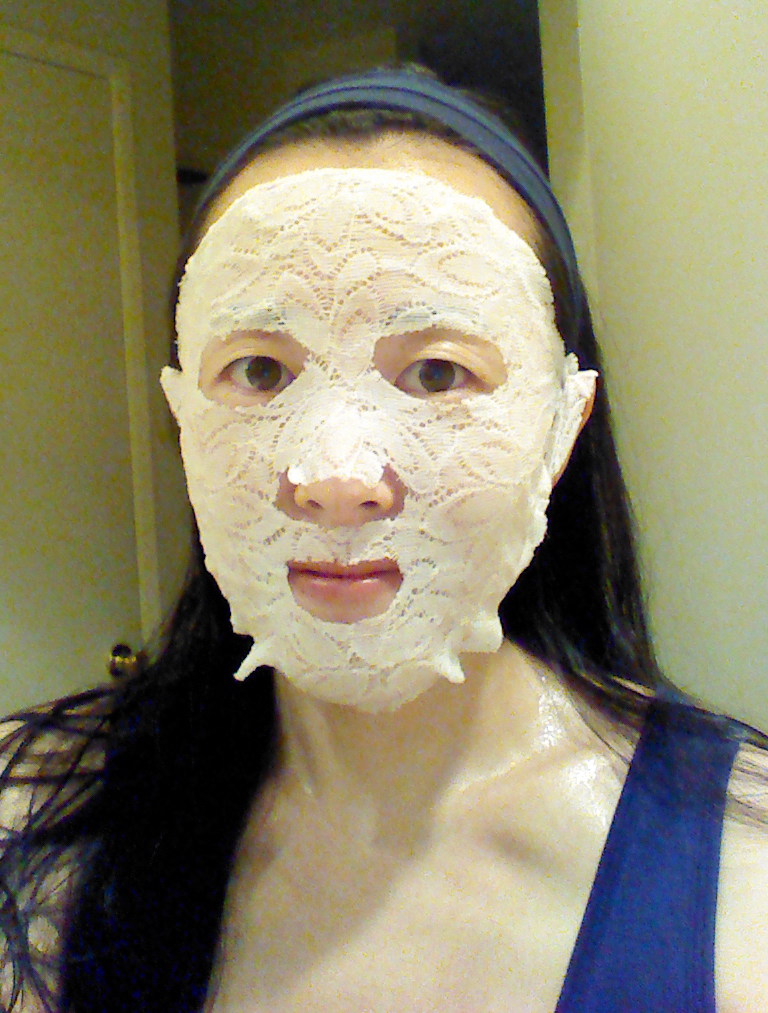
So. This sheet mask is interesting thanks to lace, the chin strap section, and the ear loops. I love how stretchy the material is, and how the ear loops hold it in place. The under-chin piece is a nice touch as well, delivering the full benefits of the mask to the often-neglected neck area.
It is, however, really, really, REALLY freaky-looking. It’s basically a wet white lace gimp mask.
Thing is, this mask reminded me of why I don’t like unlined lace garments ever. Lace makes my skin itch like crazy. The itching was almost unbearable throughout the 45 minutes I forced myself to keep this mask on, and while it was still wet enough to have worn for another 15 minutes or so, after 45, I just couldn’t take it anymore and had to get it off. Based on that discomfort alone, I won’t be repurchasing this mask for myself. For the purposes of this review, however, let’s take a look at the mask’s results.
Um. “Results,” really.
Upon taking off the mask, I was incredibly disappointed. All that itching for almost nothing. The brightening effect was minimal (vitamin C as a brightening agent needs more than a single 45-minute application at a presumably low concentration to show results): there was barely any contrast around my hairline and eyes, certainly less than I see with any other brightening mask in my collection. Plenty of leftover essence remained on my face but patted in surprisingly quickly given the lack of alcohol in this formulation, but despite all that essence, I felt barely more hydrated than I would have if I hadn’t used a mask at all. To be honest, if it hadn’t been so late at night, I would have #doublefisted and used a second sheet mask to compensate for this one’s lack of hydration. Instead, I applied heavier layers of my usual nighttime creams. In the morning, what little brightening effect there was had vanished. My skin did feel super, super silky, but in the first place, that could have been due to the extra Benton steam cream, Mizon starfish cream, and Mizon Good Night White sleeping mask, and in the second place, the Hey! Pinkgo Girl White Tea & Vitamin C sheet mask is marketed as a brightening mask, not a silky skin maker.
Conclusion: I’m really pretty disappointed. I didn’t expect anything amazing out of this mask, but I did expect the standard results one gets from an inexpensive sheet mask: visible brightening and noticeable hydration. This mask delivered neither.
Rating: 2.5/5
Rating scale:
1 – This should be taken off the market.
2 – Caused me some problems; would not buy again.
3 – Meh. Neither great nor bad.
4 – Pretty good. Would buy again unless I find something better.
5 – I’ll never be in the market for a replacement unless this one is discontinued.
Where can I buy Hey! Pinkgo Girl White Tea & Vitamin C sheet masks?
Skin care is YMMV, of course, and there’s a chance that you might enjoy this mask and see better results than I did. If you still want to try this mask for yourself (and I admit the laciness is a really appealing novelty feature), you can buy it on Amazon at the following affiliate links:
Blushes are cheap, and I’ve somehow accumulated a lot of them. I’ve gotten so many different colors and have become so comfortable with applying them that I’ve started planning looks around which blush I feel like wearing on any given day. And I like blush so much that storing them in a makeup bag out of sight started to bother me. Today I found the solution in a little souvenir shop down by my dentist’s office.
Not everyone loves skin care, and not everyone cares about skin care. And many of the people who don’t care for skin care insist that those of us who do are deluded, that “none of it works. It’s all just marketing.”
They’re not wrong about a lot of skin care products, but they’re completely wrong about some. And picking the products that work out of a lineup of empty buzzwords and shiny advertising hype is as simple as knowing how to read an ingredients list. Here’s a primer on how to do that.
Why ingredient awareness matters
As I just admitted, there are a lot of products out there that are just fluff. It’s inevitable in an industry that’s pretty lightly regulated and that caters to customers who are often driven to make emotional purchases out of insecurity or the desire to be on trend. But among all the wonder creams that don’t work and the miracle serums with nothing in them but water, glycerin, and empty promises, you can find many, many intelligently formulated and rigorously tested gems. And in my experience, few of those gems live in the luxury and prestige end of the price spectrum. Most that I’ve found are right in the midrange–and often at the low end of midrange. You can save yourself a ton of time and money by learning how to tell from the ingredients list whether a product belongs in the snake oil section or in an effective skin care routine.
It all boils down to ingredients. All the fancy packaging and glossy advertising in the world won’t make a mediocre formulation better for your skin, and no matter how rare, precious, or exotic an ingredient is (looking right at you, gold flecks in a moisturizing cream), if it hasn’t been shown to have an effect on human skin, you shouldn’t expect it to have one. Luxury and prestige skin care brands are the ones most often guilty of adding useless “precious” ingredients to their formulas, because those products need some memorable differentiator to set them apart from the more affordable competition, reinforce the brand’s perception of prestige, and justify an exorbitant price.
Here’s the truth: It doesn’t matter how special or fancy-sounding an ingredient is. It’s either been proven to affect skin, or it hasn’t. The end.
(Which is not to say that you can’t experiment with less proven ingredients like botanical extracts, snail mucin, dehydrated ground up starfish, or anything else you like. That’s half the fun of exploring Japanese and Korean skin care products! But don’t put all your eggs in one starfish-shaped basket.)
Once you have a basic grasp of the ingredients your skin needs, you’ll be able to make better purchasing choices. You’ll accelerate your skin’s improvement and reduce the number of products you buy that don’t work out for you. It’s well worth the time spent studying up on ingredients.
Examples of effective ingredients for different skin concerns
“But Snaily,” you might be saying right now, “that all sounds great, but where do I start? Am I supposed to take a class or something?”
Not at all. I’ll get you started myself with some short lists of common and proven ingredients to address various skin concerns.
Acne:Chemical exfoliants, such as the AHAs glycolic acid, lactic acid, and mandelic acid in concentrations of 5-8% and BHAs such as salicylic acid at a concentration of 2% and betaine salicylate at a concentration of 4%, all of which must be at a pH between 3 and 4 to safely but effectively exfoliate; skin turnover accelerators like retinol; benzoyl peroxide; and anti-inflammatory ingredients, including my all-time favorite ingredient, niacinamide.
Fine lines and wrinkles:AHAs (following the pH and percentage guidelines listed above), the L-ascorbic acid (LAA) form of vitamin C, retinol in over-the-counter formulations, prescription-strength retinoids like tretinoin, and niacinamide.
Dry skin and/or damaged moisture barrier: Barrier-repairing ingredients like niacinamide; barrier-supplementing ingredients like collagen, elastin, ceramides, and lipids; humectants like hyaluronic acid, sodium hyaluronate,hydrolyzed hyaluronic acid, glycerin, and lanolin; emollients like essential fatty acids and various plant oils such as olive oil, coconut oil, and argan oil; and occlusives like mineral oil and dimethicone.
Dullness and/or hyperpigmentation from acne or sun damage: Correctly formulated AHAs, niacinamide, LAA, the sodium ascorbyl phosphate (SAP) form of vitamin C, the magnesium ascorbyl phosphate (MAP) form of vitamin C, licorice root extract, arbutin, and hydroquinone (which you should never use except under a doctor’s supervision).
These are by no means complete lists of proven solutions for the skin problems I’ve listed above, but they are a good place to start your ingredient education, especially since the ingredients I listed are among the most commonly used at many price points.
I have a suggestion for you. Look in your cabinet. Find one product you use now that you believe is working for you, even a little bit. Google the ingredients if they aren’t on the label and see if you can find any of the ingredients I listed among the ones in your product. And for extra credit, think of one product you bought but returned or threw out in disgust because it didn’t do anything it claimed to do. Google those ingredients, too, and see if the loser contains any of the ingredients it should–or if those ingredients are near the top of the ingredients list or the bottom.
Guesstimating the effectiveness of a skin care product
The exercise above leads us to the second thing you need to know about a product’s ingredients list: how to tell how much of a given ingredient the product actually contains.
Just like food, cosmetics products list their ingredients in order from most to least. That’s why most moisturizers will have either water or mineral oil as their first ingredient: water or oil is the base of the product, into which much smaller quantities of the other ingredients are blended. And as you might have guessed, quantity matters with many ingredients. If retinol is among the last ingredients in your anti-aging cream or serum, then it doesn’t matter how prominent the word “retinol” is on the package: it isn’t going to have much of an effect on your skin. While you can’t usually find out the exact proportions of a product’s ingredients, their order can give you a decent idea of whether the product is worth buying or not. And don’t buy an LAA, AHA, or BHA product unless the label lists the exact percentage of the active ingredient. LAA should be between 10 and 20% to work (higher is okay but may be irritating); AHAs should be between 5 and 8%, and salicylic acid, the most common BHA by far, should be at 2%. AHAs are humectant and BHAs are anti-inflammatory, so they’ll continue to have those effects at suboptimal percentages, but they won’t exfoliate as expected.
Putting it all together
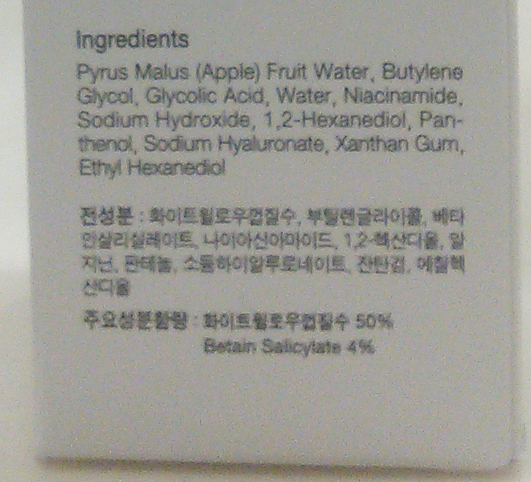
Now that we know a bit more about evaluating a skin care product’s ingredients, let’s take a look at the ingredients list for the CosRX BHA Blackhead Power Liquid.
Short and sweet.
Here we see several appealing ingredients. Instead of plain water, the BHA Blackhead Power Liquid has an apple water base; apples, like many fruits, are a great source of antioxidants and may contain natural AHA exfoliants. There’s also glycolic acid fairly high up in the list. BHA can be drying, so here I’d welcome the humectant moisturizing capabilities of the AHA. There’s also niacinamide, which is not only anti-inflammatory, but helps repair the skin barrier and lightens hyperpigmentation, and sodium hyaluronate for more non-greasy humectant moisture. And the label lists the percentage of the BHA: 4% betaine salicylate, which from what I’ve read is ideal for that particular acid.
I decided to buy the CosRX BHA Blackhead Power Liquid without trying a single sample, based purely on the ingredients list. It’s working out fantastically well for me so far. In fact, since I began developing ingredient awareness, I don’t think I’ve tried a single daily use skin care product that hasn’t done what I expected it to do–there have been products I haven’t enjoyed or that have been disappointing for subjective reasons, but nothing that I would consider ineffective at what it claims to do. I tend not to get ripped off anymore, because I know what to look for. Now you can start learning to do the same.
Where to go from here
“Nuh-uh, Snaily,” you’re saying. “We’re not done. You said those aren’t all the possible ingredients that could work for my problem. How am I supposed to find out about the rest?”
The same way you find out about anything: read about it! I learned a lot, and continue to learn a lot, about ingredients from joining communities like Reddit’s Skincare Addiction and Asian Beauty and reading high-quality, ingredients-oriented blogs like Snow White and the Asian Pear, Of Faces and Fingers, Ratzilla Cosme, and Skin and Tonics–analytical blogs written by smart cookies who understand ingredients and how they work. I Googled ingredients I saw over and over in my skin care products and figured out which ones my skin responds best to (hint: niacinamide) and which ones it doesn’t care for (mineral oil; no breakouts, but always an oily residue). And I continue to learn. These days, I’m in the habit of Googling just about every unfamiliar ingredient I see in everything I plan to use, including sheet masks, and trying to find sources that are more “scientific study” and less “random blog with naturalistic fallacy and anti-‘chemicalz’ agenda.” I’m not so much looking for triggers as I am aiming to learn about even more ways to improve my skin.
Keep an eye out for buzzword ingredients! Some common buzzword ingredients besides the ones I’ve already covered in my Hype Watch series are:
Any kind of “special” water: Water from some specific glacier or spring or other source. Water is water. It has two hydrogen atoms and one oxygen atom. Period. (The exception is micellar water, which is apparently a great makeup remover, but I haven’t yet read much about it.)
Anything having to do with precious gems or metals. I can’t think of a better way for a luxury brand to make a mediocre cream or serum seem special than by sprinkling in some gold or diamond dust, but your skin doesn’t really care about bling.
Plant stem cells. Unless you’re some kind of Lovecraftian monstrosity excavated from the Antarctic ice, you’re not plant-based. Plant stem cells are therefore not going to rejuvenate your skin. Lately, skin care companies love the stem cell concept. Not all stem cells will fix human cell function. You know what stem cells fix human cell function? Human stem cells. I’m pretty sure La Prairie hasn’t found a way to harvest and utilize those yet.
Finally, as you embark on your ingredient education and your skin care journey, nothing will help you keep track of all your newfound knowledge and all your product evaluations like a skin care notebook or spreadsheet. I say this in all seriousness: start it now, so you won’t learn things and forget them later, the way I did all through high school.
And that’s it for a starter course! Now dig up some product labels and get Googling!
How much attention do you pay to skin care ingredients? Do you know which ones work best for you?
The thing about ingredient-aware skin care shopping is that it drastically increases the chances of picking winners instead of ending up disappointed with losers. And after spending a week with my new CosRX Natural BHA Skin Returning A-Sol and Missha Longer Name Ampoule, I’m pretty confident I’ve found two more winners to add to my daily skin care routine. Here are some of my initial thoughts about these products; full reviews to come after I’ve used them for a full month.
CosRX Natural BHA Skin Returning A-Sol
This A-Sol is one of those interesting products that doesn’t seem to fit neatly into any one category. Its light liquid texture places it in the ranks of toners and first essences, but although it does contain alcohol and has some astringent effects (as well as hyaluronic acid and hydrating effects), it’s much more nourishing than most astringent or hydrating toners. Simultaneously, although it offers some antioxidant nutrition, it doesn’t contain the yeast ferment ingredients that typically characterize a first essence. It has glycolic and lactic acid AHAs and betaine salicylate for a BHA, but in concentrations too low and at a pH too high (4.3, according to Wishtrend) to qualify as a chemical exfoliant. So what the hell is it?
It’s freaking awesome, is what it is.
Some people use it as a spot treatment to treat active acne. Others use it as a preventative step. That’s primarily what I do. Morning and night, I swipe a pump and a half of A-Sol over my face; in the evening, it doubles as a pH-lowering toner as well to better prepare my skin for my C21.5 vitamin C serum.
The A-Sol is ever so slightly thicker and more viscous than water, with a bit of slip and a strong tea tree fragrance that fades fast.
I didn’t quite know what to expect from this A-Sol at all, but I have to say that I’m really impressed with it so far. I have a few spots of very persistent redness: one on either side of my nose and a patch on my chin. The redness isn’t acne or broken capillaries; I think it’s just constant irritation from Mr. Crazy Snail Lady’s rugged face scruff. And nothing I’ve used in the last year or so has been able to take that redness down by much on a daily basis. My A-Sol, however, has managed to visibly reduce that redness just in the last week. I noticed when I found myself not feeling compelled to add an extra layer of BB cream to those spots in the morning anymore.
If that were the only benefit I’d seen from the A-Sol, I’d already be sold, but it doesn’t stop there. In conjunction with the CosRX AHA and BHA products I’m testing out, the A-Sol has noticeably refined my skin texture and helped minimize the appearance of my pores. I haven’t felt the need to do my 3-Step Pore Killer since I started using this and don’t think I will for at least a couple more weeks–if ever again. I’m happier with the state of my pores than I have been since I first became aware that pores could be a problem back in my teenage years, and those took place in the 1800s. I’m officially removing the “currently in testing phase” disclaimer on this product’s spot in my official daily skin care routine page.
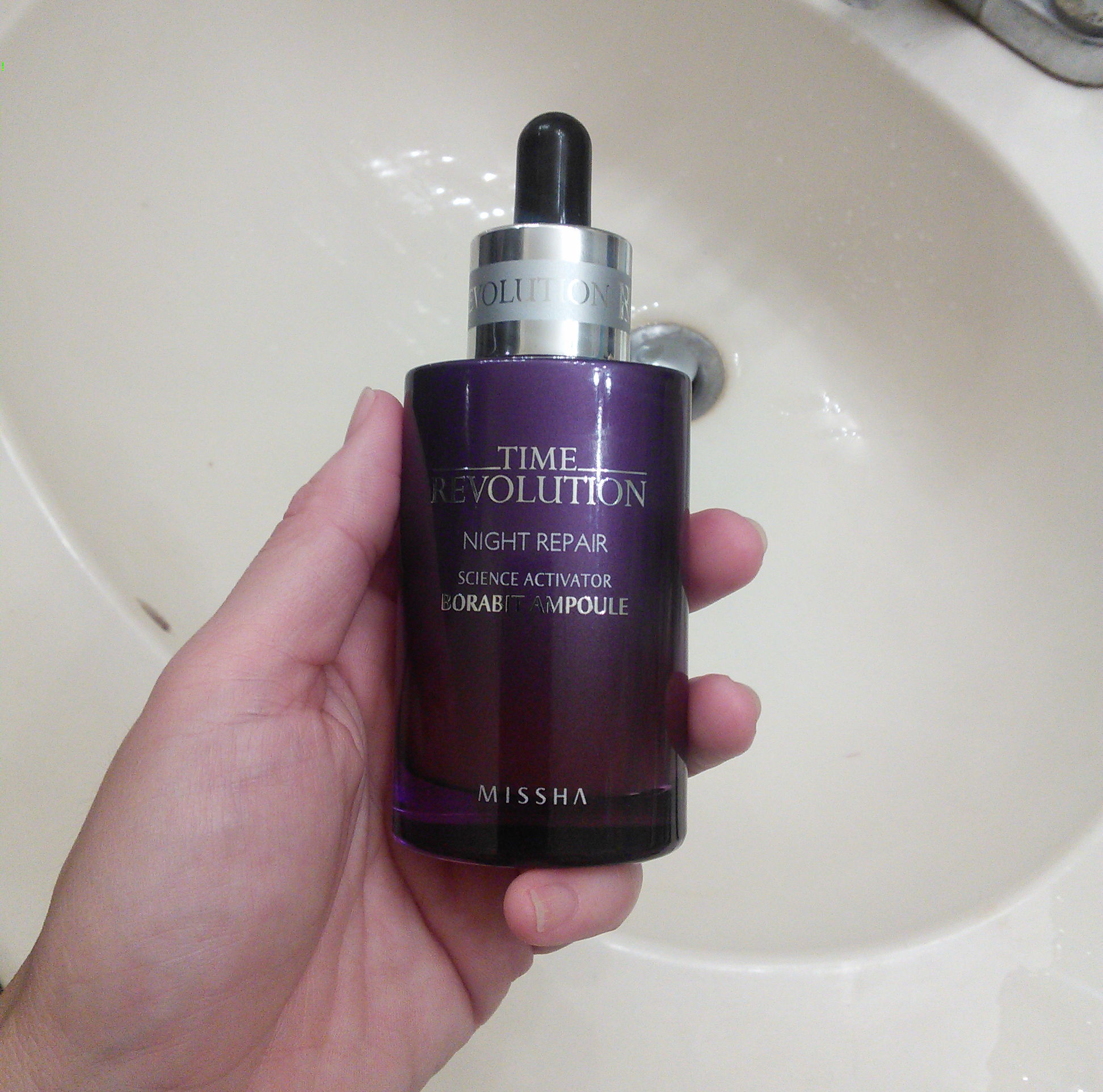
Missha Time Revolution Night Repair Science Activator Borabit Ampoule
Unlike with the A-Sol, I knew exactly what to expect out of the Missha Longer Name Ampoule, having already gone through a bottle of the original Long Name Ampoule. The new Borabit (means “purple,” apparently, since many Koreans refer to the Science Activator Ampoule as the “purple bottle,” according to Missha) formulation changes up the mix of ferments a bit and, more importantly, increases the amount of retinol in the product. Theoretically, the formulation changes should boost the Science Activator Ampoule’s antioxidant, anti-wrinkle, hydrating, brightening, smoothing and plumping abilities.
Same bottle, one more word on the front and a little band of writing on the cap. Fancy.
A product like this doesn’t produce overnight results. It takes time to see the benefits of retinol or any other anti-aging active. After a month with the original recipe, however, I had begun to notice a distinct smoothing out of the wrinkle precursors around my eyes, and I’ve continued to see that effect, particularly on my eyelids, where I only use Longer Name Ampoule and my Neutrogena retinol eye cream. The slight crepiness that I was beginning to notice at the end of the day has eased significantly, and my lids are reverting to the smoothly monolidded state that they were in before aging and daily eyelash curling turned them into semi-double lids.
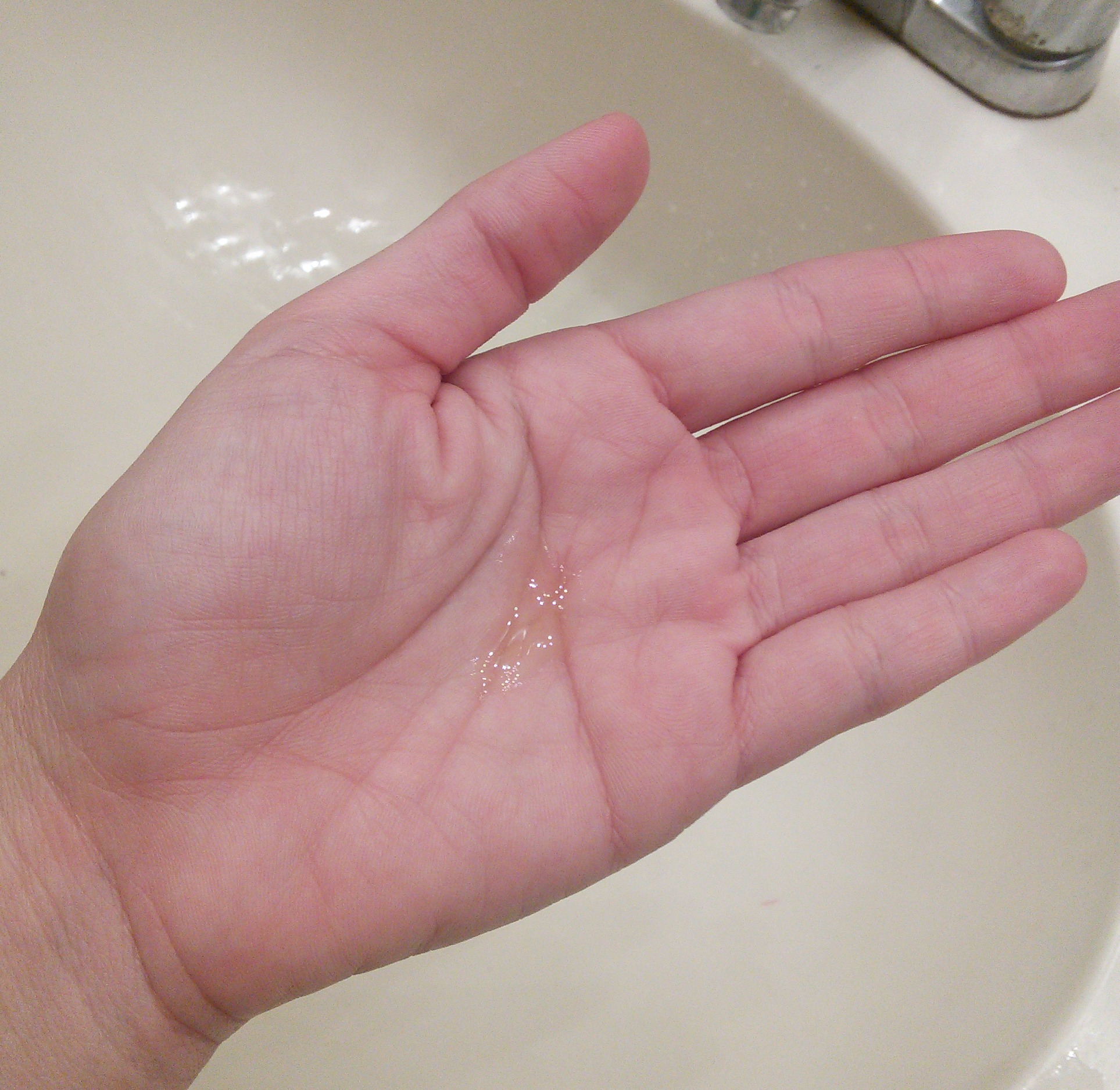
Looks about the same as the original recipe Long Name Ampoule.
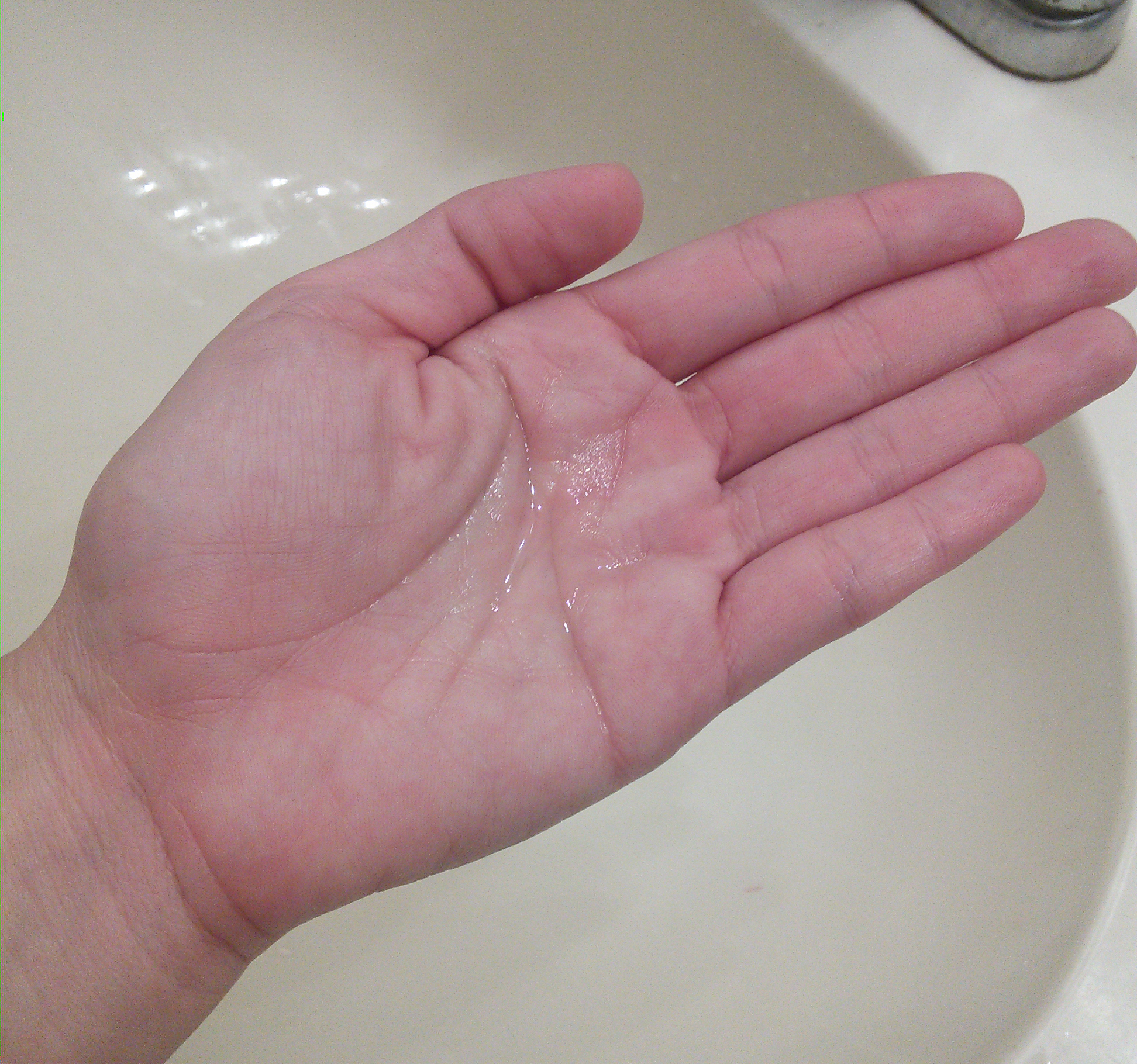
I find the texture of Longer Name Ampoule a little easier to work with than that of its predecessor. While the ampoule still looks the same–a thick and viscous pale gold liquid, a little bit like honey–it’s a bit thinner and doesn’t dry down to the slightly sticky finish of the old version. I like this, as for me, the one major drawback of Long Name Ampoule was that it always felt sticky and never seemed to fully dry down on my face unless I waited a good half hour. With Longer Name Ampoule, I can pat it in as I would any other serum and feel that it absorbs nicely and without a residue. Somewhat disappointingly, however, the Longer Name Ampoule doesn’t have the pleasantly spicy fragrance that I’d liked in the Long Name Ampoule. Despite that, however, this product definitely deserves a promotion out of testing status, too.
Have you tried CosRX Natural BHA Skin Returning A-Sol or Missha Time Revolution Night Repair Science Activator Borabit Ampoule yet? What are your thoughts on these products?
Brows: Maybelline Color Tattoo cream eyeshadow, Tough As Taupe
Lids: Maybelline Color Tattoo cream eyeshadow, Inked in Pink
Lashes: Heroine Make Volume & Curl, Heroine Make Long & Curl, both Jet Black
Liner: Innisfree Gel Liner, Suitcase Brown
Lips: Etude House Fresh Cherry Lip Tint
Etude House Fresh Cherry Lip Tint mini-review
I have a couple of samples of these from my last Etude House mask restocking and decided to give one a whirl today. I’d expected it to be a quite saturated, vivid color, like most lip tints seem to be, but it was surprisingly sheer and light, as you can see! I applied with my finger and really liked the finish. It feels lightly moisturizing and not at all sticky, and it’s lasted pretty well through a steak lunch, though I’ll need to retouch soon. Could this end up in my next Etude House cart? Mayyyybe.















 Fifty Shades of Snail